Most founders think investor outreach starts with a cold email. That's backwards.
I've spent years building OpenVC and working with founders raising pre-seed and seed rounds. The pattern I see again and again is founders treating outreach as their fundraising strategy, when it's really just the execution layer that sits at the very end of a much bigger process.
You spend weeks tweaking templates, building sequences, and debating subject lines while ignoring the factors that actually decide whether they raise. Investors don't fund companies because they got a clever email. In reality, they fund companies because the opportunity is worth their time.
So in this article, I want to walk through how investor outreach actually fits inside a fundraising strategy. When cold outreach works, when it doesn't, and how to build a process that maximizes your odds of landing investor meetings. Let's start with the question almost everyone skips.
Table of Contents
Am I Even Ready for Investor Outreach?
The most common mistake I see is a founder waking up one morning, realizing they're about to run out of cash, and deciding to spam every VC they can find. The emails go unanswered, and the conclusion becomes: "Cold outreach doesn't work."
In reality, outreach was never the problem.
Outreach amplifies investor interest. It does not create it.
If your company lacks traction or your team lacks track record, no outreach strategy will save you. You can send a hundred follow-ups and the result won't change.
Before you build a list or write a single email, you need to look at your company through an investor's eyes. What would make someone excited to write a check? What evidence backs up the opportunity? What have you already shipped or achieved?
This is uncomfortable, because it forces you to confront whether you're fundable in the first place. But it matters far more than any outreach tactic.
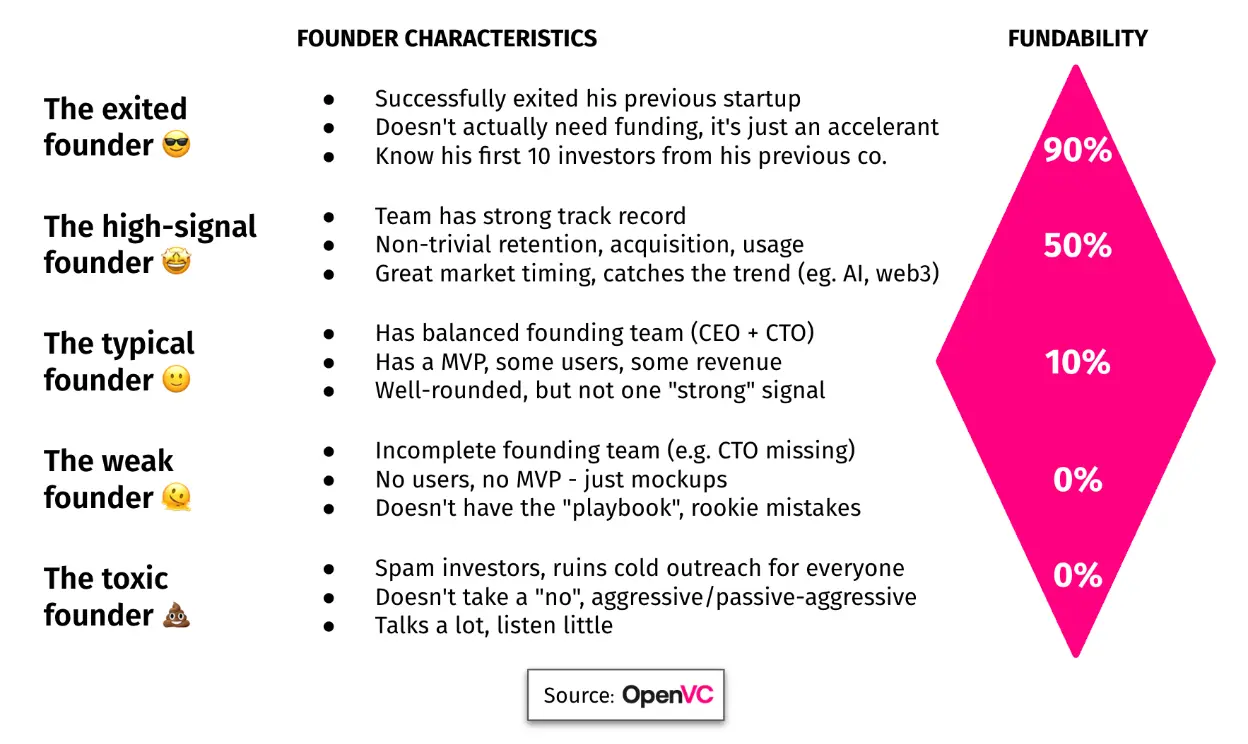
What's Your Strongest Signal?
Most founders obsess over email copy. Investors obsess over signals.
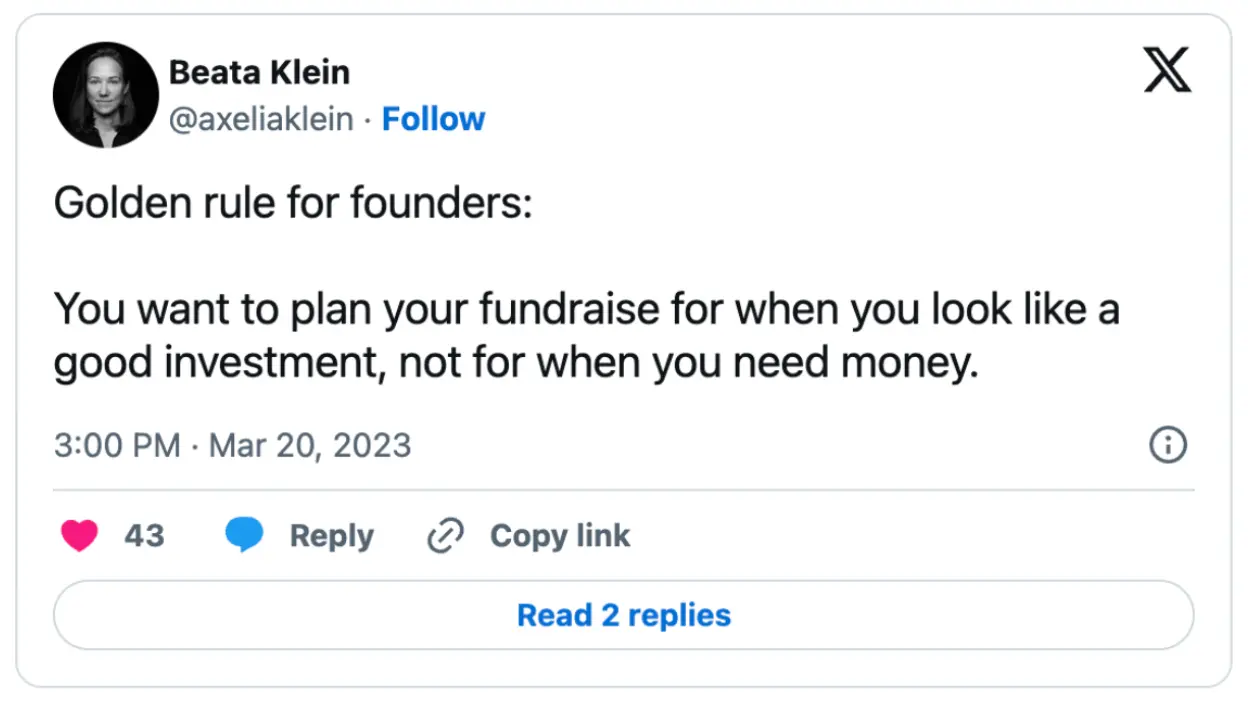
This is the single most underrated part of outreach, and I think founders miss it constantly. By the time an investor opens your email, they're already scanning for evidence that the opportunity deserves attention. The strongest fundraising outcomes are almost always driven by one clear signal that reduces perceived risk and builds conviction.
A signal can be a lot of things. Strong revenue growth. Exceptional retention. A previous exit. A team that's uniquely qualified to build this. Existing investor commitments. Deep industry expertise. A genuine technical breakthrough.
What matters is that the signal is tangible and measurable. It's not strong because you say so. It's strong because you have real, verifiable achievements to point to.
And if you're being honest and you don't have a sharp edge anywhere, you're just average across the board, that's a signal too. It might mean you're not ready for outreach yet. Outreach only really works when you have one strong signal to cut through the noise.
Our breakdown of VC signals goes deeper if you want to figure out what yours is.
Where Does Investor Outreach Fit Within a Fundraising Strategy?
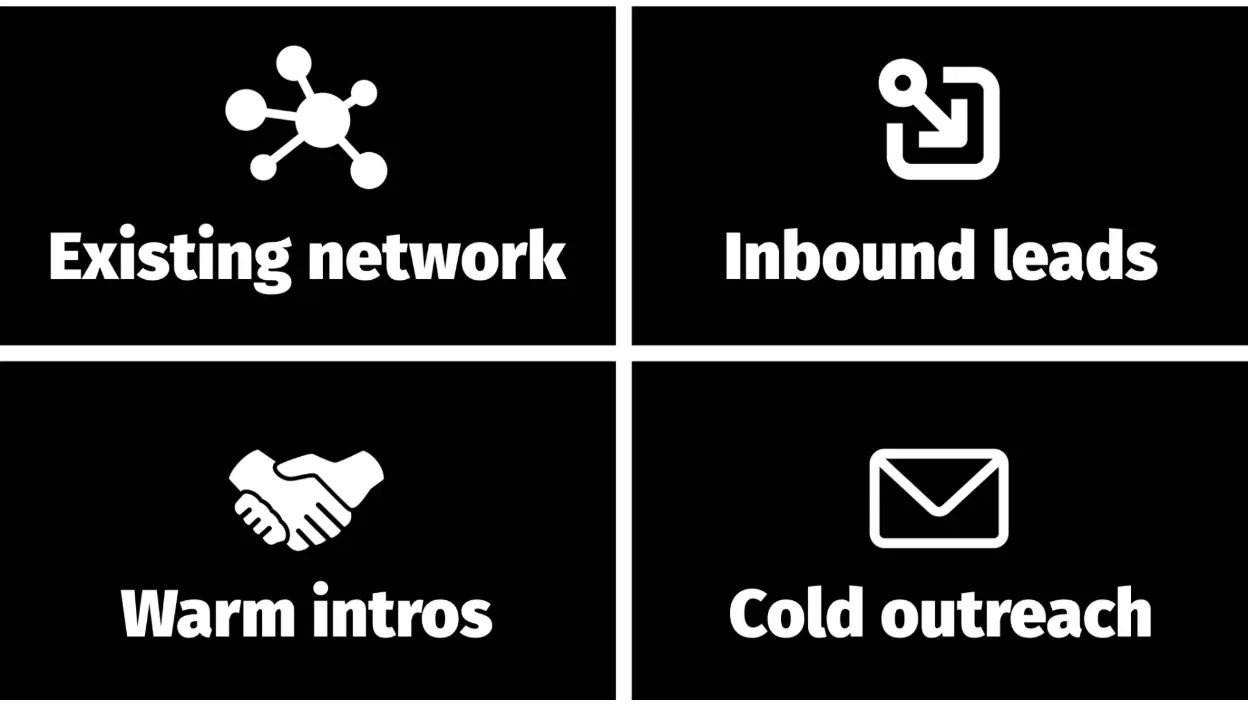
Your outreach strategy shouldn't live in a silo. It's one part of a larger fundraising strategy, and at OpenVC we think about that strategy through four ways to access investors:
- Your existing network
- Warm introductions
- Inbound interest
- Cold outreach
Most founders over-index on the fourth one and underuse the first three.
I get why. Cold outreach feels scalable. You can build a list of hundreds of investors and start firing off emails today. But the highest-converting opportunities almost always come from relationships and trusted introductions.
Your existing network is full of people who can either invest or introduce you to someone who will: ex-colleagues, former bosses, advisors, other founders, operators, angels. These relationships already have trust baked in, which makes the conversation easy to start.
Warm intros add another layer of credibility. An investor is far more likely to respond when someone they trust vouches for you.
Inbound becomes powerful as you build visibility through content, press, and social media. You post, and interested investors come to you.
Cold outreach still works, but it should rarely be where you start.
Get The Fundraising Wheel Rolling
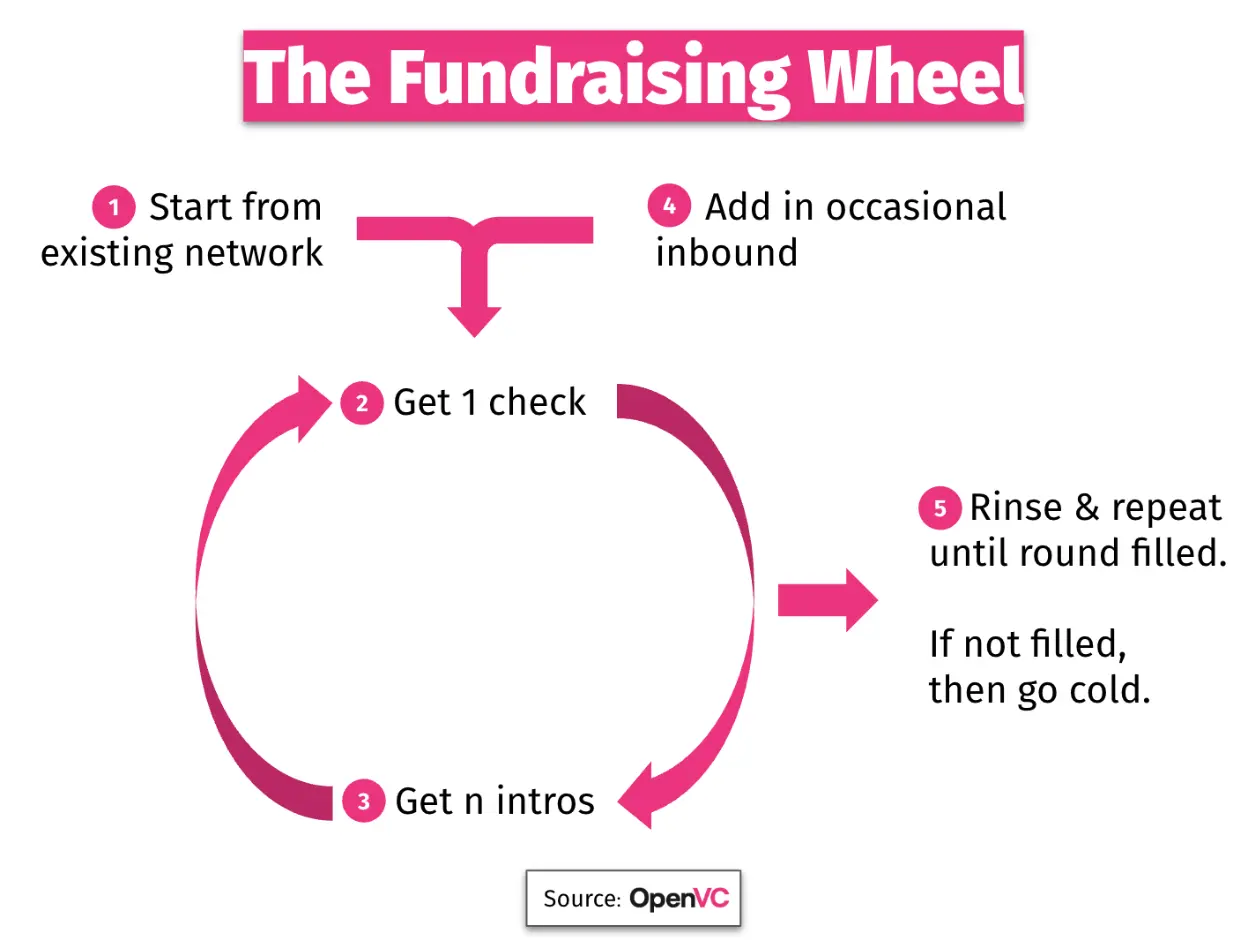
I call it the fundraising wheel.
You start with your existing network. Get a few of them to invest, then ask those backers for intros, because those are the strongest intros you'll get. From the people they introduce you to, you ask for checks, and you rinse and repeat.
At the same time, you're posting on social media, which brings in inbound. Same process again.
Then, and only then, you go cold to fill whatever's left.
There's a reason for this order beyond just credibility. Cold outreach demands your strongest possible signal, and the warmer channels help you build one. If you've already filled 30, 40, or 50 percent of your round through your network and intros, you can cold email someone and say, "We have half the round secured and we're looking to complete it."
That lands very differently than, "Nobody has invested yet. Want to be the first check?"
So you can actually engineer your signal by working the warmer channels first. End with cold. Don't start with it.
Does Cold Investor Outreach Actually Work?
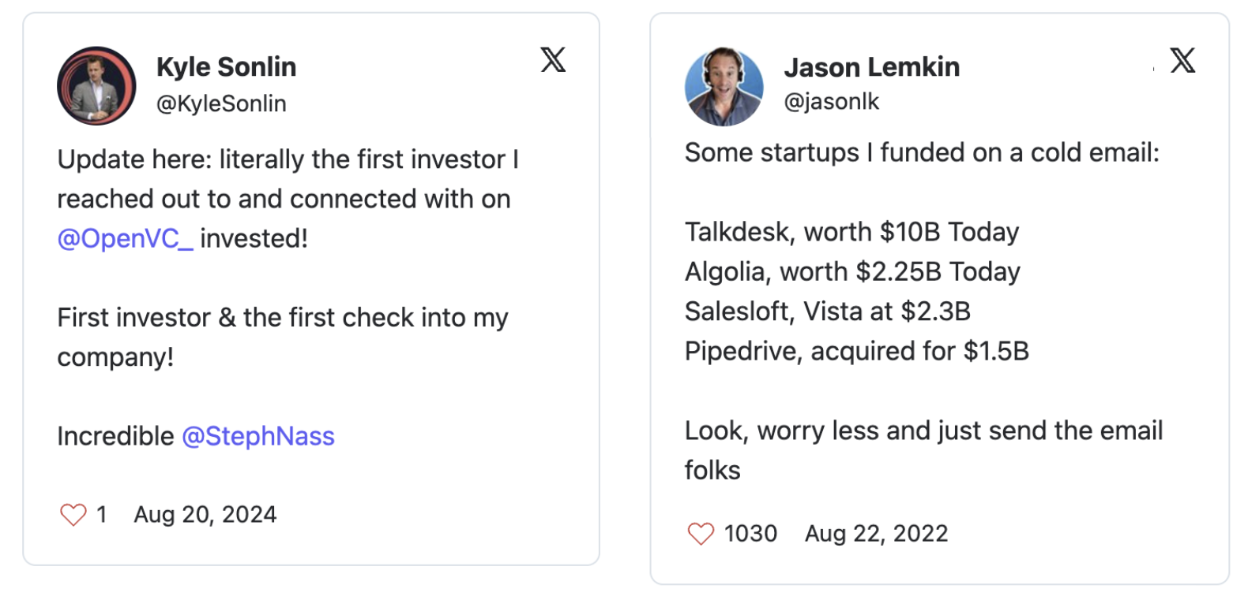
A lot of founders will tell you cold outreach is dead and it's all intros. I don't buy it.
Cold outreach absolutely generates meetings, term sheets, and closed rounds. Jason Lemkin, one of the most recognized SaaS VCs out there, has done multiple well-known deals that started with a cold email. The channel works.
The reason people think it doesn't is that most cold campaigns fail for reasons that have nothing to do with the outreach itself. Usually it's one of these:
- Poor targeting. Founders email investors who don't invest in their stage, geography, sector, or check size.
- Weak signals. Even with a perfect-fit investor, there's no real evidence to justify a conversation.
- The company isn't fundable. Sometimes it's just not ready for venture money.
- The execution is bad. A weak email and a weak deck will sink even a great company.
So when someone tells you cold email doesn't work, what they usually mean is that they spammed unqualified investors, with a weak signal, using a bad email. Of course it didn't work.
Well-targeted cold outreach behind a compelling company is surprisingly effective. The channel isn't broken. It just exposes weaknesses everywhere else in your process. If you want the tactical version, we have a full guide on how to cold email VCs.
How Should I Choose Which Investors to Contact?
The quality of your investor list matters more than the quality of your outreach. Most founders get this wrong by optimizing for volume. They want the biggest list possible, which mostly just creates noise.
Optimize for qualification instead. At a minimum, run every investor through four filters:
- Geography. Do they invest where you operate?
- Stage. Do they invest at your current stage?
- Check size. Can they realistically write a check that fits your round?
- Sector. Do they invest in your category?
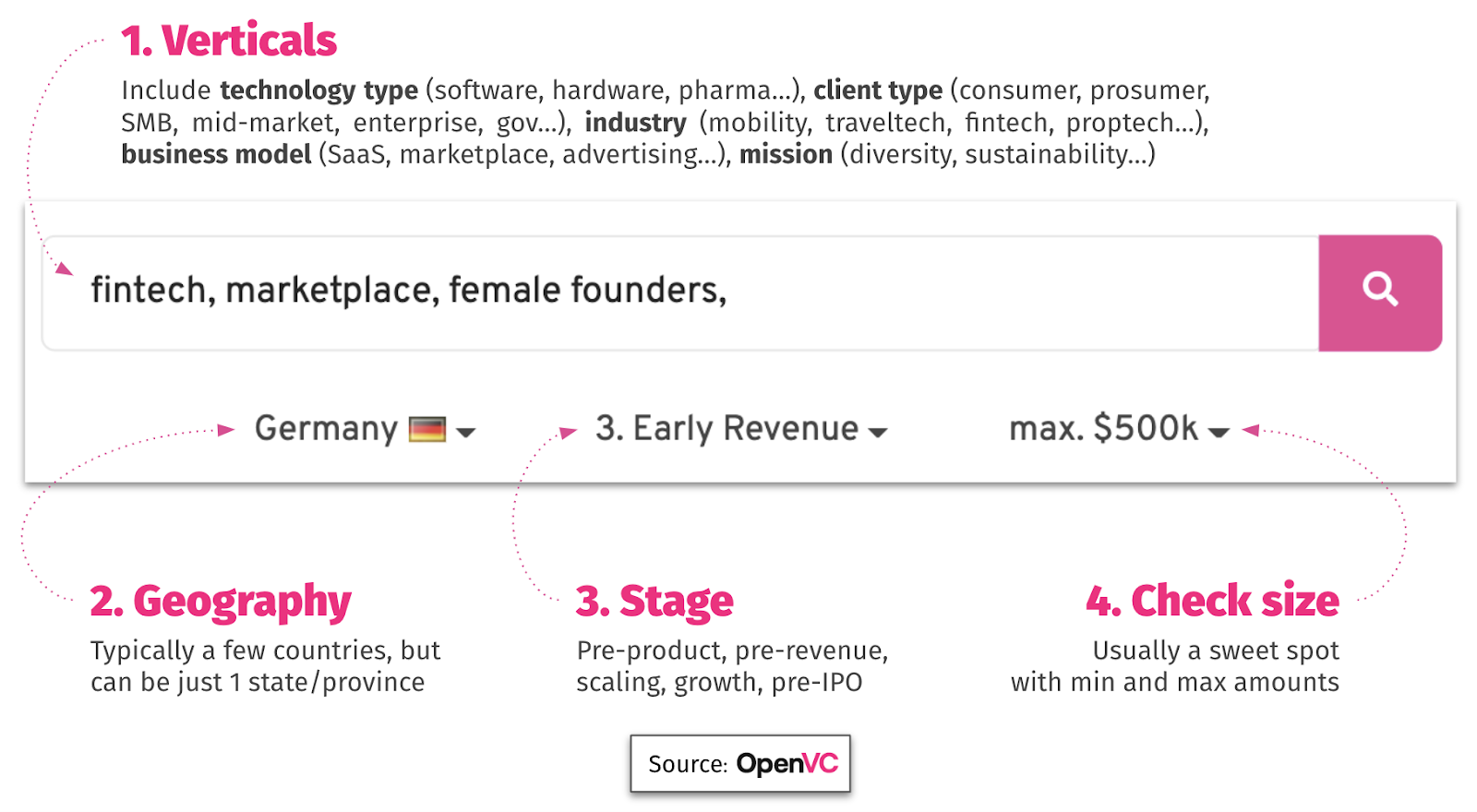
If an investor fails these filters, they're not a productive target no matter how good your email is. This is exactly why broad lists underperform. A list of 50 highly qualified investors beats a list of 500 loosely relevant names every time.
The goal isn't to contact the most investors. It's to contact the most relevant ones. This is the kind of filtering our investor database is built for, so you're not manually piecing together a list from scattered sources.
Find your ideal investors now
Browse 16,000+ investors, share your pitch deck, and manage replies - all for free.
Get Started Now
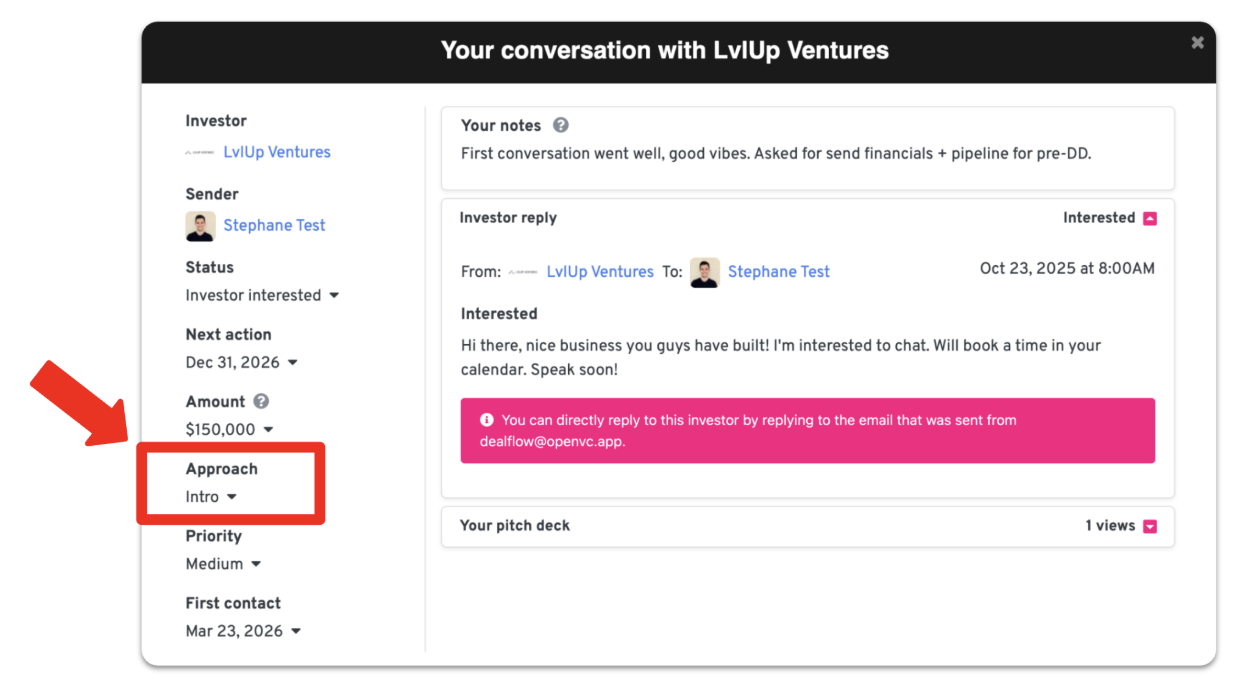
Assign an ”Access Path” to Every Investor
Once you've built your list, do a bit of homework before you start emailing. For every investor, decide how you're actually going to reach them. Not everyone should get a cold email.
Assign one of four access paths to each name:
- Existing relationship
- Warm introduction
- Inbound opportunity
- Cold outreach
This forces you to think about access strategically. A lot of investors who look like cold targets at first are actually reachable through someone you already know, an advisor, a customer, a portfolio founder, an angel. You can map this manually on LinkedIn, or use OpenVC's intro finder to surface mutual connections automatically.
The rule stays the same: work your relationships and intros first, and keep cold outreach as the fallback. The goal isn't just to contact investors. It's to contact them through the strongest available channel.
Which Outreach Channel Should I Use?
Email is king. VCs live in their inboxes.
Their CRM is plugged into their email. They forward deals to partners, associates, and co-investors over email. Their AI screening tools increasingly run inside the inbox. And critically, every single investor has an email address, which isn't true on LinkedIn or X. That consistency makes email the most scalable, reliable channel you have.
LinkedIn and X can work, but they're highly variable. Only a fraction of investors are genuinely active there. X skews heavily US. LinkedIn covers both the US and Europe. And the DMs are flooded with low-effort founder pitches, which means the channel is mostly rotten.
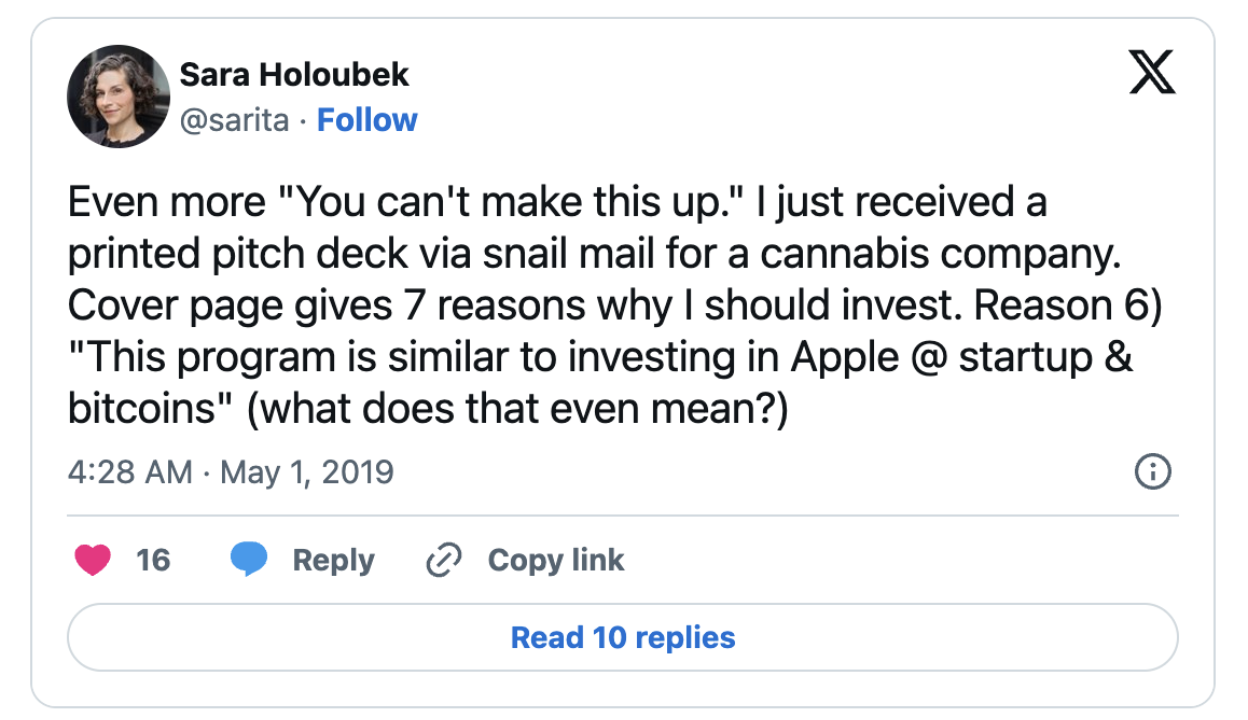
And then there's the fun one: snail mail. I've seen founders print their pitch deck and physically mail it to a VC, sometimes delivered alongside a pizza. It doesn't scale, and it didn't always get them funded, but it definitely got attention. A few VCs have gone viral posting about decks that showed up in their physical mailbox. The lesson isn't "mail everyone a pizza." It's that attention is often the first hurdle, and sometimes the channel matters less than finding a way to genuinely earn it.
One more technical note that founders constantly overlook: deliverability. If you don't warm up your domain and configure it correctly, your cold emails land in spam and you'll never know why. At least get the basics right before you start a campaign.
Open Your Email With Signal, Not Forced Personalization
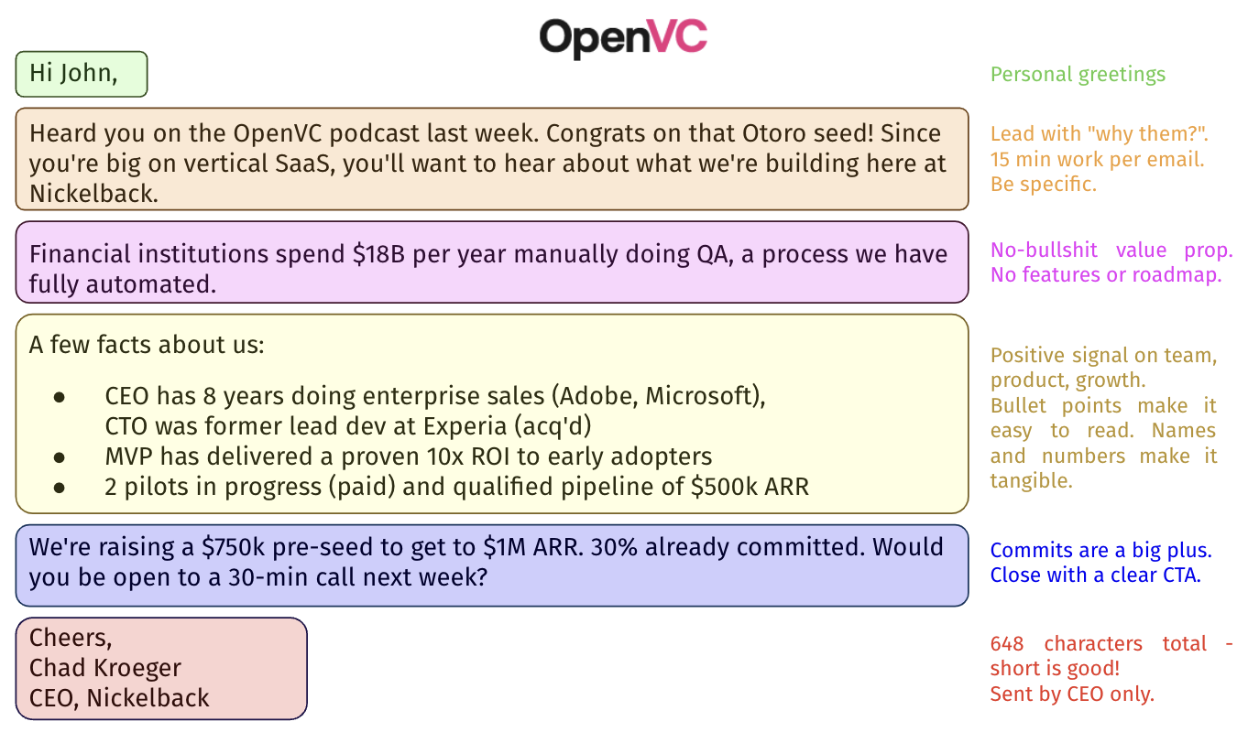
You've probably heard the advice to always start with "why this investor." It's true, but only when you have something genuinely relevant to say.
If an investor said something on a podcast that connects directly to what you're building, mention it. If they have a specific thesis your company fits, reference it. That's real personalization.
But "I see you invest in SaaS and we're a SaaS company" is generic, artificial, and makes you sound dumb. You're better off saying nothing than that. Founders take the "start with why me" rule and apply it mechanically, and it shows.
Instead, lead with your strongest signal. Put it in the subject line, repeat it in the body, and repeat it again in the deck. Say it three times. If your edge is "I sold my last company for $50M and I'm doing it again, bootstrapped," that belongs in the subject, the body, and the deck.
Keep Your Email Short, Focus on What *They* Care About
The job of an outreach email isn't to tell your whole company story. It's to earn a conversation. Everything else can happen in the meeting.
Nobody has time for a wall of text, and nobody cares about your product. There's no point listing every feature or your roadmap, it'll change anyway. Investors care about three things:
- Team. Who's building this?
- Traction. What's working today?
- Who else is investing? Is there social proof?
A good email has a hook, a real reason for reaching out (if you have one), a short value proposition at a high level, your team and traction, a hint at how much of the round is already committed, and a clear call to action. That's it. If you want a starting point, our startup pitch deck guide pairs well with this, since your deck should reinforce the same signal.
What Tools Do I Need for Investor Outreach?
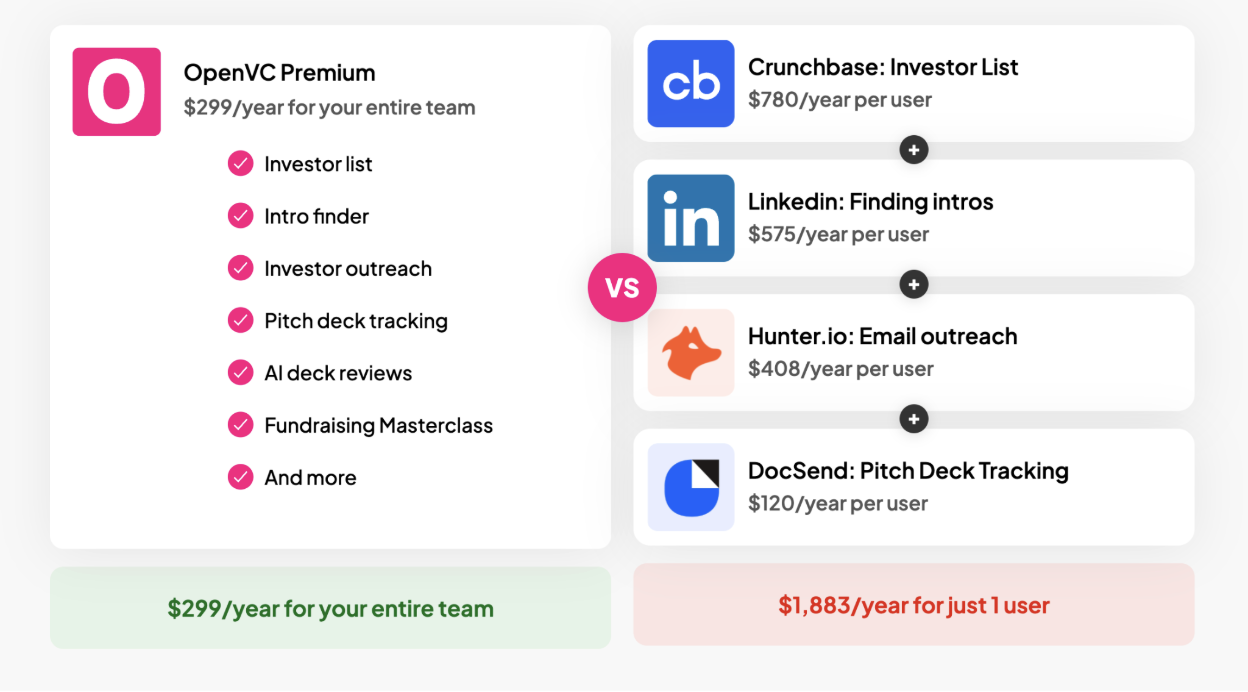
A lot of founders stitch together a stack of disconnected tools. One for investor research, another for finding contact info, a spreadsheet or CRM for tracking, and something separate for deck engagement.
Each tool solves a single problem. The issue is that fundraising isn't a set of isolated tasks. It's one connected workflow. Investor discovery, relationship mapping, outreach, follow-up, pipeline management, and deck tracking all feed into each other. When that information lives in five different systems, execution slows down and gets harder to manage.
You can absolutely use specialized cold email tools like Apollo, Hunter, or Snov.io. But then you still have to build your list elsewhere, find the intros elsewhere, and manage your pipeline elsewhere.
This is where OpenVC is built to be all-in-one: the investor database to build your list, the intro finder for warm paths, the investor outreach platform for connecting with investors, the CRM to run your process, and the deck viewer to track engagement, all in one place. The point isn't the feature list. It's that fewer disconnected tools means less friction when you're already stretched thin.
Outreach Comes From the CEO. Always.
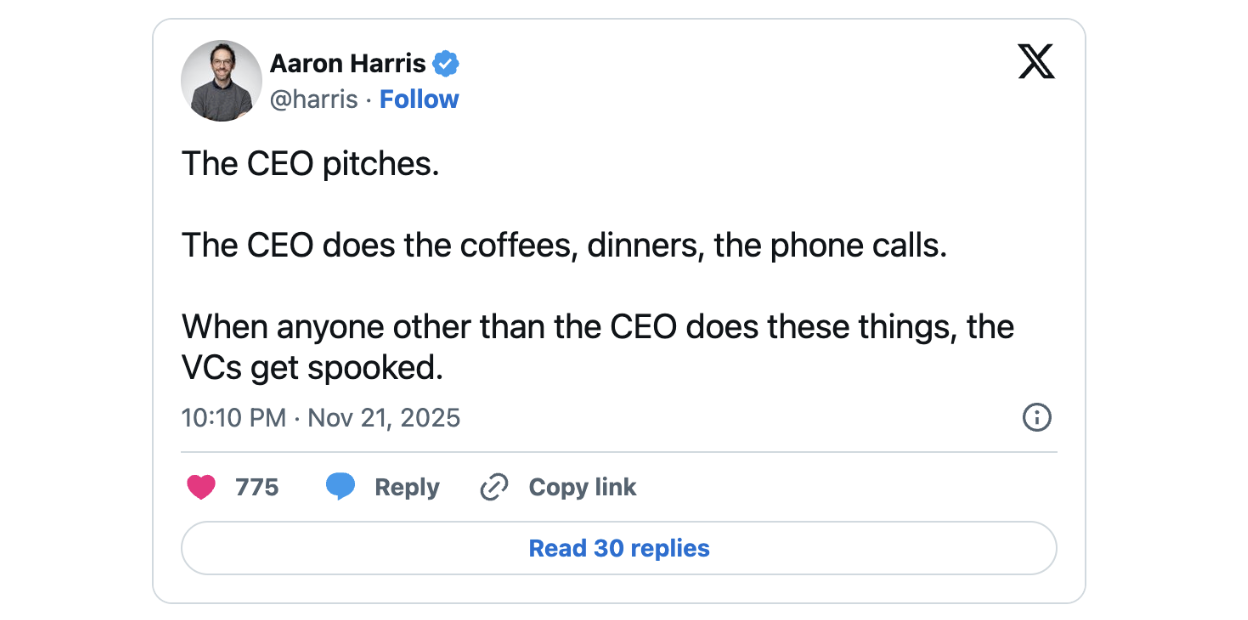
Fundraising should stay founder-led. Investors invest in founders, full stop. They want to read your vision, your conviction, and how you communicate directly from you.
If you use a consultant or advisor, do not let them email investors as themselves. Have them send from your inbox, signed with your name. In the US especially, investors have a real distaste for getting a deal from a middleman, they want the CEO. It plays a little differently in India, China, and the Middle East, but for a US raise, own those relationships from day one.
Run Outreach in Waves
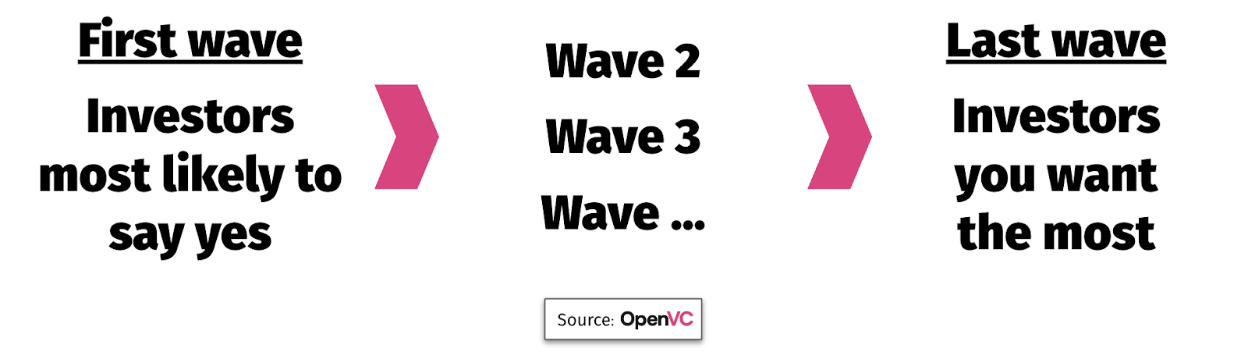
Don't stretch your campaign over twelve months. Compress it.
Group investors into batches and send in waves, say twenty or thirty investors every Monday and Tuesday. Waves create urgency, let you compare interest levels across the batch, and keep momentum up. They also give you room to improve between rounds. If one version of your email consistently pulls stronger replies, apply that to the next wave.
Follow Up and Track Your Deck
Most conversations need follow-up. Investors are busy, emails get buried, and timing shifts. Silence doesn't mean no.
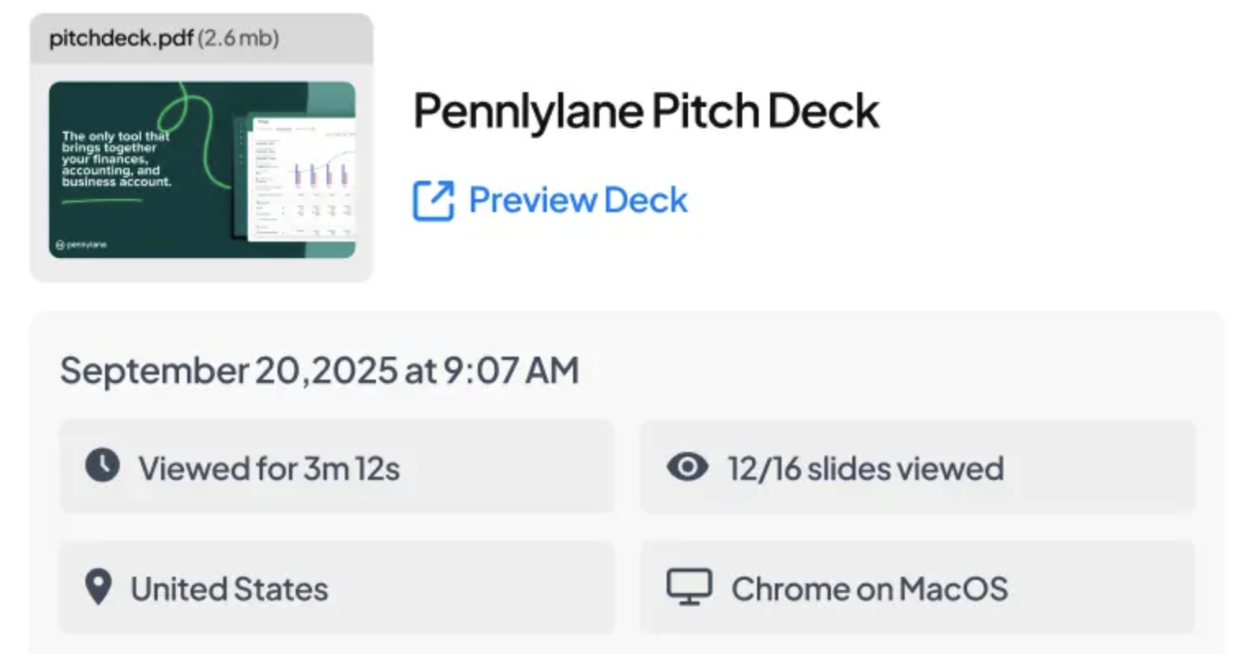
This is where deck tracking earns its keep. You don't need to know whether they spent twenty or twenty-five seconds on the team slide, that's noise. What you need to know is simple: did they open the deck at all? If they opened it, spent real time on it, and still didn't reply, that's effectively a no, and it tells you how hard to push on follow-up.
Use one deck link per investor so the analytics stay clean.
Don't Overthink Send Times
Founders agonize over whether to send Tuesday morning or Thursday afternoon. Honestly, it matters less than you'd think.
One interesting wrinkle: analysts and associates tend to keep nine-to-five hours, but angels and partners often have strong open rates at night and on weekends, because they're owners, not employees. So there's no clean rule on timing.
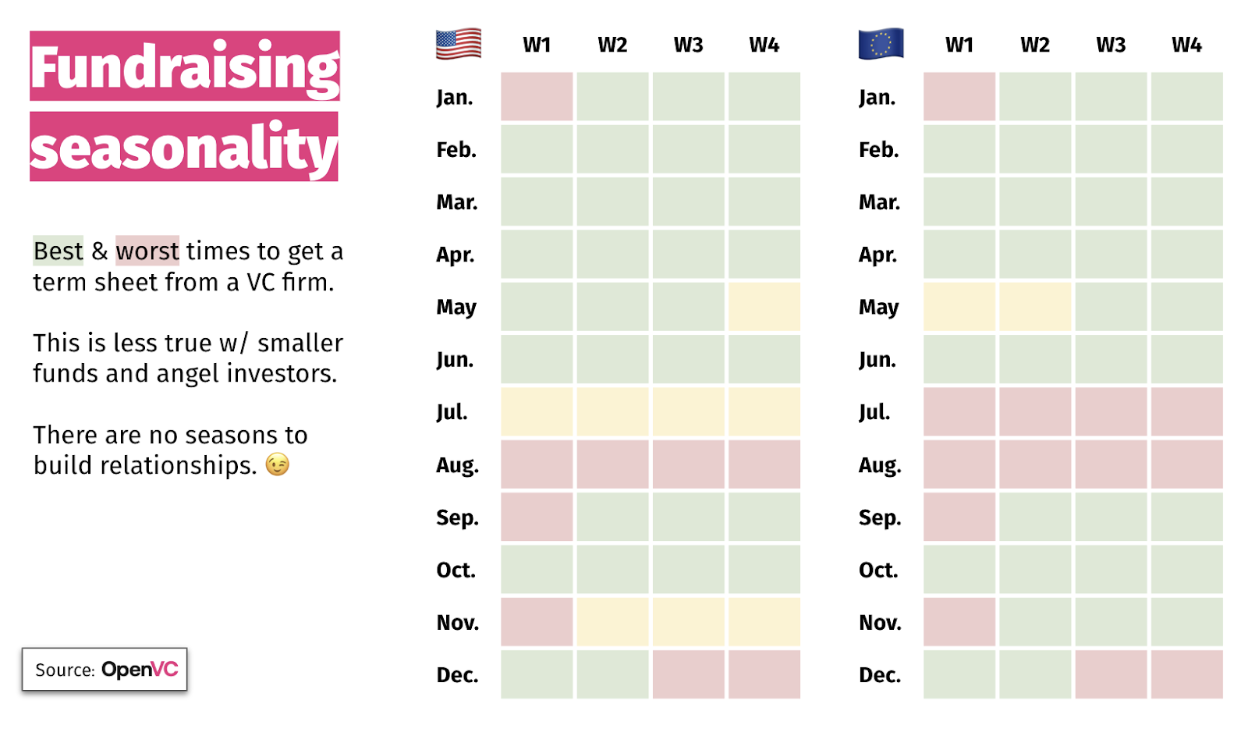
Seasonality matters more. Avoid the dead periods, Thanksgiving and Christmas in the US, July and August in France, early September around Burning Man. Outside those windows, a strong company can raise year-round. The quality of the opportunity beats the exact minute you hit send.
Common Investor Outreach Mistakes
Most outreach mistakes are symptoms of deeper problems. The same ones come up over and over:
- Raising before you're actually fundable
- Starting outreach with no compelling signal
- Targeting investors who aren't a fit
- Over-personalizing while under-communicating traction
- Writing long emails that bury the important part
- Explaining the product instead of the business
- Failing to follow up consistently
- Ignoring deliverability and ending up in spam
- Starting cold when warmer paths already exist
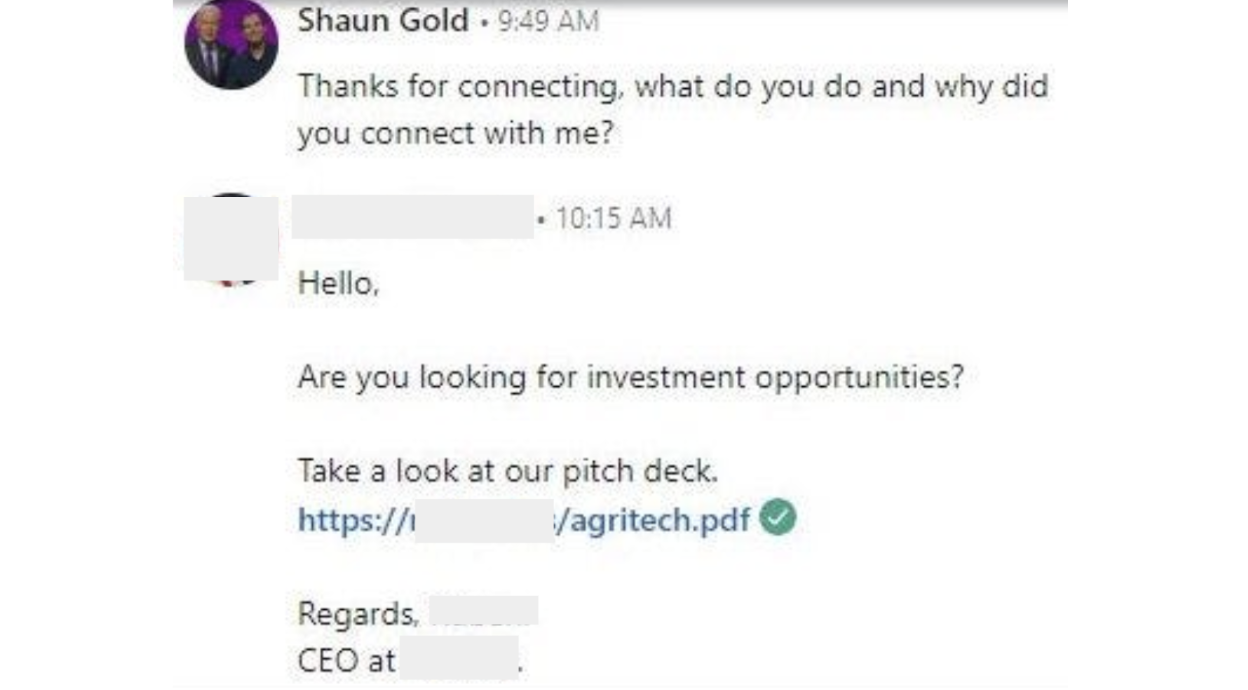
These compound, and each one drags down the effectiveness of everything else. If you want a laugh and a lesson at the same time, our post Founders, For The Love of God, Don't Do This is full of real screenshots of outreach gone wrong. Worth a look before you send anything.
Conclusion: Start Warm, End Cold
Investor outreach isn't about the perfect email template.
It's not about subject line tricks, personalization hacks, or growth-hacking your way into someone's inbox.
The campaigns that work are built on fundamentals. Fundability, signal, targeting, access, and process all matter more than the exact words in your email. Founders who only focus on outreach miss the bigger picture entirely.
The best outcomes come from building momentum before you reach out, working your warm paths first, and using cold outreach as a strategic fallback rather than your opening move. Get the fundamentals right and a clean, connected process behind them, and outreach stops feeling like shouting into the void.
Start warm. End cold.
Find your ideal investors now
Browse 16,000+ investors, share your pitch deck, and manage replies - all for free.
Get Started Now



![12 Best Startup Financial Model Templates [Free & Paid]](https://d1pnnwteuly8z3.cloudfront.net/images/177302d9-3657-45b7-ac9d-acf801d83a74/019fadd2-2388-77a4-a43e-6c44f536d546.jpg)