An interview with Nick Callegari, founder of Verustruct , on the realities of raising a pre-seed round: the slow start, the tactical pivots, and the single warm intro that changed everything.
Table of Contents
We Build A Robot That Climbs the Wall It's Printing
Shaun Gold from OpenVC: Let's start with the quick version. What are you building?
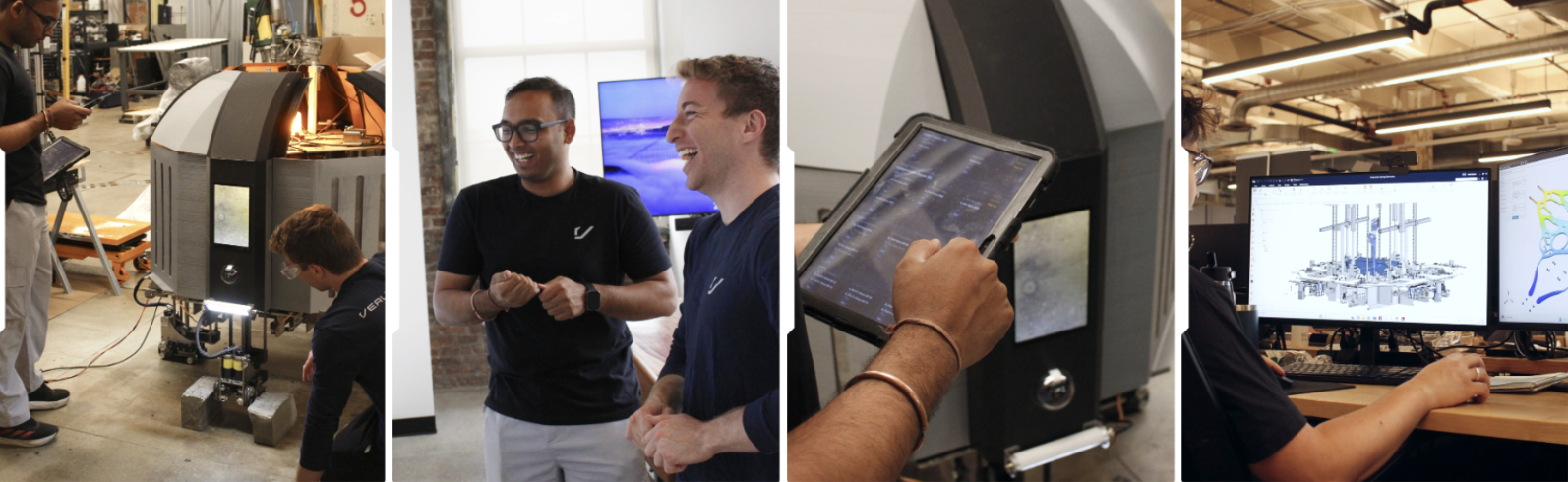
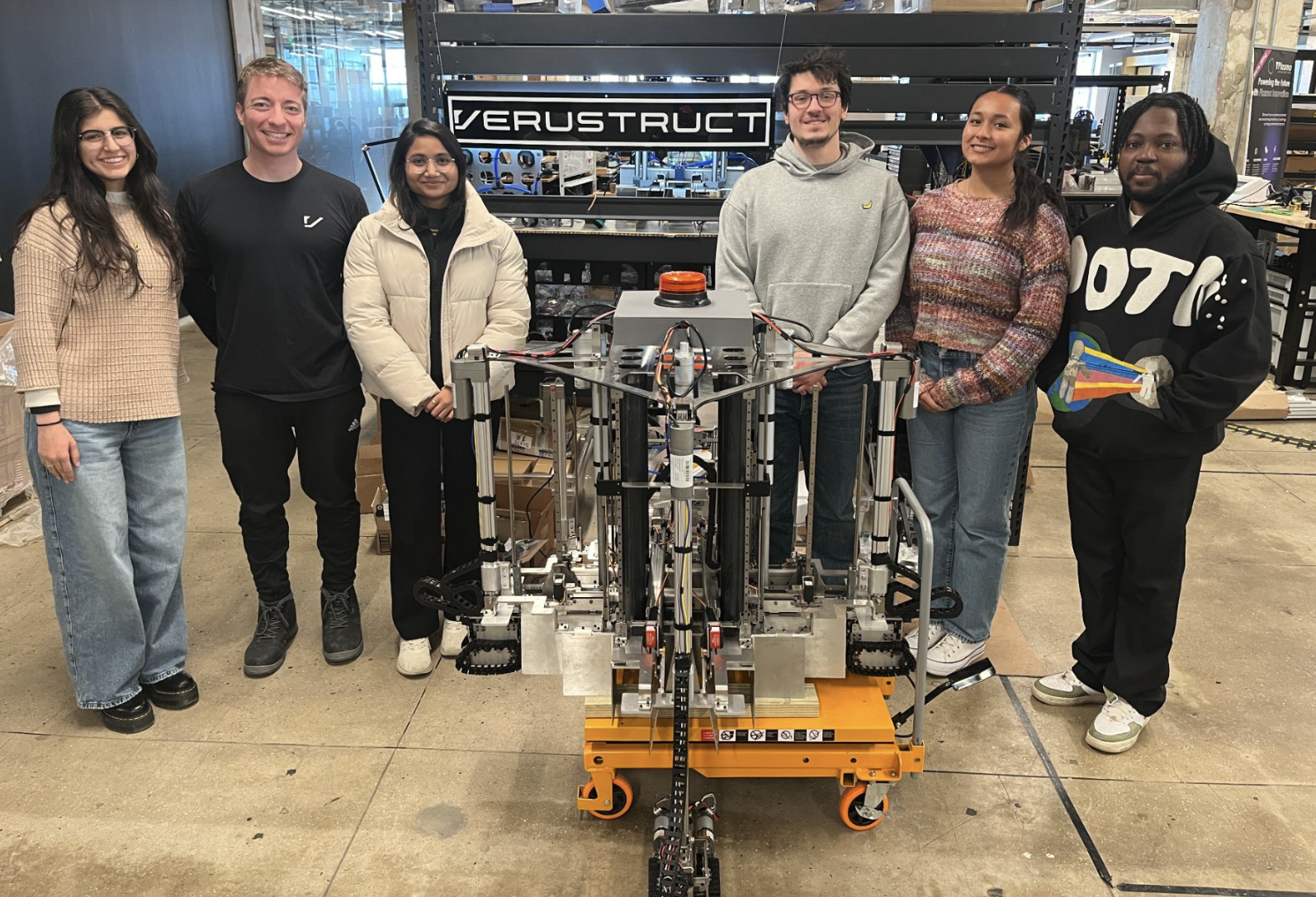
Nick Callegari: We're taking a completely new approach to automating construction on the job site, with the goal of building more housing and commercial structures at scale. The way we're doing it is by significantly reducing labor through robots that automate work directly on site, while using ubiquitous, code-compliant materials.
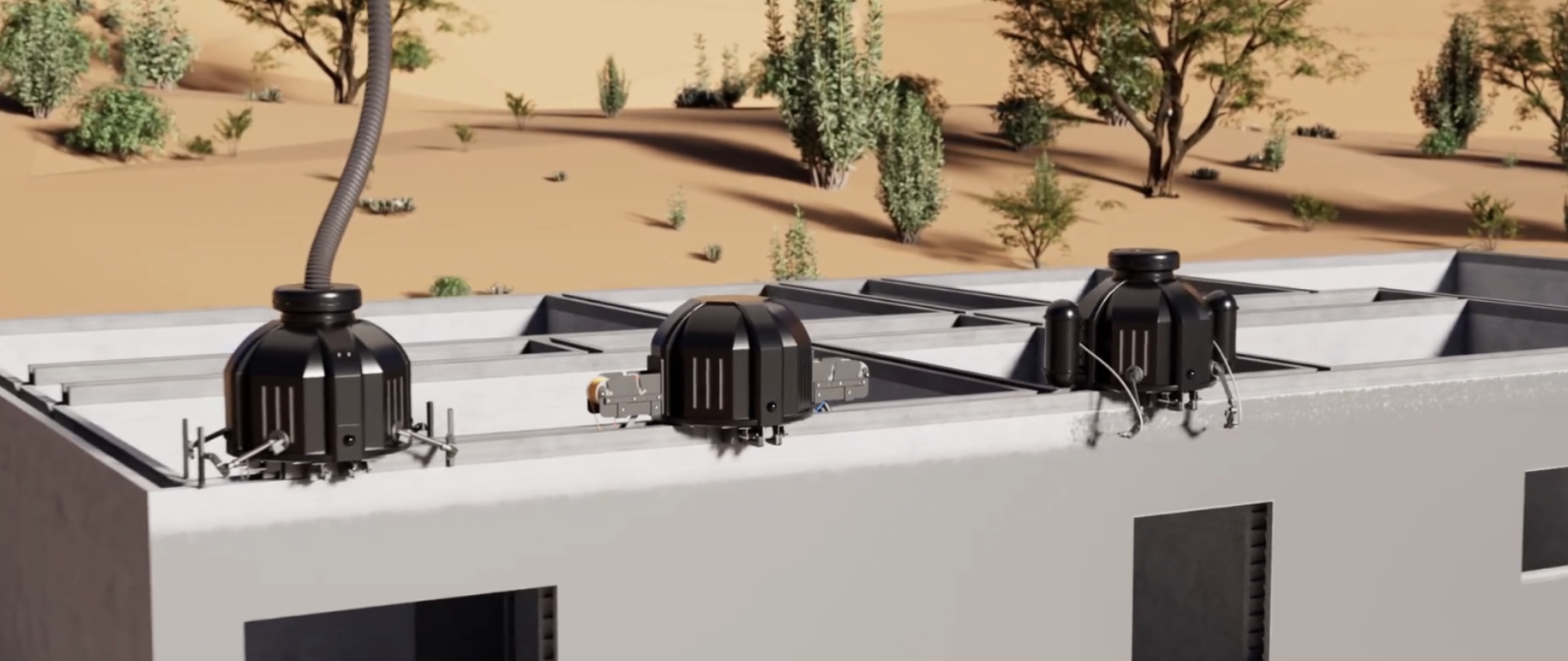
If you've seen something like ICON's 3D construction printer, they use a large nozzle-based system mounted on a gantry, a big support frame. We do something fundamentally different. We use the structure itself as it's being printed as a support system. Every layer of a wall we print becomes the foundation for the next layer, and the device actually climbs on those layers as they're deposited.
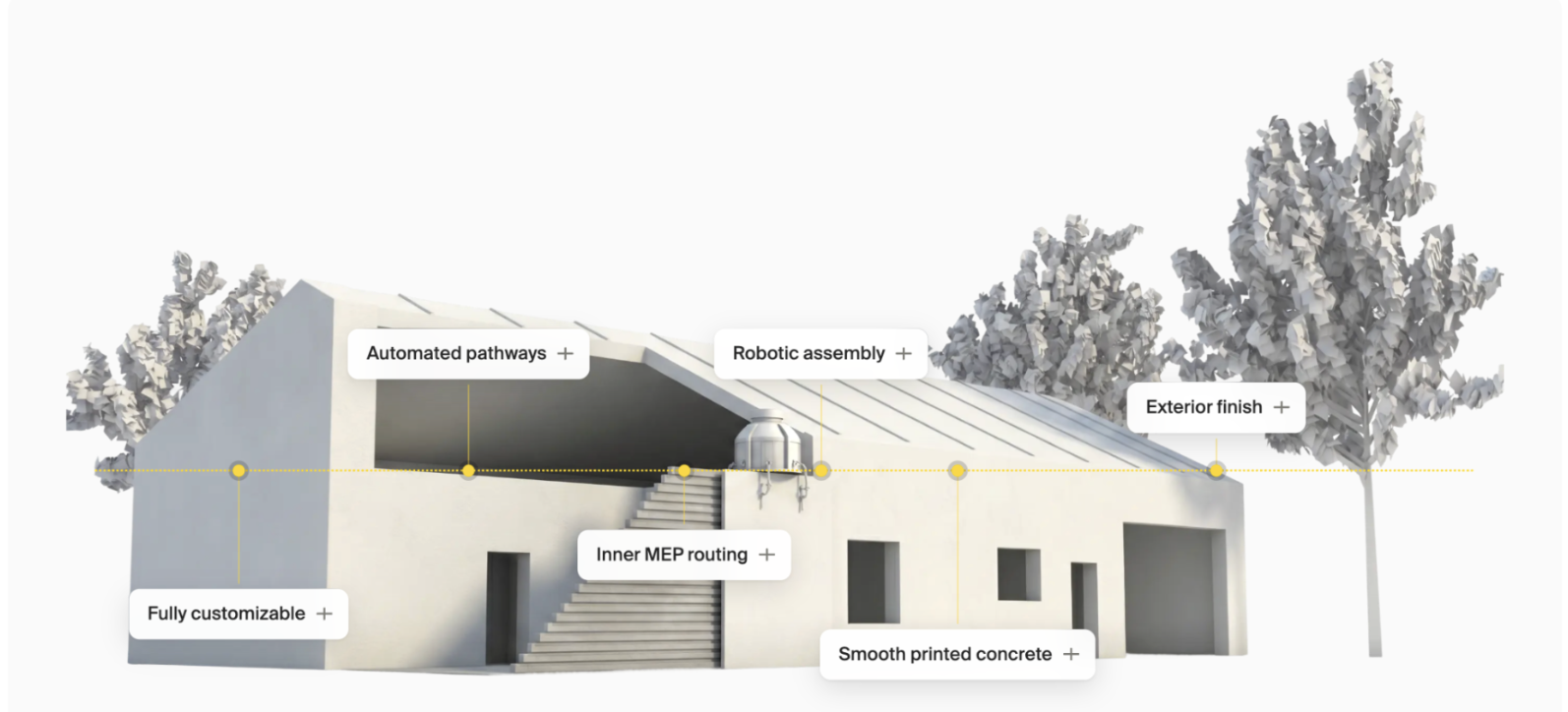
The result is that our CapEx is reduced by an order of magnitude. And because each layer has a track embedded within it, other robots can work simultaneously on separate tasks: routing electrical, installing plumbing, adding insulation, applying finish and paint, all at once. So you end up with a fully automated, complete wall. We're talking about building these walls in under a couple of days rather than months of coordinating different subcontractors.
OpenVC: Cheaper materials, faster timelines, less labor. That's a lot of wins stacking up.
Nick: Exactly. Cheaper materials, more sustainable, significantly faster. It's a win-win on the cost side across the board.
Our Pre-Seed Reality: A Tabletop Demo, One Engineer, and a Vision
OpenVC: When you kicked off this pre-seed round, what traction did you actually have?
Nick: We had a small-scale tabletop prototype demonstrating the core concept, a small section of a printed wall showing how the device would scale. That was it on the hardware side. We also had a provisional patent that had since been converted to a non-provisional, and we had about ten interns in various capacities, what we called our "intern army." I was a solo founder at that point, with one full-time engineer. So we were still pretty small.
The traction was really the story and the vision. That's what we were selling.
OpenVC: And what made you feel like the timing was right to raise?
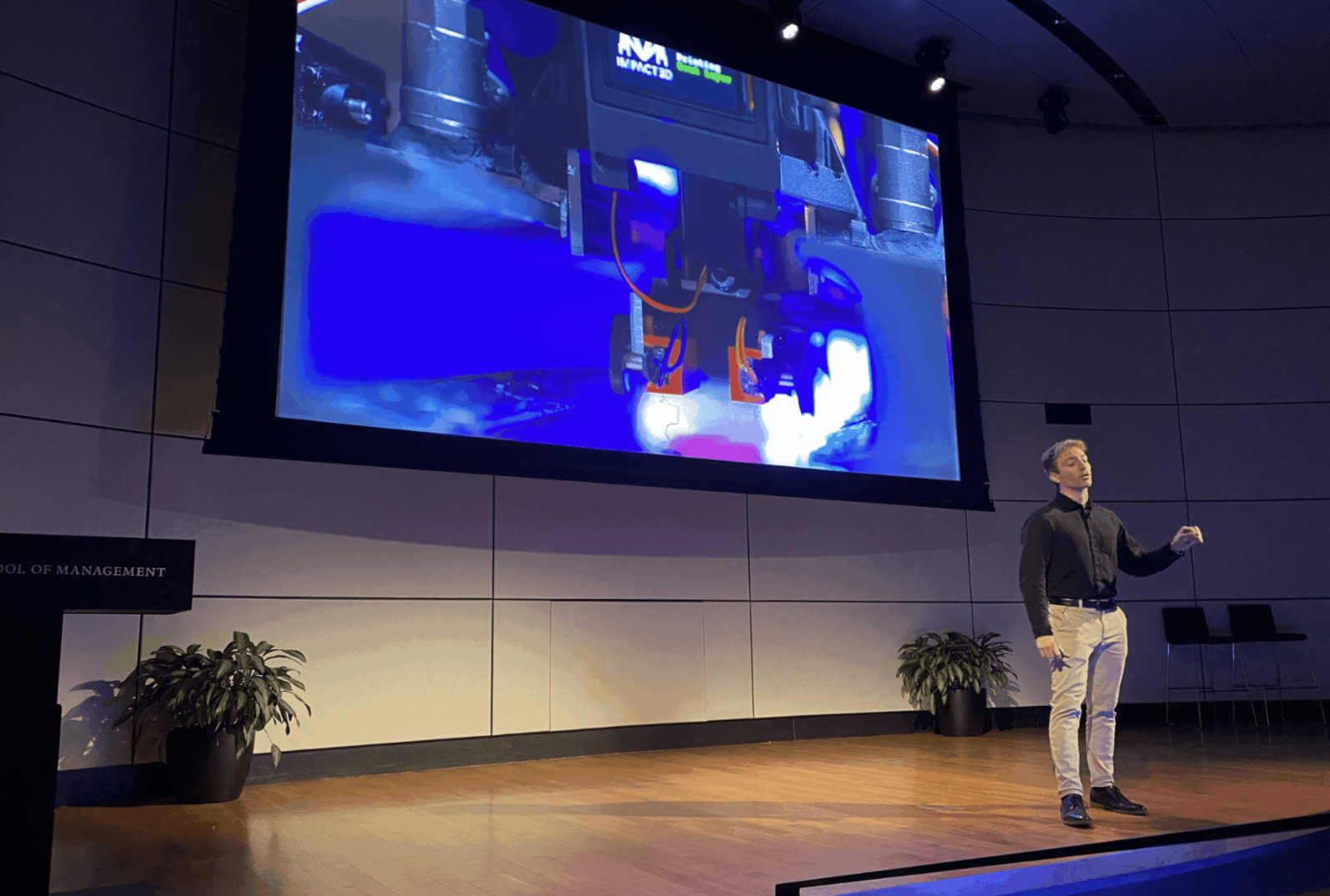
Nick: I had just graduated from Yale with an MBA. Before that, I was a structural engineer at SpaceX. I looked at what I was working on at Verustruct and thought: this is what I want to spend the next 25 or 30 years on. So I might as well commit to it fully and give it the best shot I can.
We had already raised about $120,000 in non-dilutive funding through awards and grants, partly because we were one of the only hardware companies in the Yale ecosystem, which helped us stand out. We had that as a foundation, we had the vision, we had a plan for building out the team and developing full-scale devices within 8 to 12 months, and I thought: let's go. In retrospect, I kicked it off in the summer, which probably wasn't ideal timing given that a lot of VCs were on vacation. But it still worked out.
OpenVC: What was the target raise going in?
Nick: We bounced around a fair amount, between $3 million and $1.7 million, and at one point even considered a million. A lot of that fluctuation came from conversations with investors who would nudge me in different directions. I was raising for the first time and I was still learning. Someone would say, "That makes sense, but have you considered this?" and I'd adjust the story. In hindsight, I should have had more conviction around a specific number and stuck with it from the start. I eventually did settle in, but it cost me some time early on.
OpenVC: What were the milestones attached to the round?
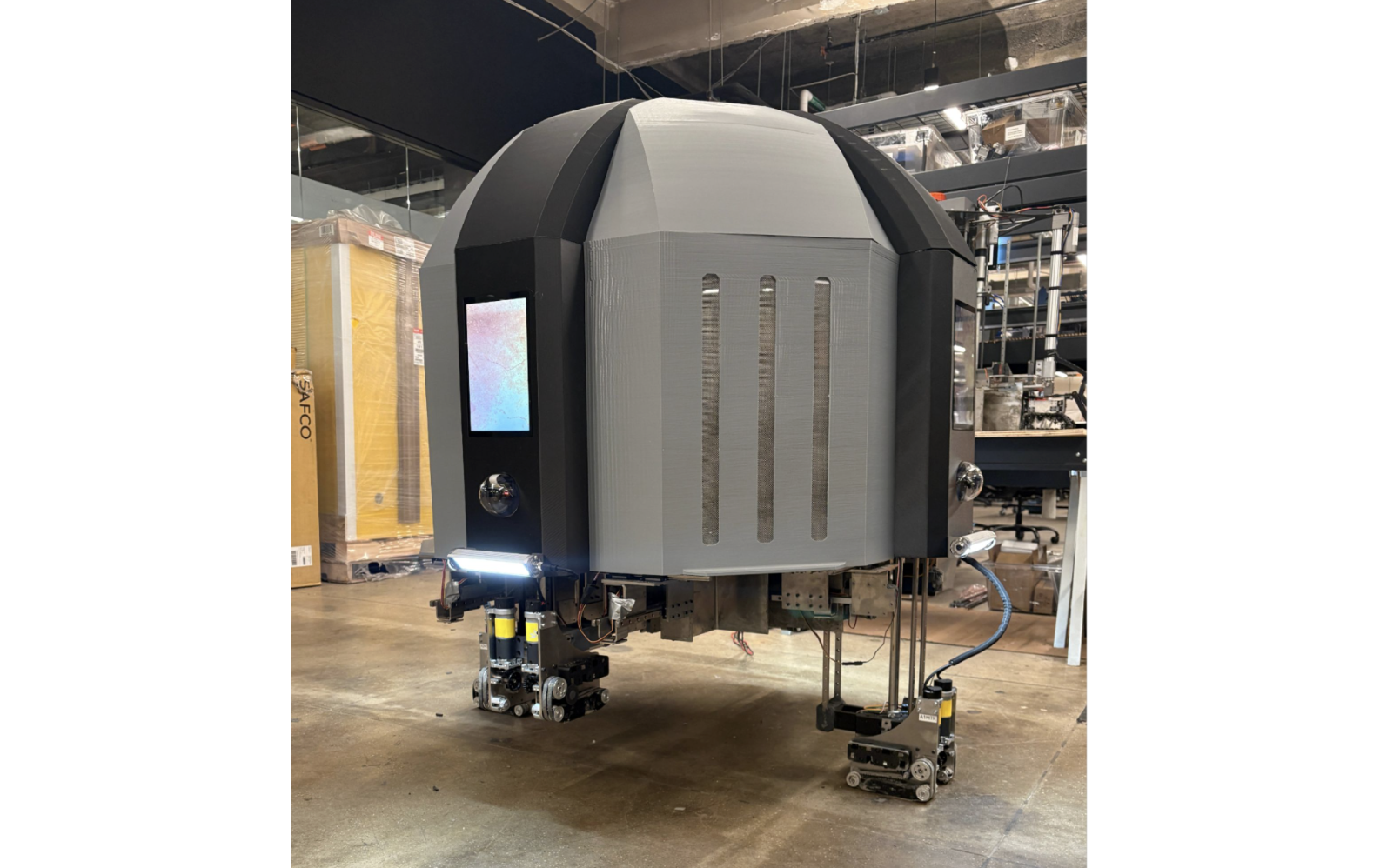
Nick: Our primary goal was to build a demonstration room, a physical space proving that we could print using this novel approach. Smooth walls, sharp corners, with a device that's completely untethered from a large support structure, fed material directly from something like a concrete truck. If we could achieve that, it would unlock the seed round, a much larger infusion of capital to build more devices and deploy them in the field for pilot homes.
We're currently on prototype number six for the full-scale device, and we're getting very close to being able to reliably print those walls.
Raising Capital Was a Psychological Nightmare for Us
OpenVC: When you started this round, how did you expect it to go?
Nick: People in our incubator (we were at ClimateHaven in New Haven) told me to expect three to five months and that summer would make it harder. So I went in with realistic expectations: this is going to take time, and it might not work. We did the OpenVC fundability assessment, which was useful. I came in wanting to beat those timelines, and we landed somewhere in between. It closed faster than three to five months, but it wasn't fast. We finished in roughly two to two-and-a-half months total, though almost all the momentum came in the final few weeks.
OpenVC: What did the first few weeks actually feel like?
Nick: Slow. Really slow. You put your pitch deck up, you send some cold outreach, and then it's mostly silence. Maybe a couple of emails a week. You're trying to line up conversations and most of the time you just don't get responses. And when you do get conversations, they don't go anywhere.
It was frustrating because I had this urgency: I wanted to move quickly, show traction, get back to building. But it was just slow and painful. Eventually, we got smarter. We started going directly to founders in adjacent spaces, asking for advice, and those relationships naturally evolved into introductions to investors. That's when things started to shift. About a month to a month-and-a-half in, we had conversations every single day, and then multiple conversations a day. It starts compounding fast once you have momentum.
OpenVC: Was there a real low point?
Nick: There were definitely tough moments. Getting rejected for reasons that felt avoidable, where you think, if I had just explained this one thing differently, they would have understood. And sometimes you'd get feedback from investors that felt less like advice and more like a personal critique. You have to learn to receive that, look for what's actually useful in it, and not let it break you.
But I never seriously considered stopping. I always came back to: I believe in what we're building. This is going to happen. It's just a matter of when.
OpenVC: Everyone sees the announcement. Nobody sees what comes before it.
Nick: Exactly. The announcement is fun. "Look what we raised." But they don't see the hundreds of conversations, the rejections, the advice that contradicts itself, the weeks of silence.
Three Things Closed the Round for Us: Warm Intros, a Fixed Story, and Early FOMO
OpenVC: Looking back, what were you doing wrong early on?
Nick: A few things. The biggest was relying on cold outreach. Investors receive a constant stream of cold messages. What's going to make yours stand out? A warm introduction creates an immediate bridge of trust that cold outreach simply can't replicate. I should have led with a founder-first strategy from day one: find founders working in comparably difficult spaces who aren't direct competitors, build a genuine relationship, ask for advice, and then if the conversation goes well, they'll often organically offer to introduce you to investors they think would be a good fit.
Those conversations, because the investor already has a relationship with that founder, were categorically different from any cold outreach we did. Almost all of our funding ultimately came through that pathway.
The second thing was spending too much time on the pitch deck. We kept refining it based on conflicting feedback: make it more technical, make it shorter, add this, remove that. At some point, you have to commit to a deck that you believe in and that tells your story clearly. The deck's job is to get you the first meeting. Once you're in that meeting, it's your job to get the next one.
And the third thing, and this is huge, is creating urgency and FOMO from the start. We ground through about two months of conversations. But the moment we had multiple commitments in place and could tell people "we're closing in two weeks, we have several investors already committed," everything accelerated. We raised over two million dollars in the final few weeks largely because of that momentum. If I had secured a few small soft commitments before officially opening the round, even from friends and family who were accredited investors putting in $5,000 or $10,000 on a SAFE, I could have created that sense of urgency from the very beginning.
OpenVC: Did you have a system in place for tracking all of this?
Nick: We built our own. We tracked things in an Excel sheet initially, with columns for when I spoke to each investor, when I should follow up, when to reach back out if I hadn't heard anything. That evolved into a Notion database as the volume of conversations grew. With 15-plus conversations in flight at a time while also running a company, you need something clean and well-documented. I kept it open every morning, scanned through it, and knew exactly who needed attention that day.
OpenVC: When did you start treating fundraising as a structured process rather than a series of conversations?
Nick: Around 15 conversations in. That's when it became clear just how quickly things could slip through the cracks. I had other things to manage: building the company, the technology, the team. Fundraising had to live in a system, not just in my head.
OpenVC: How did you qualify investors and prioritize who to contact first?
Nick: Early on we focused on impact-focused investors and smaller, less prominent firms. Part of it was strategic: I wanted to practice the pitch with lower-stakes conversations before going into major institutional funds. Angels, local forums like the Angel Investment Forum in Connecticut, and OpenVC were all useful for getting reps in.
But we also learned quickly that impact funds often advertise as pre-seed while quietly expecting seed-stage traction. They're already taking a risk on the social mission, so they want more proof of concept. Once we recognized that, we pivoted toward hardware-focused deep-tech VC firms, investors who already understand that hardware takes time and are willing to bet on vision at the pre-seed stage. That reframe made a significant difference.
We also started using investor databases to qualify investors before reaching out, understanding their check sizes, their recent investments, their dry powder. And we'd open conversations by being upfront: we're looking for investors with this profile; if that doesn't fit, no problem ending the call here. Investors respected that. It saved everyone's time.
Francis Put In $10K and Introduced us to $500K More
OpenVC: Where did OpenVC fit in the overall fundraising stack?
Nick: It was most useful earlier in the round when we were looking to get angels involved. It's honest to say that for a pre-seed hardware and robotics company, the volume of inbound wasn't enormous. OpenVC skews toward SaaS, which is a much larger universe of investors on the platform. But we extracted real value early on, and the value we did get was significant.
OpenVC: That's where Francis came in.
Nick: Exactly. Francis actually reached out to us, inbound. He'd seen the deck we'd posted and said he'd love to learn more. We had one conversation, I shared some additional information, and within about a week he was in. Small check initially, $5,000, which he doubled to $10,000 after seeing some of our subsequent traction.
But the monetary value of the check was almost secondary. Francis immediately started making introductions. He connected us with people who connected us with more people. When I try to trace how much capital came through the network Francis opened up, directly or one degree removed, it's somewhere in the $250,000 to $500,000 range. And there are people he introduced us to who passed on the pre-seed but have given verbal commitments on the seed round: if we complete the demo room, they're in for a significant amount.
OpenVC: One introduction from a $10K angel.
Nick: That's the point. It's a chain reaction. You don't need one person writing a $10 million check. You need one person who believes in you, who has a network, and who's willing to make calls on your behalf. Francis was that person for us. It all branched from that one relationship.
The Angels Gave More Than Capital - They Gave the Most Valuable Advice
OpenVC: Now that you've closed the round, how do you think about the balance between angels and institutional funds?
Nick: Don't overlook angels. For us, the angels in this round have been the most engaged, the most hands-on with advice as we've been developing the technology and building out the team. Funds are important too, but a healthy mix gives you the best of both worlds. Too many angels on a round this size can become logistically complex: you have a lot of people to coordinate with. But having a meaningful chunk of angels alongside institutional capital means you still have people who are invested enough to make introductions, help you find talent, connect you to municipalities or developers or other strategic contacts in their networks.
Beyond capital, what we were really looking for was strategic access: connections in the cities where we want to operate, relationships with developers and construction industry players, introductions to potential hires, advice from people who understand hardware timelines. Capital is the entry ticket. The relationships are the real asset.
OpenVC: What actually changed once you closed the round?
Nick: We could finally build a full-time team. We had operational runway to hire people, develop full-scale devices, and make meaningful progress. It unlocked doors that had been locked. In the eight months since the round, we've made significant strides and we're getting ready for the seed round this September. We're on the flywheel now. To build housing at scale, you have to move fast. To move fast, you need the right team. To get the right team, you need the right capital. It all connects.
Belief, Story, FOMO - That's the Whole Playbook
OpenVC: What advice would you give another founder raising right now?
Nick: Believe in yourself, craft your story, and create FOMO.
OpenVC: And what's the one piece of advice you wish you'd had from the start?
Nick: Get early commitments before you officially open the round. Find people in your network, friends, mentors, acquaintances who are accredited investors, who believe in what you're building. Get even a few small checks committed on a SAFE note before you start your outreach. Because the moment you can say to a new investor, "we already have multiple commitments," their ears perk up. Somebody else already believes in this. Maybe I should too. That social proof is enormously powerful, and I could have created it much earlier than I did.
OpenVC: Last question. If you had to summarize the entire fundraising journey in one sentence, what would you say?
Nick: It's like surfing. Waves will come. And if you miss one, there's always another one behind it. So go for it. Don't be afraid to send it.
OpenVC: Are you actually a surfer, or did that just come to you?
Nick: I'm a surfer. Yeah.
OpenVC: I knew it. That's too clean a metaphor to be accidental.
About Nick Callegari from Verustruct
Nick Callegari is the founder of Verustruct , a construction automation robotics company. He holds an MBA from Yale University and previously worked as a structural engineer at SpaceX. Verustruct's pre-seed round was backed by Necessary Ventures, Boost, Anorak Ventures, Mana Ventures, HAX (operated by SOSV), RPV, and individual angels including Francis Santora, who connected with the company through OpenVC. Follow Verustruct on LinkedIn .

![12 Best Startup Financial Model Templates [Free & Paid]](https://d1pnnwteuly8z3.cloudfront.net/images/177302d9-3657-45b7-ac9d-acf801d83a74/1b029edf-43cf-4bd9-9e37-203f66bf426f.png)