An interview with Dax Hamman, co-founder of FOMO.ai, on raising entirely through SAFE notes, why getting fast rejections is a strategy, and the concept of building gravitational pull around your company.
Table of Contents
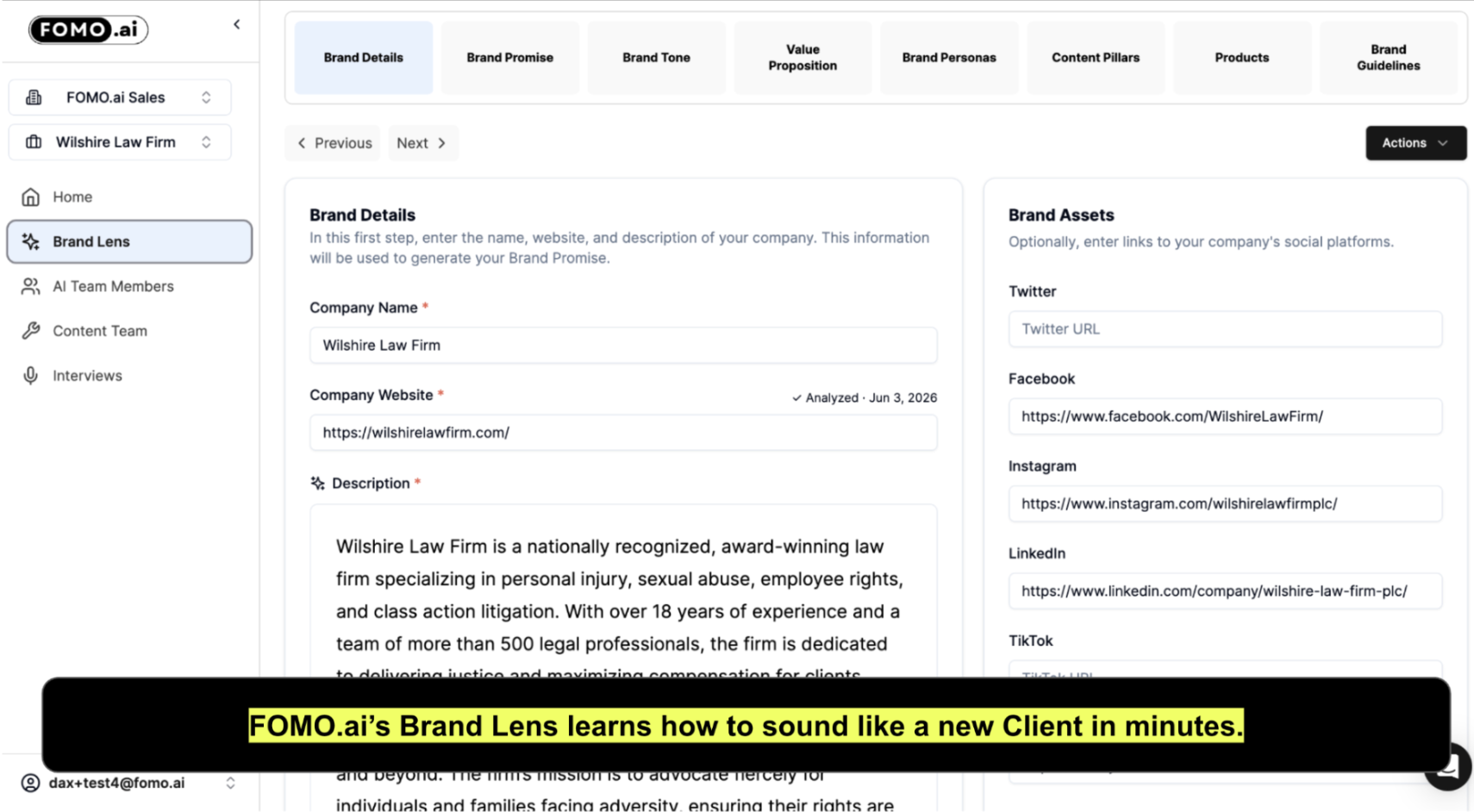
We are a human+technology marketing company for the AI age
Shaun Gold from OpenVC: Give us the quick version: what's the company, what problem are you solving, what's the value proposition?
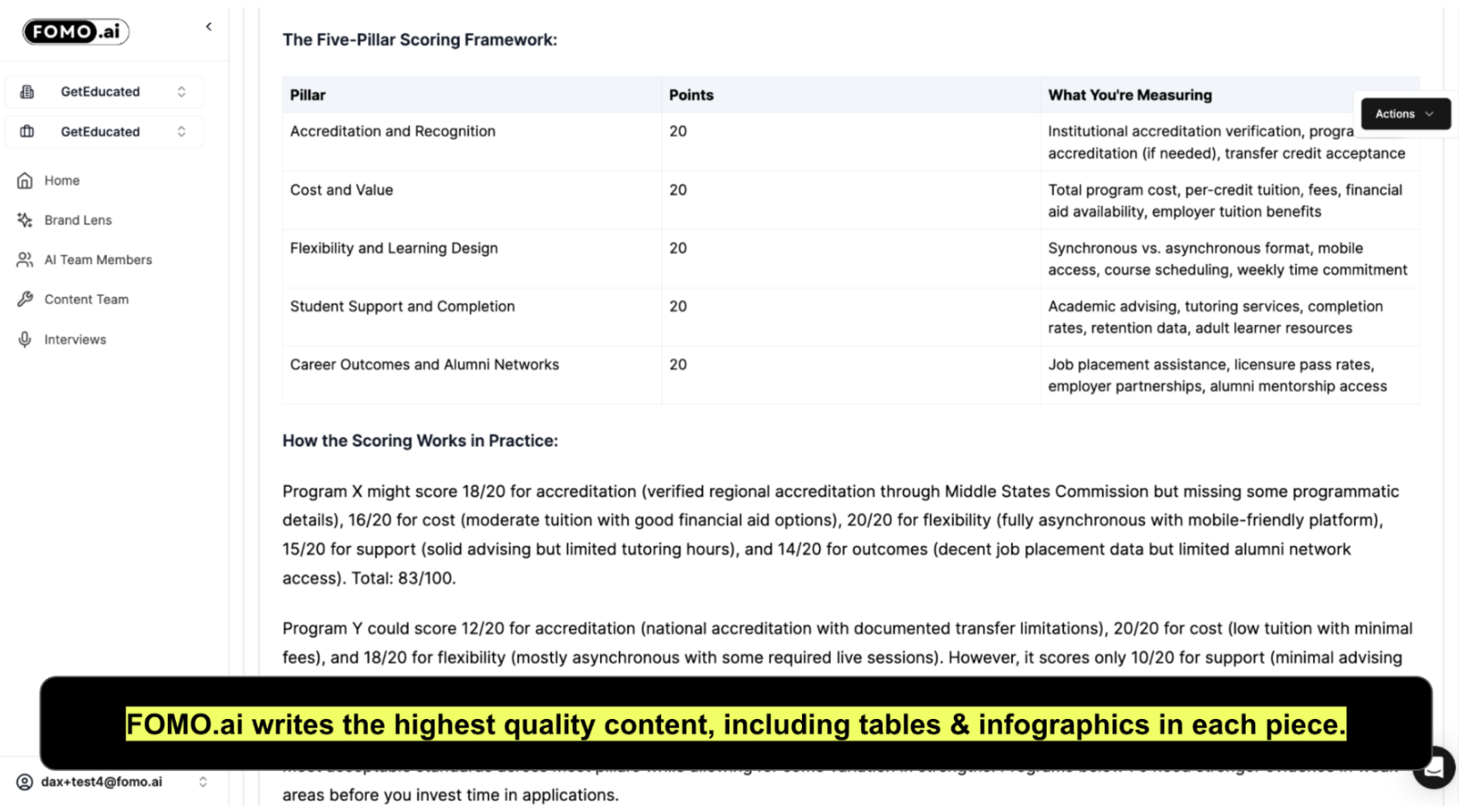
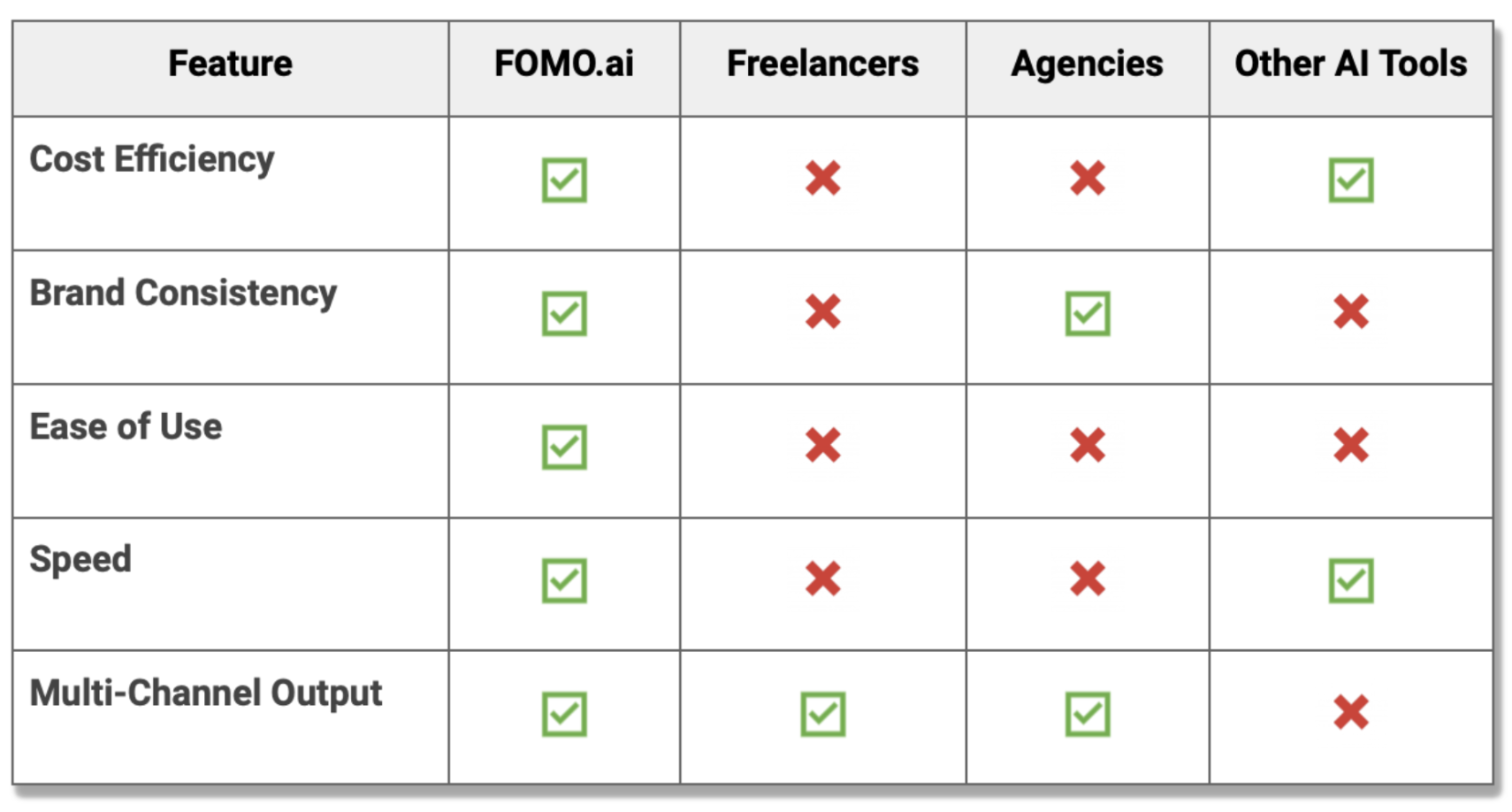
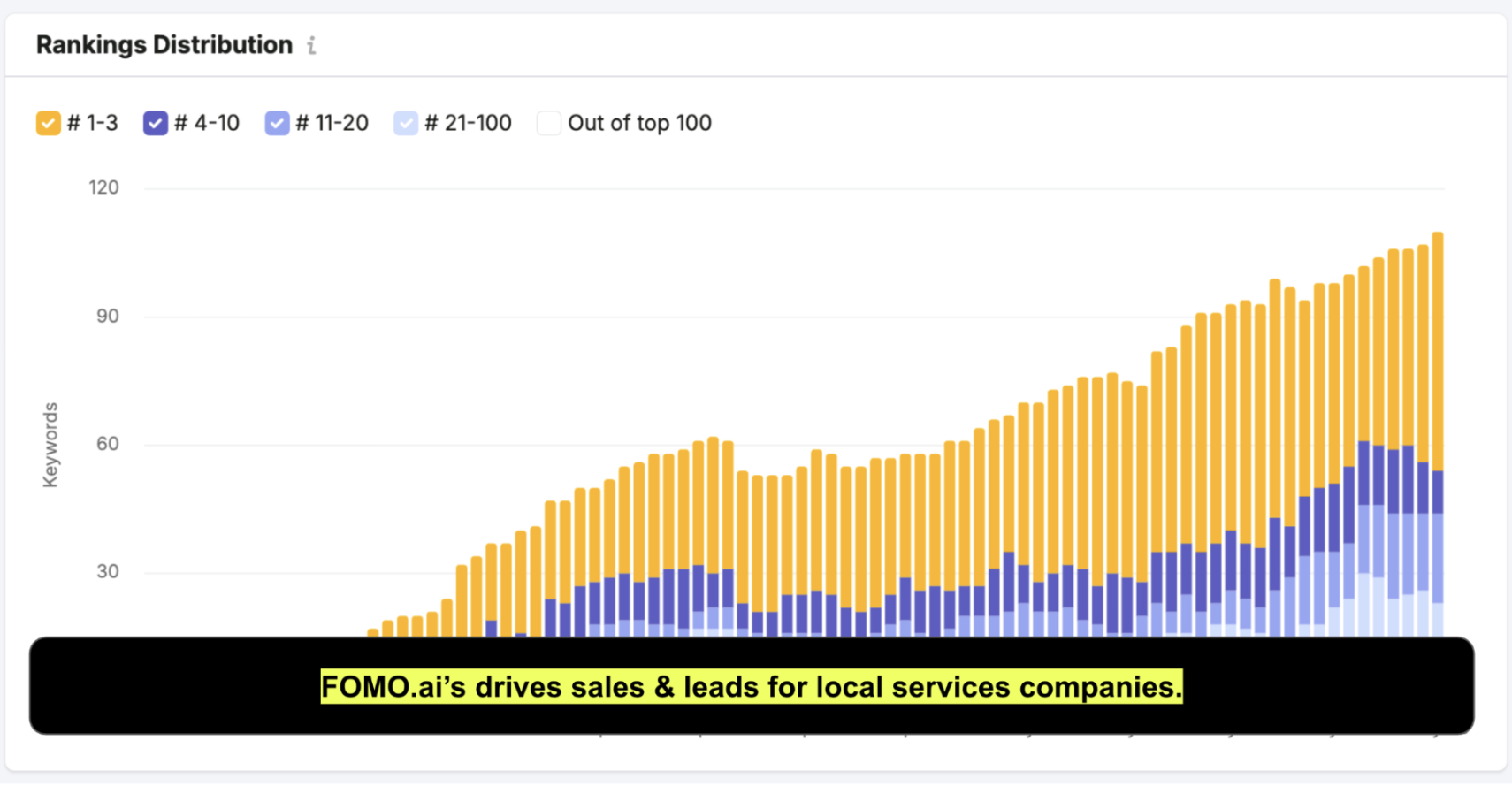
Dax Hamman: We're focused on generating sales and leads for clients without them relying on paid ads. We do that by taking ownership of all their organic channels, including AI search optimization (what people used to call SEO, now called AEO, GEO, and so on), content marketing, thought leadership, and by turning their website into their best salesperson. And because we're a technology company, we can do it in a way that saves clients serious money, often replacing a $10,000-a-month agency. We've driven close to $20 million in organic revenue for one of our clients. We're really good at what we do.
But we also have a core principle that's non-standard, similar to our raise. Most of the industry is trying to use AI to go faster or cheaper - usually to increase margins. We fundamentally believe that's the wrong goal. Our equation is: faster plus cheaper should equal better, something genuinely better for the client.
Two examples of what "better" looks like in practice. One: we write better-than-human-quality content for thought leadership, content marketing, and SEO. Why better than human quality? Because honestly, most human-produced content is not very good. We passed that benchmark about six months ago, and clients love it.
Two: we fully replace websites and turn them into a company's best marketing asset. A traditional website project is miserable - four months of wireframes, look-and-feels, content layout plans that business owners are expected to conceptualize from scratch, and they end up $10,000 to $20,000 poorer with a burden rather than an asset. Our process is different. After one call, we build nine fully realized versions of the client's website. They can interact with them, read them, give feedback. We build the final site from there. That's what faster plus cheaper enabling better actually looks like.
We Hit $50K MRR Before Raising a Single Dollar
OpenVC: Before you started to raise, what traction did you have?
Dax: My co-founder and I have always believed - and this is why I have a publication called Hard Part First - that from day one you have to put as much time and effort into distribution as you do into engineering and product. We launched in October 2023. Within our first 60 days, we had paying clients.
We operate under a principle we call the forcing function. One of our earliest clients, who's still with us today and who we've had enormous success with, probably doesn't know this: for their first 30 days, we were doing everything 100% with humans behind the scenes. That was our process deliberately. You win the client with the use case you want to solve. You throw the best humans in the world at it. You help those humans document and automate their process. Then you turn it into product through development.
By the time our very first outside money came in - a $250,000 seed check in March 2024, six months after launch - we had nine or ten paying clients and were doing around $50,000 a month in revenue.
SAFE Notes Only, No Priced Round.
OpenVC: You mentioned your raise is non-traditional. Walk me through it.
Dax: We've raised entirely on SAFE notes and we'll never do a priced round. When you raise that way, you're sort of always in the round. We've raised $1.6 million to date, we'll bring in another $600,000, and that will take us to the finish line. So $2.2 million total.
My previous ad tech company needed $15 million and VCs were the only path. It's a different world today. Building a technology company with this little capital would have been absolutely impossible five years ago. Now it's very possible.
We started raising at a $7.5 million post-money valuation and we've been bringing in the most recent money at $20 million post. The upside of doing it this way is that my co-founder and I have maintained enough ownership that we have real optionality. We could potentially be in an acquisition process by the end of 2026. Sequoia just published something about the next trillion-dollar companies being technology-enabled service companies, which I think is pretty compelling validation of our thesis. The way we've raised, we've preserved the equity to make interesting decisions rather than being forced into them.
The downside? Having this many investors, ranging from $25,000 to $700,000 with a couple of $100,000 and $250,000 checks in between, is far more time-consuming than doing one structured, timed round. That's the real cost of this approach, and founders should go in clear-eyed about it.
Combining Hands-Off Money And Strategic Investors
OpenVC: What does your ideal investor profile actually look like?
Dax: I'll answer that in layers. At the highest level, the answer is simply: anyone who is happy doing a SAFE note investment.
The second level is that I like investors on one end or the other of a spectrum. On one end, I have individuals who don't particularly understand the business. They liked me and my co-founder, they got excited about the idea, they wrote a check. Outside of one of my investors very generously taking me fly fishing recently, I don't interact with them day-to-day.
On the opposite end, I have a prolific New York investor who backed our previous company. I have the former CMO of Citigroup and E*Trade. I have the former SVP of marketing at Williams-Sonoma. Those people I also love because they don't really expect much from me day-to-day, but when I need to call an expert for guidance, I can.
The middle ground, the investors who want to be involved but bring noise instead of strategic value, is where things become distracting. I've stayed away from that.
At the more tactical level: individuals are wonderful for us. Angel groups work well. VCs who are genuinely on board with SAFE investments and aligned with our thesis are great too. We initially stayed away from institutional money for a couple of reasons. One, institutional investors nearly killed the exit of our last company - we raised $17 million and sold for $122 million, and we almost lost that deal because of a board member who kept voting it down. And two, when we started two and a half years ago, no VC wanted to invest in a SaaS tool that deliberately included humans in the process. We are a purposeful human-technology hybrid, and now I see VCs publishing theses as though they invented that concept (we didn’t invent it either of course!). They would have had very little interest in us at the door two and a half years ago.
Every Small Check Comes With a Hidden Tax
OpenVC: Every outsider only sees the final announcement. Nobody sees the messy middle. Do you have one?
Dax: Absolutely. And the messy middle for us is structural. If I had gone out early and secured, say, a million dollars from one firm and another million when we were a little bigger, I would have saved myself an enormous amount of opportunity cost. Managing this many investor pitches, tracking those relationships, fielding their questions - it's far more time-consuming than a clean, structured, timed round.
The positive side is the equity position we've preserved and the optionality that comes with it. But founders should be honest with themselves: doing it the way we did creates its own form of slog. It's a different kind of hard, not an easier kind of hard.
And there's a comical dynamic that comes with it too. Many of the angel groups we spoke to early on said no because they didn't want the risk. Now that we're further on in our growth, some of those same groups feel like it's too late and we should have called them a year earlier. The year earlier when they wouldn't have invested anyway. It's circular and it's fairly predictable, but it’s important to have accountability, and perhaps they would have if I had pitched better a year ago.
We Booked 20 Meetings in 60 Days on OpenVC
OpenVC: What role did OpenVC play in the raise?
Dax: Two things. You brought in Rahul as an investor, which is great. He's a lead engineer at MAG7, and it's always useful for other investors to see that someone who knows more than them about technology looked at what we're doing and said yes. He committed after one 25-minute call.
But the second thing, which I think is significantly undervalued, is that you helped us get a lot of rejections very, very fast. And from those rejections, we were able to define our IIP - our Ideal Investor Profile - much faster than we otherwise would have. We were talking to everyone at first: big funds, small funds, angel groups, pitch days. We could have wasted another three or four months doing that. Because OpenVC helped us book 15 to 20 meetings within about a 60-to-70-day window, we learned what worked and what didn't far faster than we would have on our own.
OpenVC is not expensive. I referred two founders to you yesterday because of that. The value of being able to reach investors at scale quickly and for very little money is real.
The Fund That Said No
OpenVC: What's a story from the raise that you haven't told before?
Dax: There's one that came through OpenVC, actually. I had two calls with different partners at the same fund. Then they asked for a third call, and every partner showed up. I thought, great, this is it. And the partner leading the call said, "We've all gotten on this call to tell you we're not going to invest."
I asked why. He said, "Because we fundamentally believe that in the next 18 months, you'll have a nine-figure exit, and we think you should take it."
We were only raising at a $17.5 million valuation at the time. I said, "If I get to $175 million, that's a 10x return for you. What's the problem?" He said, "We've committed to our LPs that we only invest in future unicorns. At your current price, we can't buy enough of your company to take a meaningful enough position to prevent you from selling at that number. And so collectively, we think you should take that exit if it comes."
Most of the time you get "too early" or "not the right fit" or some other variation. These people took the time to be genuinely transparent and constructive. I have a huge amount of respect for them. And one of the partners reached out afterward and may well come in as an individual investor now that the fund has officially passed.
Stop Chasing Funds That Will Never Be a Fit
OpenVC: Once things started to click, what did you change and what did you stop doing?
Dax: We stopped wasting time with investors who were never going to be a fit. That sounds obvious, but it takes a while to accept it in practice.
And we leaned harder into what I'd call building gravity. A core job of a founder is to create gravitational pull around your company, pulling in the people you want in your ecosystem: people who are aware of you, excited about you, who just want to be part of the journey. Sometimes those people want something in return. Sometimes they don't. Right now we have two individuals who are passionately excited about us and are going out of their way to set up multiple calls a week on our behalf, calls they join themselves. That's how we're going to close out this round and sign more agency & PE firm partnerships
The gravity concept matters beyond fundraising too. Every potential investor, every potential acquisition partner, every referral client - the more people you're in front of, the more you're known, the more people will mention you when a relevant conversation comes up. You want your name to surface in rooms you're not in. That only happens if you've been building that gravitational pull consistently.
Ask for More Than You Think You Can Get
OpenVC: What would you tell another founder raising right now?
Dax: Founders in the US are stuck in a mindset that there's one set process to follow: raise an angel round, raise a seed, maybe do a post-seed, then work your way through the alphabet. That's not the only path, and increasingly it's not the best one, depending on what size company you are build, of course. Building a technology company with this little capital would have been impossible five years ago. Today it's very possible.
So my first piece of advice: be very careful about giving up equity too early, because you're more in the driving seat than you think.
Second: focus on distribution as much as you focus on product and engineering. I would argue your product decisions should be distribution-led, not the other way around.
And a practical note that applies beyond fundraising: go ask for things you don't think you'll get. When we chose the name FOMO.ai, the domain was listed for $14,000. I didn't know what we were going to build yet, I wasn't paying that. So I offered $250. They said no. But I realized a human being had replied, so I countered. We went back and forth and I got it for $1,400. Ten percent of the asking price. Every dollar at an early stage might be the difference between surviving or not. Go be cheeky. Ask for things. The worst anyone can say is no.
OpenVC: Last question. If you had to summarize your entire fundraising journey in one sentence, what would you say?
Dax: Successful but slow.
OpenVC: Most people take a long pause on that one. You had it immediately.
Dax: I've thought about it.
OpenVC: Is there anything you'd do differently next time?
Dax: I would have spent more time earlier finding the individuals willing to write $500,000 checks. Getting three or four of those people rather than the fourteen I've taken money from so far would have been faster, cleaner, and would have freed me up to focus on more areas of growth in the business. The distributed cap table has real costs. Next time I'd front-load the search for the bigger believers.
About Dax Hamman from FOMO.ai
Dax Hamman is the co-founder of FOMO.ai , a new type of marketing company that helps businesses generate leads and sales without paid advertising. He previously co-founded an ad tech company that raised $17 million and sold for $122 million. FOMO.ai's $2.2 million raise has been conducted entirely through SAFE notes with no priced round. Read more at dax.fyi.

![12 Best Startup Financial Model Templates [Free & Paid]](https://d1pnnwteuly8z3.cloudfront.net/images/177302d9-3657-45b7-ac9d-acf801d83a74/1b029edf-43cf-4bd9-9e37-203f66bf426f.png)