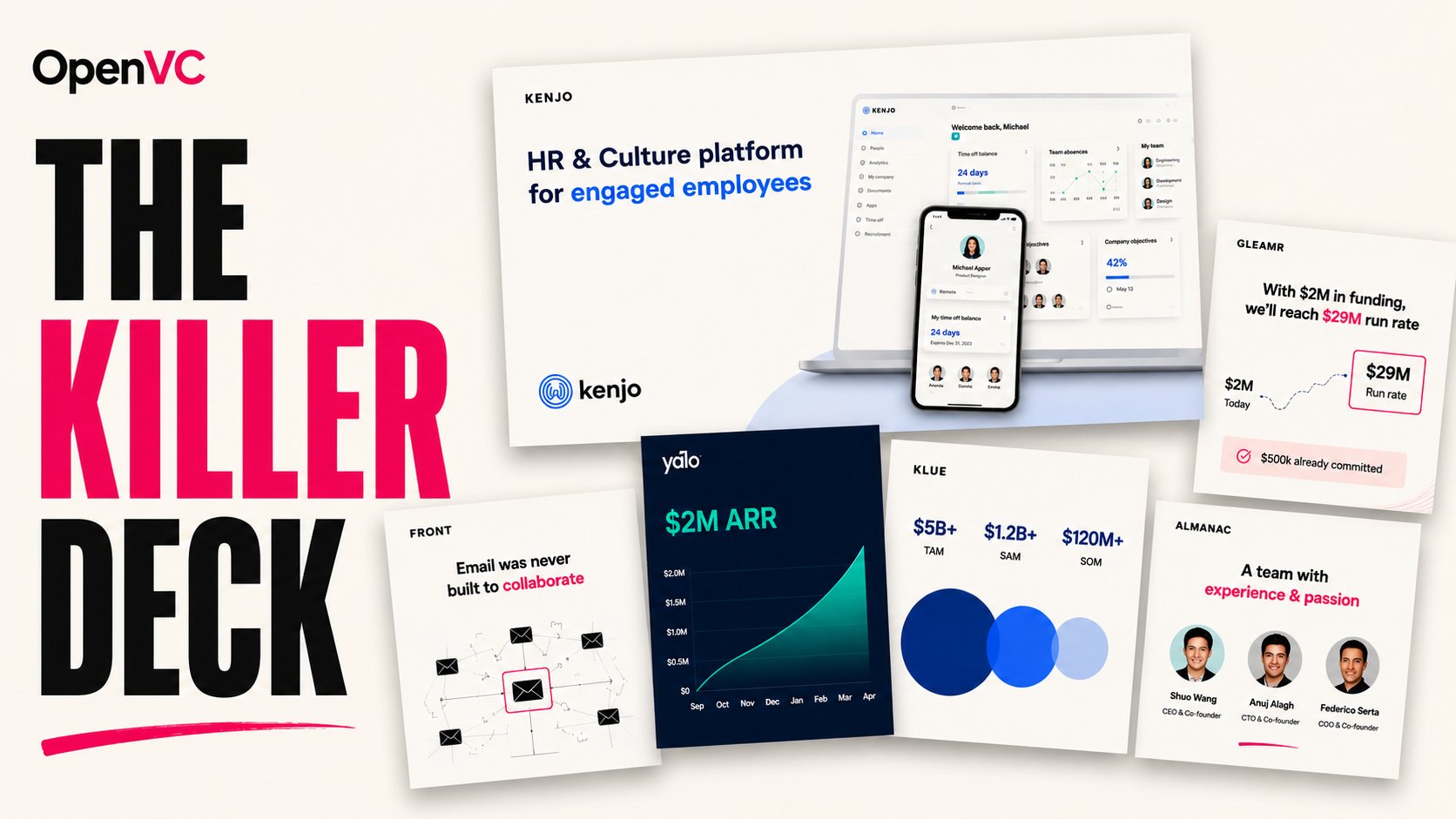
A pitch deck is more than just a series of slides; it's your ticket to capturing an investor's intrigue.
Yet, it’s common to stumble. Every word and image is scrutinized, every claim evaluated, making the creation of a compelling pitch deck a formidable task.
The reality? Crafting this essential tool is tough, particularly for first-time founders. It's a mix of art and science, a balance of information and engagement.
So, if the mere thought of assembling a pitch deck makes your palms sweaty, you're not alone. We’ve identified the important and common pitfalls and, more importantly, how to sidestep them to ensure your deck isn’t just seen but remembered.
Table of Contents
With investors spending less than 3 minutes on a pitch deck, according to DocSend, the stakes have never been higher. Out of the 1,000+ pitch decks crafted daily, a staggering 99% falter. Only a mere 1% of pitches actually secure funding.
Crafting that outstanding pitch deck on your first try is no walk in the park. So, what trips up most founders? Here are the top 10 common pitfalls early founders face in pitch deck creation and strategies to avoid them:
1. Too Many Slides: Information Overdose
It's tempting, as a founder, to pour every detail of your vision into your pitch deck. But consider this: on average, investors dedicate a mere 3 minutes to each deck, with only 1% of pitches seeing funding.
Remember Guy Kawasaki’s rule: "10 slides, 20 minutes, 30-point font." Your deck is a teaser to incite interest, not an exhaustive manual.
Overflowing your deck with slides not only dilutes your core message but might come off as disrespectful to an investor's time. Renowned investor Reid Hoffman emphasizes scheduling priorities. Here, each slide must be a succinct priority, crucial to your startup's essence.

Essential Slides to Include
- Opening Hook: Capture attention with a compelling statement or fact. Make it irresistible for investors to want to learn more.
- Problem/Opportunity: Clearly outline the issue or gap in the market. Ensure it's relatable and underscores a significant market need.
- Why Now: Contextualize urgency. Highlight market trends and dynamics that make the current moment ripe for your solution.
- Your Solution: Provide a snapshot of your product or service. Highlight its uniqueness and effectiveness in addressing the identified problem.
- Market Size & Potential: Quantify the market opportunity. Use credible data to illustrate the potential scale and return on investment.
- Competition & Market Positioning: Identify key competitors. Delineate your unique value proposition and competitive advantage succinctly.
- Traction: Share milestones achieved, customer testimonials, or data. Prove your startup isn’t just an idea, but has momentum.
- Your Team: Spotlight on the team's expertise and experience. Highlight past successes, underscoring the capability to execute the vision.
- Strategy & Vision: Outline the roadmap. Give insights on planned milestones and how you intend to achieve and scale them.
- Financial Projections & The Ask: Present realistic forecasts and clearly state funding requirements. Be precise on the use of funds and expected outcomes.
Best Tips to Avoid this Mistake
How can founders craft a pitch deck that captivates early-stage investors without drowning them in slides or info? Here's what to remember:
- Conciseness is Key: Get straight to the heart of your message. A pitch deck should spark interest, leaving room for deeper dives during follow-up discussions, not drowning the investor in details upfront.
- Visual Simplicity: A picture speaks a thousand words. Use compelling graphics and charts, minimize text, and let the visuals convey your story. This approach holds the attention and facilitates better understanding.
- Ensure Clarity: If your message is wrapped in jargon and complexity, it's time to strip it back. Make your pitch so straightforward that even a ten-year-old would get the gist.
- Limit Text: Overloading slides with text is a surefire attention killer. Stick to the 6-line guideline, ensuring each slide crisply conveys its core message. Use bullet points, keywords, or phrases that highlight your main points.
- Value the Time: Remember, your pitch deck is the appetizer, not the main course. Design it to entice and draw interest swiftly, setting the stage for deeper conversations.
Get free, instant pitch deck feedback 
Catch the issues investors would reject in seconds — before you hit send.
2. Being Too Product-Focused
Enthusiasm for a product is natural, especially when it's your brainchild. But here lies a common pitfall for early founders: sculpting their pitch decks around the product.
The truth? While products intrigue, they don't always translate to investments. Investors don't just buy into products; they buy into visions, markets, teams, and potential returns.
A pitch deck dripping with product details, though brimming with passion, often leaves investors scratching their heads, struggling to decipher the business's broader framework. It's a journey from product to profitability, and investors want a snapshot of that entire journey.

How to Avoid Being Overly Product-Centric
Here are key strategies to strike a balance in your pitch deck, ensuring it's not just product-centric but covers all crucial aspects:
- Bridge Understanding: Investors aren't always industry experts. Present your product in context, highlighting its relevance and market need.
- Market Over Mechanics: Highlight the potential market size, demographics, and growth trajectory more than intricate product features.
- Team and Traction: Emphasize the team's expertise and any traction or milestones achieved. This paints a picture of execution capability.
- Monetize the Model: Clearly depict how your product translates to revenue. Break down the business model and forecasted earnings.
- Save Details for Q&A: Keep intricate product specifics for follow-up sessions or Q&A rounds. This ensures the deck remains streamlined, with room for deeper dives post-pitch.
3. Lack of Storytelling
While the product is undeniably the core, the narrative woven around it can be a game-changer. Many founders, engrossed in their creation, focus solely on the product, leaving the story behind.
But here's the twist: Investors invest in stories, visions, journeys—beyond just the tangible product. A deck might be brimming with data, but without a compelling tale, it's just a lifeless presentation.
Stories evoke emotions, ensuring your pitch isn't just another deck in a pile but a memorable journey that captivates from start to end. Remember, it's the 'why' behind your startup that often resonates more than the 'what'.
Key Tips for the Art of Storytelling
So, how do you captivate potential investors with a riveting narrative in your pitch presentation? Here are essential tips to avoid common pitfalls and ensure your narrative hits the mark:
- Craft a Gripping Opening: Begin with a strong statement or anecdote that captures attention immediately, setting the stage for what's to come.
- Maintain a Logical Flow: Your pitch should have a consistent narrative, smoothly transitioning from one slide to the next, avoiding abrupt jumps.
- Show, Don't Just Tell: Use compelling visuals that complement and enhance your story. Avoid overwhelming data alone.
- Relatability is Key: Share personal experiences, motivations, or challenges that led to the inception of your idea. Investors connect with real, human stories.
- Wrap with a Strong Ending: End on a memorable note. Reinforce your core message and the potential of your venture, leaving a lasting impression.
4. Lack of Market Research
Many early-stage founders, engrossed in their innovative solutions, often neglect the pivotal role of market research. This isn't just about creating a solution, but ensuring that the solution finds its echo in a larger, receptive audience.
Incorporating market research isn’t a checkbox activity; it's the backbone of sustainable growth. Yet, here's where many falter: taking this invaluable research and weaving it into an enthralling narrative for a pitch deck. It’s not just about presenting facts but telling a captivating story.
Ignoring this synthesis of research and storytelling isn’t merely an oversight; it's a critical misstep that could cost traction, interest, and invaluable opportunities. In essence, for startups, skipping the 'market homework' and failing to communicate it effectively can be a potential pitfall.

Essential Steps for Comprehensive Market Research
Here are essential tips on conducting market research and effectively conveying those insights through your pitch presentation:
- Develop a Research Plan: Outline your objectives, methodologies, and expected outcomes. This clarity streamlines the process and illuminates the path ahead.
- Understand Customer Segments: Dive into the demographics, preferences, and pain points of your target audience to tailor your offerings precisely.
- Determine Market Size: Evaluate the number of potential customers, their willingness to pay, and your capability to meet their needs effectively.
- Assess Market Dynamics: Identify key players, prevailing trends, and opportunities for disruption. A nuanced understanding aids in strategic positioning.
- Identify Direct Competitors: Keep an eye on companies with similar offerings. Analyzing their moves and strategies offers insights and competitive advantage.
- Integrate Research into Deck Presentation: A pile of raw data won't cut it. Translate your findings into digestible, impactful insights in your pitch deck. This can make the difference between an engaged investor and a lost opportunity.
5. Absence or Insufficient Traction
Traction—the measurable growth or user engagement—often becomes the Achilles' heel for many early founders. In their exhilaration, they spotlight the product's capabilities, sidestepping the tangible progress they've made.
This leaves investors skeptical. After all, an idea, no matter how groundbreaking, requires evidence of real-world resonance. It's not just about boasting massive numbers; even early-stage startups can depict traction through MVPs, waitlists, or budding interest. Think about it: Investors are essentially buying into your startup's story.
Without the chapter on growth, the narrative feels incomplete. For startups, traction isn't merely a statistic—it's a testament to potential. So, how can early founders aptly illustrate their budding journey?

Essential Tips for Traction in Pitch Deck
- MVP Development: Creating a Minimum Viable Product is foundational. It serves as tangible proof that your idea is executable, offering preliminary insights into its market viability and areas for improvement.
- Collect User Data: Gather data on user engagement, feedback, and usage patterns. Even initial data can be instrumental in demonstrating product-market fit and potential scalability, adding credence to your claims.
- Showcase Growth Metrics: Quantifiable metrics, such as user acquisition rates or revenue figures, paint a picture of growth and potential, making your pitch more compelling and believable to investors.
- Highlight Market Interest: Provide evidence of market interest, be it through waitlists, customer inquiries, or expressions of interest. These indicate market demand and potential customer base.
- Notable Achievements: Include key milestones, partnerships, or recognitions. These not only validate your startup’s potential but also instill confidence in investors regarding your team’s capability to execute and deliver.
- Display Adaptability: Showcase how feedback and data are driving your iterative process. Adaptability underscores your commitment to continuous improvement and market responsiveness.
6. Claiming Lack of Competitors
Claiming a lack of competitors in your startup pitch deck can backfire. Investors, seasoned in the nuances of business dynamics, understand that every startup has rivals, whether direct or indirect.
To assert otherwise suggests either naivety or a lack of thorough research. A competitive market is often indicative of a vibrant demand, something investors seek. What's more, understanding and acknowledging competition signifies a startup's readiness to navigate market challenges.
This doesn't just stop at identifying competitors; it's about showcasing how your solution is uniquely poised to grab market share, leveraging advantages that aren't easily replicable.
For first-time founders, understanding and strategically positioning oneself against competitors is a strength, not a weakness. It portrays foresight, planning, and a commitment to delivering unmatched value.
How to Avoid this Mistake?
As previously noted, articulating the competition is essential in every pitch deck. Here are some tips to effectively address this aspect, avoiding common pitfalls:
- Identify Competitors Accurately: Ensure a comprehensive sweep of the market. It's better to recognize a competitor now than be blindsided later.
- Showcase Your Unique Value Proposition: Rather than just listing features, focus on what makes your product or service distinctive and harder for competitors to mimic.
- Understand Indirect Competition: Sometimes, your competitors aren’t obvious. Recognize solutions or behaviors currently addressing the problem you aim to solve, even if they’re unconventional.
- Adopt Competitive Positioning: Using visuals, like matrices or charts, can effectively show where your startup stands in comparison to others, highlighting your strengths.
- Embrace Competition: Remember, competition can validate the market need for your solution. Spin it positively, showing how it keeps your startup agile and innovative.
7. Unrealistic Financial Projections
One of the pitfalls early founders often fall into is presenting unrealistic financial projections in their pitch decks. While optimism is commendable, investors prioritize reliability and grounded expectations.
An audacious growth graph may exude confidence, but without a solid, research-backed foundation, it can appear naive or misleading. Portraying projections that seem unreachable or ungrounded can raise red flags about a founder's comprehension of the market or the viability of the startup.
Conversely, projections that are too modest can be equally concerning, suggesting limited ambition or market potential. Striking the right balance, where numbers reflect diligent research, understanding of market trends, and genuine growth strategies, is crucial.
It's not merely about displaying figures; it's about telling a realistic, compelling growth story that resonates with potential investors.
Key Tips for Creating Compelling Financial Projections:
So, how should startups present realistic financial projections in their pitch deck? Here are crucial tips for first-time entrepreneurs:
- Data-Driven Projections: Ground your financial forecasts in solid data. Analyze market trends and competitor performance to establish realistic revenue and profit estimates. Ensure your projections reflect both the opportunities and challenges inherent in your startup’s market segment.
- Clarity and Transparency: Be clear and transparent with your financial information. Break down revenue streams, expenses, and expected profitability. Clearly articulate your assumptions and be ready to justify your projections, instilling confidence in potential investors about your financial acumen.
- Balance Optimism with Realism: Project growth that’s both ambitious and attainable. Avoid overly optimistic forecasts that lack credibility. Align projections with your business model and market research, ensuring they’re ambitious yet grounded, capturing investors’ interest while maintaining trust.
- Visual Presentation: Utilize graphs and charts to make complex financial data easily digestible. Visual aids should accurately represent projections, facilitating quick comprehension and highlighting key financial milestones, growth patterns, and potential return on investment for prospective backers.
- Metrics and KPIs: Incorporate key performance indicators to supplement financial data, offering a holistic view of your startup’s viability and growth potential. Metrics like customer acquisition cost, lifetime value, and churn rate provide insights into your business’s operational efficiency and market appeal.
- Detailed Business Model: Present a comprehensive exploration of your business model. Outline how each element of your operation contributes to financial projections. Provide insights into unit economics and scalability, ensuring investors grasp the startup’s potential profitability and growth trajectory.
8. Overlooking Your Team
When launching a startup, a game-changing idea isn't enough. The team steering the ship determines its fate. An overlooked yet pivotal mistake founders make in their pitch deck is undervaluing the 'Team Slide'.
Investors don’t merely invest in innovative ideas; they invest in the people capable of bringing those ideas to life. While highlighting market problems and solutions captures attention, introducing your team early in the narrative instills trust. They need to see the experienced minds navigating challenges, leveraging opportunities, and driving the vision.
For investors, understanding why your team is the right fit is as crucial as understanding your business's potential. Remember, a great vision without the right people is just a daydream.
Essential Tips to Avoid This Mistake
So, how do you spotlight the key minds driving your vision in your pitch? Here are essential tips for the team slide:
- Prioritize the Team Slide: Position the team slide early in the deck to immediately introduce the skilled individuals behind the vision. This ensures the investors appreciate the human element steering the innovative idea towards successful execution.
- Highlight Relevant Experience: Each team member’s experience should be highlighted, focusing on their expertise and achievements that directly correlate with the startup’s goals. It paints a picture of a team tailored to execute the business plan effectively.
- Include Core Team Only: Focus on core team members who are dedicated full-time to the project. Investors are keen on understanding the commitment and contributions of each integral member, not just the advisors or part-time contributors.
- Answer “Why Us”: Address the crucial question of why your team is the best fit for executing the vision. Highlight the unique blend of skills, experience, and insight that sets your team apart in navigating the startup journey.
- Avoid Advisor Overload: While advisors can be valuable, avoid cluttering the team slide with them. Focus on showcasing those who are hands-on in the daily operations and strategic decisions, underlining full-time commitment and expertise.
9. Ignoring the Ask Slide
Many founders passionately detail their startup's vision, only to gloss over or even omit the crux of their investor pitch: the "Ask Slide".
This isn't just about stating a figure. It's about clearly articulating the amount of funding you're seeking, its intended use, the equity on offer, and most crucially, the rationale behind the sum. The lack of a clear ask can perplex investors, leaving them in a haze of ambiguity.
While you're asking for financial support, investors are weighing their risks and returns. Being forthright not only showcases your financial prudence but also offers investors clarity, compelling them to invest in your journey.
Key Tips to Craft an Engaging 'Ask Slide'
To steer clear of this common pitfall, consider these steps:
- Specify the Amount: Be explicit about the funding amount needed. It's not a guessing game. Let investors know the exact figure, establishing a starting point for discussions and negotiations.
- Break Down the Allocation: Detail where every penny will go. Transparency in allocation showcases planning and instills confidence in your startup's financial management prowess.
- Highlight the Expected Runway: Clearly outline how long the funds will last and what milestones the startup aims to achieve within that period. This offers investors a timeline and measurable goals.
- Explain Equity Offerings: Clarity in the equity or other financial instruments offered against the investment is crucial. It translates the investment into tangible value for the investor.
- Minimum Ticket Value: Include this to guide investors on the minimum investment accepted. It helps in filtering and attracting the right investors aligned with your funding needs.
10. Sloppy Design and Layout
An engaging design in your pitch deck isn't just about aesthetics; it's about clarity, professionalism, and capturing attention. A poorly designed pitch deck can cloud even the most compelling narratives, potentially leaving investors disinterested or confused.
Remember, your pitch deck is often your startup's first impression. While content is vital, design serves as the visual gateway to your story. In a world where investors sift through numerous decks daily, yours must be immediately captivating, easy to digest, and flawlessly structured.
After all, a chaotic design might suggest a chaotic business approach. In this visual narrative, clarity and engagement are not mere by-products but are engineered with intent, underscoring the startup's meticulousness and vision.
Tips for a Riveting Design and Layout in Your Pitch Deck:
Often said, a pitch deck is 10% content and 90% design. Here are crucial design tips for crafting a standout deck.
- Consistency is Key: Maintain uniformity in fonts, colors, and margins. Consistent design elements exude professionalism and meticulousness.
- Simplicity Over Complexity: Avoid clutter. Each slide should convey one central idea, making it easier for investors to follow and absorb.
- Adopt a Familiar Flow: Stick to a structure investors are accustomed to vision, team, problem, solution, and so on. A familiar format helps maintain their focus.
- Use Narrative Headers: They guide the reader, summarizing the essence of each slide while keeping the narrative fluid.
- Color Palette: Limit your color choices. Too many can distract. Instead, use a consistent and visually appealing color scheme that reflects your brand.
- Fonts Matter: Use simple, readable fonts. Having one primary and one secondary font can maintain clarity without being monotonous.
- Visual Representation: Use graphs, charts, and images to break text monotony. But avoid complicated visual elements like stacked bar charts or cluttered line graphs.
- Avoid Overdesigning: While aesthetics are important, overdesigning can overshadow your content. The focus should always remain on your startup's story.
Best Tips for an Ideal Startup Pitch Deck
Creating a pitch deck isn't just about presenting facts; it's about telling a persuasive story. Knowing what to include is crucial, but understanding how to present it can make all the difference.
Here, we explore essential tips for crafting a pitch deck that not only informs but also engages investors:
- Tailor to Your Audience: Understanding your audience is fundamental. Research investors to align your pitch with their interests and expertise, emphasizing elements that resonate with them, and ensuring a personalized, engaging experience that speaks directly to their investment focus and criteria.
- Hone Your Message: Clarity and precision in conveying your startup's value are paramount. Concentrate on the core message, avoiding jargon and complexity. Make every word count, ensuring that the central idea is understood and remembered, highlighting the problem, solution, and market opportunity succinctly.
- Deliver the Right Information: Balance is key. Include essential data and skip the fluff. Investors seek concise, relevant information that demonstrates market understanding, business viability, and growth potential. Articulate critical aspects clearly, showcasing informed decisions rooted in thorough research and analysis.
- Narrate with Numbers: Data should not just be stated but woven into a compelling narrative. Use statistics, metrics, and financial projections to bolster your story, showcasing a blend of ambition and realism, with each figure contributing to a cohesive, convincing narrative.
- Instill a Sense of Urgency: Highlight the timely opportunity your startup presents. Illuminate the market gap and your unique positioning to fill it. Make it clear why now is the opportune moment, urging investors to act promptly to seize the potential rewards.
- Simplicity and Honesty: Be straightforward and transparent. Avoid overcomplication and present facts sincerely. Investors appreciate honesty and a clear, easy-to-follow presentation. Authenticity builds trust, laying a foundation for potential partnerships and investment.
- Team Participation: Involve your team in the presentation. Highlighting diverse skills and expertise underscores your startup’s capacity for execution and adaptability. A united, competent team is a reassuring signal of your startup's resilience and potential success.
- Include a Demo if Possible: If applicable, integrate a product demo. Visual, interactive elements can make your offering tangible, allowing investors to witness your solution in action, and enhance understanding, and interest. Ensure it's concise and adds value to the presentation.
- Perfect Timing: Timing impacts the receptiveness of your pitch. Consider market trends, investor availability, and the readiness of your startup. Aligning these elements ensures your pitch is presented when most likely to receive a favorable response.
- Anticipate Tough Questions: Be prepared for probing questions. Anticipating and rehearsing responses to potential inquiries demonstrates thorough preparation, market understanding, and adaptability, instilling confidence in your ability to navigate challenges and uncertainties with acumen.
Get free, instant pitch deck feedback
Catch the issues investors would reject in seconds — before you hit send.
Final Thoughts
Crafting an ideal pitch deck blends passion with practicality. As a first-time founder, challenges abound, but each hurdle is a lesson learned. Your pitch deck isn't just a presentation; it's the beginning of a dialogue with potential investors.
It should grab attention, relay your business story, and assure them of its financial promise. Always evaluate your pitch from an investor's perspective: does it interest and inspire confidence?
While perfecting a pitch deck can be intricate, keep the fundamentals in mind. Prioritize clarity, authenticity, and your unique vision, ensuring your startup's potential shines brightly.






![12 Best Startup Financial Model Templates [Free & Paid]](https://d1pnnwteuly8z3.cloudfront.net/images/177302d9-3657-45b7-ac9d-acf801d83a74/019fadd2-2388-77a4-a43e-6c44f536d546.jpg)