Here is the question I hear from founders constantly.
"What if a VC shares my deck with other investors without my permission? What if they pass it to my competitors?"
It is a real fear. And this post is going to walk through every technique available to protect your pitch deck, explain honestly what works, and what does not.
The short version: none of them truly works. The only real solution is not to put sensitive information in your deck in the first place. But stay with me, because the reasoning matters.
Let’s dive into it.
Table of Contents
One important note before we start. Everything here applies to your intro deck: The first deck you send to an investor before the first meeting. This is the deck in your cold email, or the document your introducer shares on your behalf so an investor can decide whether to take the call. The rules are different at the due diligence stage and when a data room is involved. We will get to that at the end.
There are two main approaches to deck protection.
- The first is controlling access : restricting who can open the deck.
- The second is tracking access : gathering information about what people have done with it.
One is about restriction. The other is about information. They are very different strategies, and I have very different opinions about each.
Part One: Protecting Your Deck by Controlling Access
When you share a pitch deck with an investor today, you do not attach a PDF to an email. You host the deck online and share a link. There are many platforms for this: OpenVC Decks, Google Drive, Dropbox, Canva, DocSend, Notion, HubSpot, and many others. The investor clicks the link and accesses the document.
Each of these platforms comes with a set of features designed to control who can see what.
Here is how they work in practice.
Email input
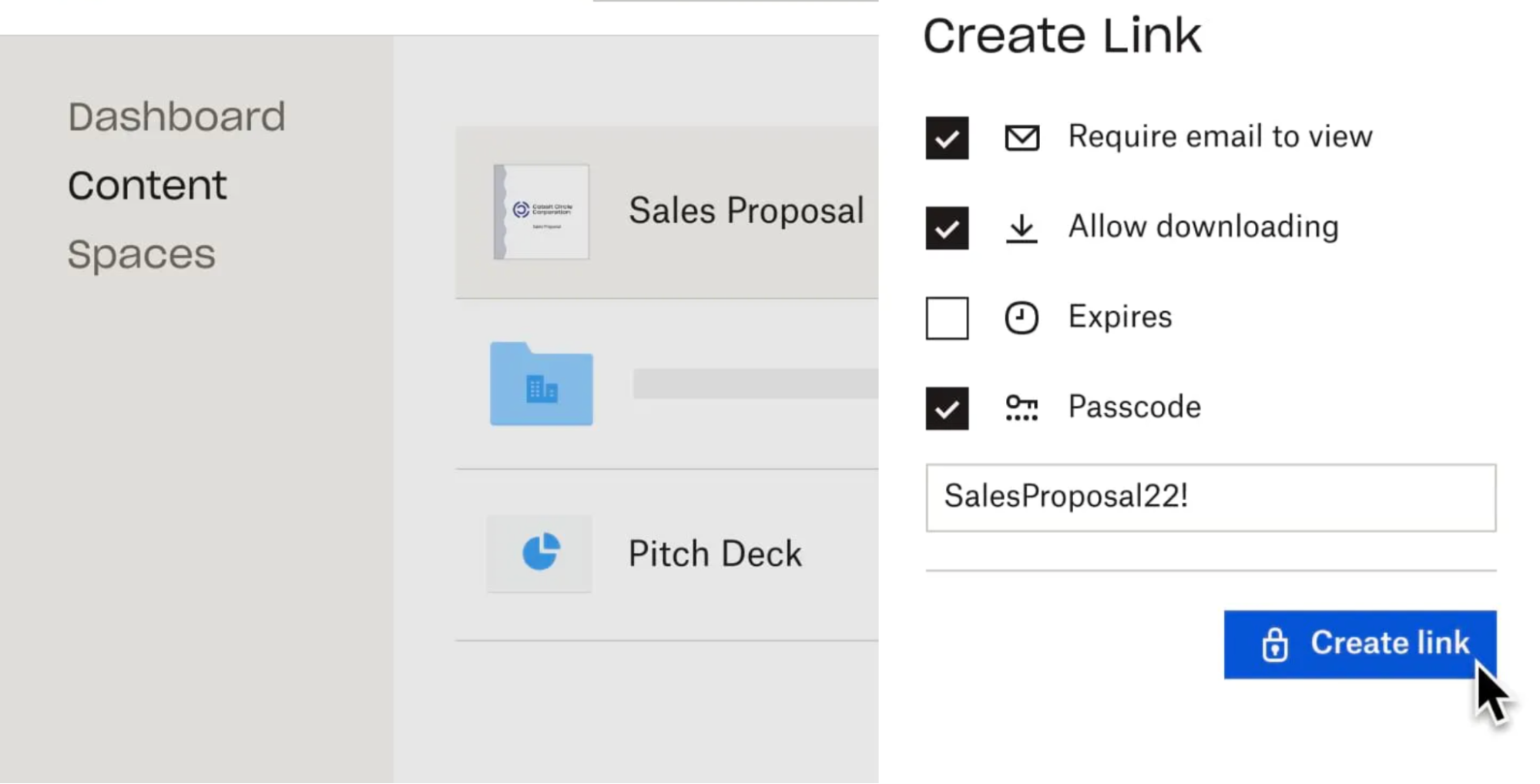
The most common version is a modal that pops up when someone clicks the link, asking them to enter their email address before the deck opens.
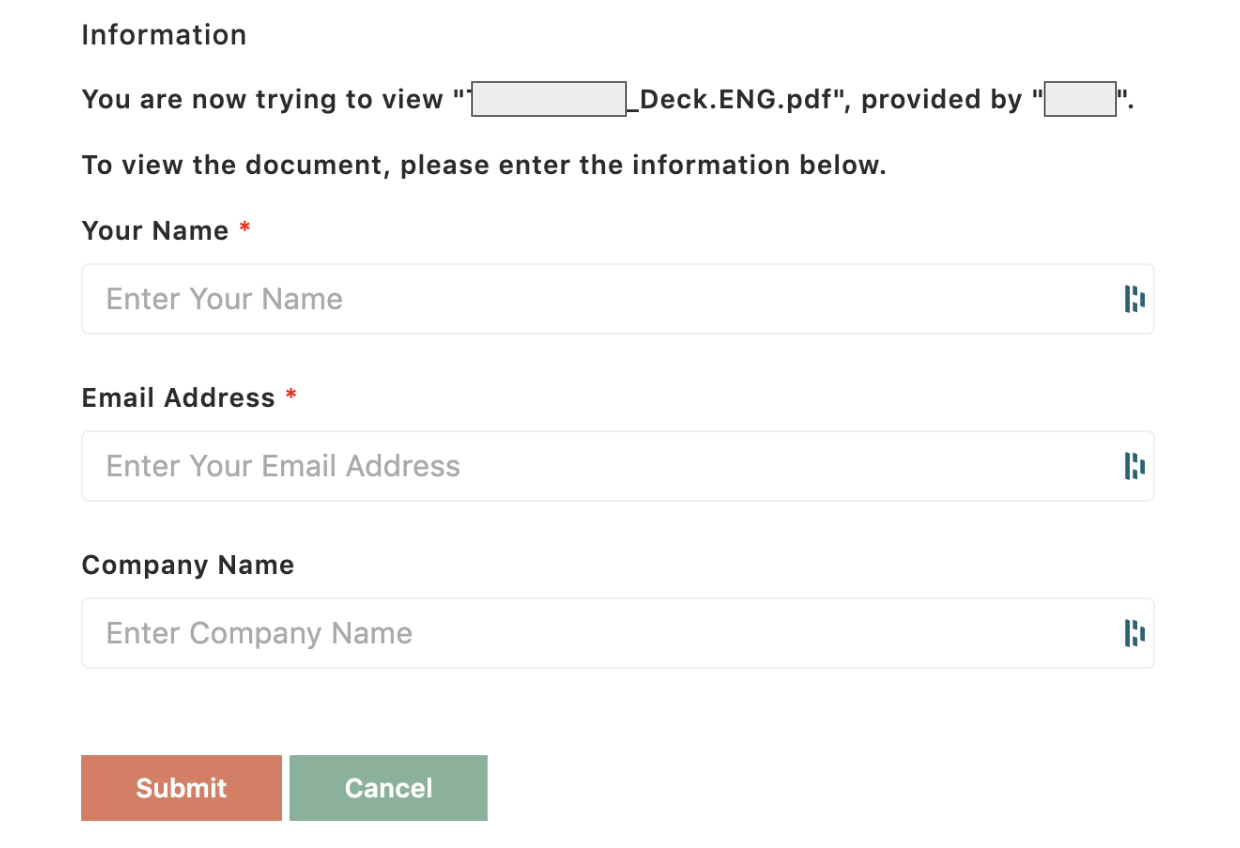
The problem is obvious once you think about it. There is zero verification. When a founder sends me a deck with one of these email gates, I type [email protected] and move on.
Many people just enter random garbage. So you have added friction to the experience without capturing any real information. It is a false sense of security that causes real damage to the user experience.
Whitelisting specific email addresses
A more sophisticated version of the same idea. You pre-approve only the email address of the specific investor you are targeting. If I send my deck to [email protected], I configure the link so only that address can access it.
This sounds tighter. It breaks in practice constantly.
What happens when I forward the deck to my partner or analyst? Their email is not on the whitelist. Access denied. What happens when I open it from my personal Gmail on a Saturday morning? Blocked. You have just guaranteed that the people most likely to champion your deal inside a VC firm cannot see it. And on your side, you have to manually configure this for every single deck you send. Not a good trade…
Password or PIN protection
I see this one fairly often. The founder sends a deck link with "password: barbecue123" in the body of the email.
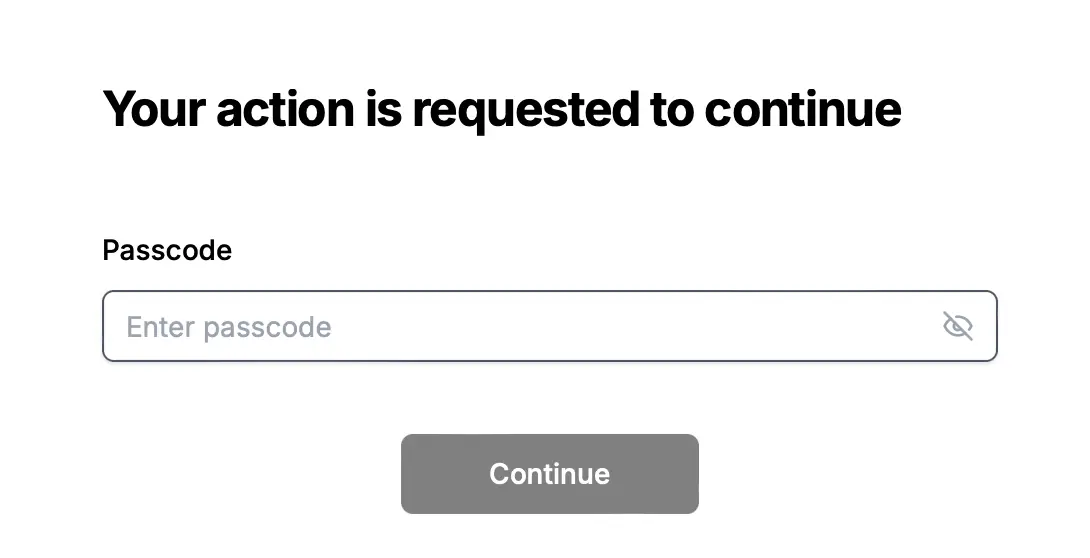
The investor clicks the link, gets a pop-up asking for a passcode, has to go back to the email, find the password, come back, and type it in. On mobile, this is a nightmare. If the investor pastes the link into their deal-flow WhatsApp group and forgets to include the password, the link is useless for anyone else in that group.
You have added friction at exactly the wrong moment when someone who might be interested is trying to learn about your company. And the protection is practically zero, because the password is sitting one scroll away in the same email as the link.
Two-factor authentication
The technical version of email input. The investor enters their email, gets a verification code, and enters that too. In theory, it solves the fake email problem.
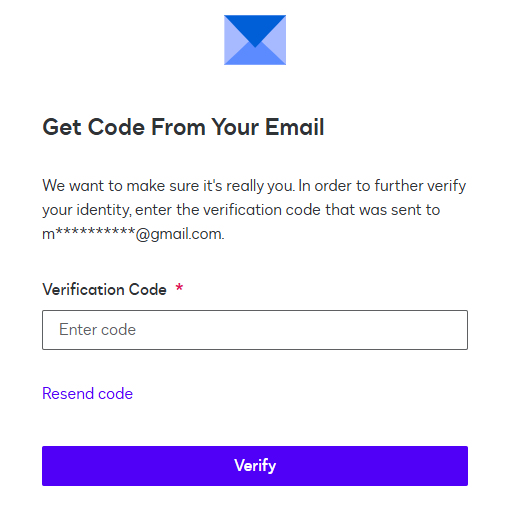
In practice, it creates the same user experience problems but worse. You are asking someone to switch apps on mobile, find a code, come back, and type it in, all before they have even seen your first slide. VCs are busy. They open decks in LinkedIn messages, in WhatsApp threads, on airplanes with weak connections. 2FA is not buttery. It is a wall.
A significant number of investors will just close the link.
Disabling download
This one I am actually okay with.
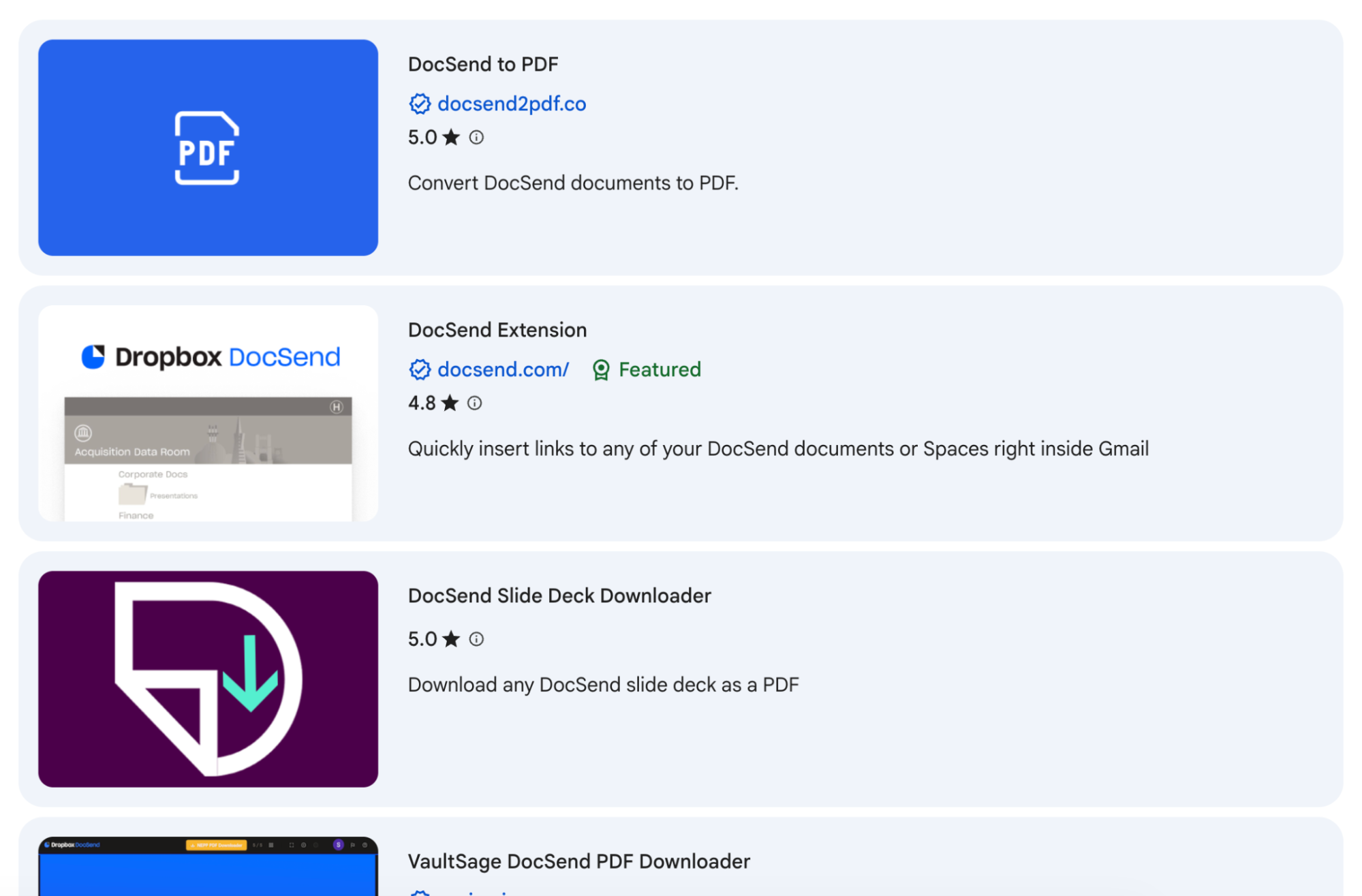
Some deck platforms allow viewers to download the PDF, and you can turn that off. Unfortunately, it is not foolproof. Screenshots and photographs of a laptop screen all still work. And there's literally a bunch of Chrome Extensions called “Docsend Downloader”, strictly dedicated to grabbing your deck against your will.
But here is what makes it different from the other techniques: the friction comes after the investor has seen your deck, not before.
You had the chance to make your pitch. They considered the opportunity. Preventing a casual download after that moment does not cost you much. It just makes bulk data export slightly harder. That is an acceptable trade.
Part Two: Protecting Your Deck by Tracking Access
This is the part I am much more enthusiastic about. Instead of blocking access, you observe what happens.
Deck analytics
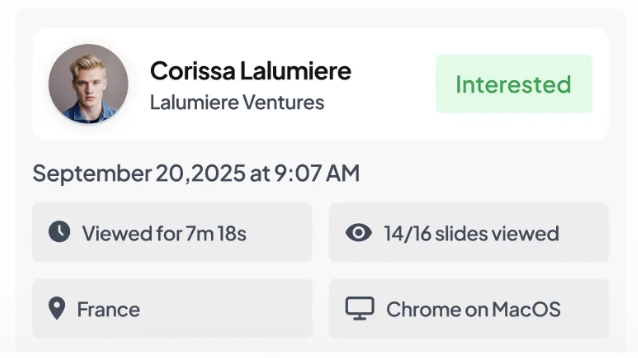
This is a no-brainer. When an investor opens your deck, you want to know when they opened it, how long they spent, and how far they got. Did they close it after slide two? Did they read the whole thing? Did they come back three days later for a second look?
This information does not get in the way. The investor experiences nothing different. You just get data that helps you follow up more intelligently. If someone spent 14 minutes on your deck and made it to the team slide, that is a warm signal. If they opened it for 30 seconds and stopped at the cover, that is useful information too.
Deck analytics are painless for the investor and genuinely valuable for you. Use them.
Here’s an example from OpenVC’s deck tracking.
IP tracking
Interesting feature, limited usefulness.
IP tracking tells you roughly where someone opened the deck. In theory, you might notice a geographic anomaly that suggests your link was forwarded to someone in a different country.
The problem is that VPNs are everywhere now. I spend a lot of time in China, and my VPN is set to Japan. If I open your deck, it looks like the view came from Tokyo. Privacy-conscious people, which increasingly means everyone, will trigger false location data.
IP tracking is cool if you are a data nerd. It is not particularly actionable.
Screenshot tracking
Some deck platforms let you block screenshots. If someone tries to capture the screen, the screenshot is blank. And not only that… you get notified that someone tried. Some platforms even show the investor a message: "Screenshot blocked. The document owner has been notified."
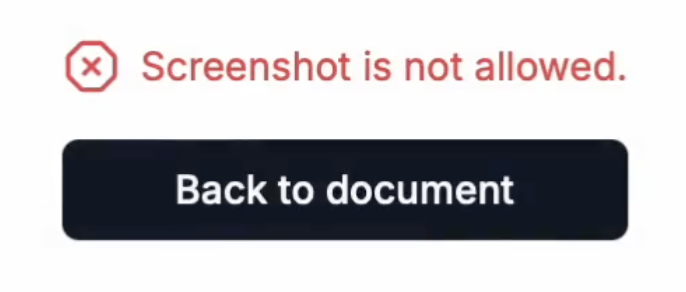
Is it going to stop a determined investor? No. They can just hold up their phone and photograph the laptop screen. You cannot prevent that. But here is why I like this feature anyway: most investors are not expecting it.
The element of surprise is real. It catches people off guard. It sends a clear message that you are paying attention. For once, the founder has a small advantage.
Practically speaking, it is more of a psychological deterrent than a real barrier. But deterrence is still something.
Watermarking
This is my favorite technique in this whole list, and I think it has the right balance of effectiveness and acceptable friction.
Watermarking displays the investor's email address as a repeating pattern across every slide. If the deck leaks, if a photo shows up somewhere it should not, the investor's name and email are plastered all over it.
There is no deniability.
The deterrent effect here is real. Most investors will think twice before forwarding your deck carelessly if their name is on every slide.
The catch is that watermark-removal tools exist and are free.
An investor with bad intentions and five extra minutes could strip the watermarks before sharing. So it is not airtight. But it significantly raises the cost of misuse for casual actors, which covers the vast majority of cases.
At OpenVC, we are currently adding this feature into our deck product. Since we manage outreach as part of the platform, we can pre-set the email address automatically, which removes the manual friction that makes watermarking annoying elsewhere.
The Uncomfortable Truth About All of This
Here is the conclusion I cannot avoid, and the one that should change how you think about the entire problem.
You cannot protect your deck.
Once you send it to someone, you have to accept that the information is in the world. A mentor of mine said it well early in my career: "When you send a deck to investors, treat everything inside it as if it were on page one of Google."
That is the mental model. Not your intention, not your preference. Just the practical reality.
And here is the second thing worth sitting with: fundraising is a sales exercise. You are trying to get a document into as many relevant hands as possible. You are sending cold emails, asking for intros, trying to get your deck in front of 100, 200, 300 investors. Why, in the middle of all that, would you add walls, passwords, and friction?
It is two opposite goals at the same time, and it damages the one that actually matters.
If an investor loves what they see, they are going to forward the deck to a co-investor. They will mention it to friends in the industry. They will circulate it in the deal-flow channels. That is how deals happen. You want that behavior.
You should be making it easy, not hard.
What to Actually Do Instead
Accept that your deck will be seen by a lot of people. Embrace it. Make sharing as easy as possible.
And then (this is the real protection), simply do not include information that you cannot afford to have public.
That sounds obvious, but a lot of founders misunderstand what needs to be in the intro deck. It is not the place for your patent-pending technology, your proprietary formula, your exact unit economics, or anything else that gives a competitor a real advantage.
I have worked on raises for biotech companies with genuinely sensitive IP. It is still possible to craft a compelling deck without revealing the mechanism. You can say the performance benchmarks, reference third-party validation, and establish credibility without explaining how the technology works. The investor's job at this stage is to decide whether to take a meeting, not to understand the science. Give them enough to get excited. Save the rest for due diligence.
The two-stage framework looks like this.
Your intro deck is marketing. You want it to spread far and wide. Make it irresistible, make it clear, make it easy to share, and keep the genuinely sensitive information out of it.
Your data room is where confidentiality actually matters. Once you have confirmed interest and a real due diligence process is underway, that is the moment to share deeper materials, potentially under an NDA, on a need-to-know basis. The rules are different at that stage, and the techniques are different too.
Do not confuse the two.
The One Technique Worth Using Consistently
If there is one practical takeaway from all of this, it is to use deck analytics without hesitation. No friction, real signal, and it genuinely improves how you follow up with investors.
If you want to add deterrence on top of that, watermarking is your best option. It is not perfect, but it raises the cost of misuse without making life harder for the investors you want to impress.
Everything else (passwords, whitelists, 2FA) creates friction that hurts you more than it protects you.
And the rest? Handle it by being deliberate about what you put in the deck.
When you use OpenVC to share your deck, you get per-investor tracking links, view analytics, and upcoming watermarking features, all built into the same workflow you are already using to find and reach out to investors. If you are actively raising, that kind of visibility on investor engagement is worth having. You can get started for free at openvc.app.
Frequently Asked Questions
Should I ask investors to sign an NDA before viewing my pitch deck?
For the intro deck, this is suicidal. No investor at the early stage will sign an NDA before seeing what they are being asked to sign it about. You will lose the meeting before it starts. If you reach a serious due diligence stage and there is a legitimate request from the investor, an NDA may make sense at that point. Not before.
What deck hosting platform should I use to share my pitch deck?
There are many options: Google Drive, DocSend, Canva, Pitch.com, and others. OpenVC Decks is what we recommend because it is built as part of the fundraising workflow, not as a standalone hosting tool. You get per-investor tracking links and analytics inside the same platform you are using to manage your investor pipeline.
Is it okay to share the same deck link with all investors?
You can, but it limits what you learn. Per-investor links let you track engagement by individual recipient. If you send the same link to 50 investors, you see aggregate views but cannot tell who opened it, for how long, or whether they came back. Individual links give you that granularity, which makes follow-up much more intelligent.
What information should I leave out of my intro deck?
Anything that gives a competitor a real operational advantage if they saw it: your exact proprietary technology, detailed unit economics, specific supplier relationships, pending patent mechanisms, or sensitive financial projections. The intro deck should be compelling enough to earn a meeting. Save the depth for due diligence.
What is the difference between an intro deck and a data room?
Your intro deck is marketing. It goes to investors who do not know you yet, and its job is to create enough interest for a first conversation. Your data room comes much later, when there is confirmed interest and a serious due diligence process underway. The data room can and should contain detailed, sensitive information, shared on a controlled, case-by-case basis.





![12 Best Startup Financial Model Templates [Free & Paid]](https://d1pnnwteuly8z3.cloudfront.net/images/177302d9-3657-45b7-ac9d-acf801d83a74/019fadd2-2388-77a4-a43e-6c44f536d546.jpg)
![The 17 Best AI Pitch Deck Generators [August 2026]](https://d1pnnwteuly8z3.cloudfront.net/images/177302d9-3657-45b7-ac9d-acf801d83a74/019f799a-743b-7331-89c1-12315901b11f.webp)