Fundraising is sales.
If you've spent any time around venture capital, you've heard that line before, and it's true.
When you raise a round, you're selling a product, and that product is equity in your startup. What you call the valuation is really just the price tag on that equity. You have a list of prospects, which are investors. Your pitch deck is a sales brochure. And the term sheet or the SAFE is the sales contract.
Like any sales process, you take people from acquisition to activation to conversion. That's what an investor pipeline is for. Sometimes people call it an investor pipeline, sometimes an investor funnel, sometimes a CRM. It's all the same idea: a process that takes investors from complete strangers to investors who've wired money into your company.
This post breaks that process into four parts.
First, how to set up your investor pipeline. Second, how to add investors to it. Third, the final check you should run before you kick off a raise. And fourth, three tips for running your pipeline while the raise is actually happening.
Table of Contents
Part 1: Setting Up Your Investor Pipeline
I'm going to use pipeline, funnel, and CRM more or less interchangeably here. It's all the same concept, and it comes from sales, incidentally.
Traditionally, founders used a spreadsheet to keep track of things. In the old days that meant Microsoft Excel. When Google Sheets came along, founders moved there. Then Airtable became the cooler option. This is still a common, cheap, and easy choice for a lot of people.
Some founders, especially if they come from a sales background, use a proper sales CRM like HubSpot or Pipedrive, which is fine. But today you actually have purpose-built CRMs for fundraising, like the OpenVC CRM, and that's what I'd encourage people to use. It's free, and it's designed around the specifics of early-stage tech fundraising rather than adapted from a generic sales workflow.
Whatever tool you use, though, it should rely on the same principles.
Break your process into clear stages, each with a clear gate
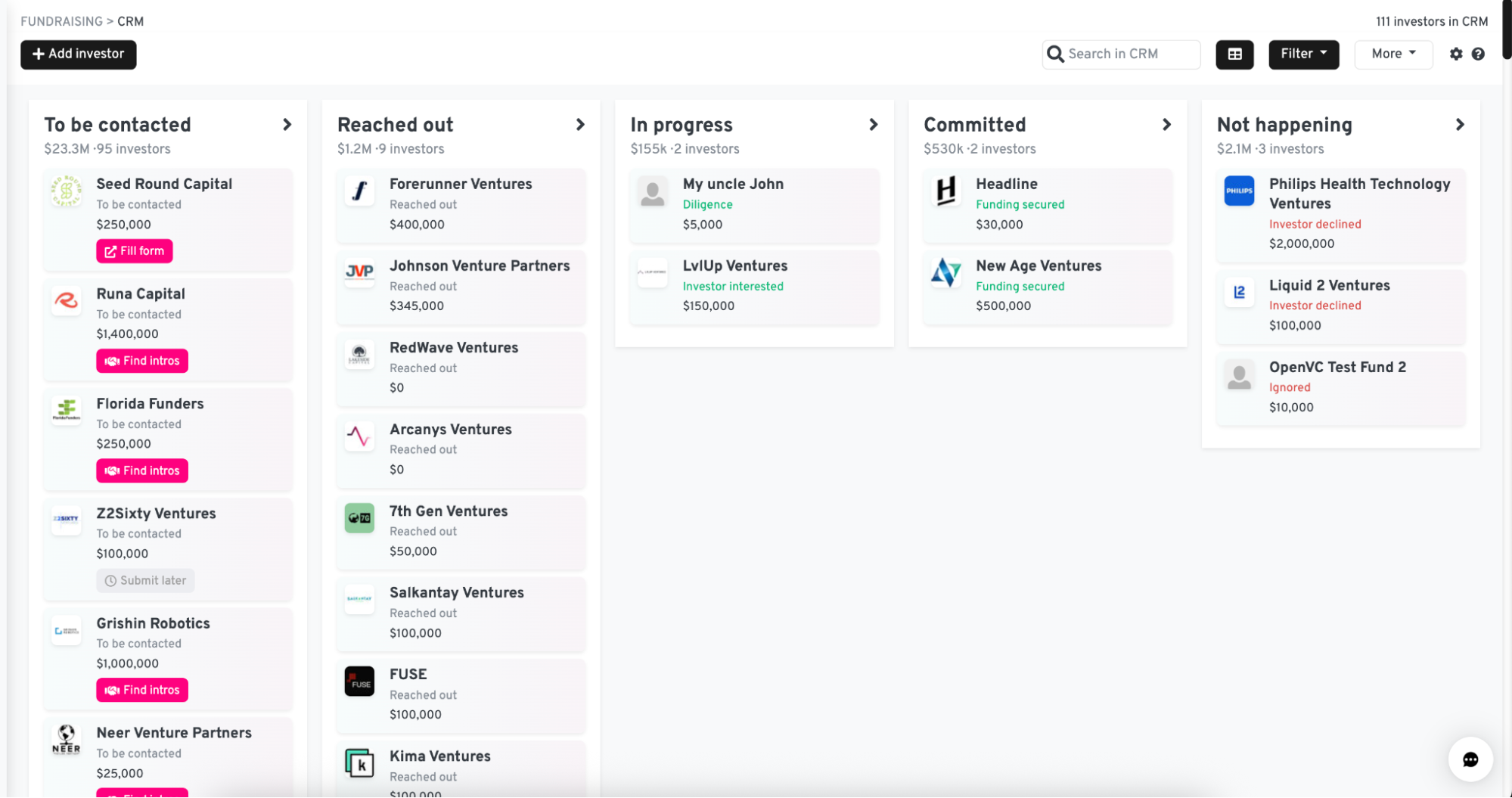
In the OpenVC CRM, we use five stages:
- To be contacted — Investors you've identified but haven't reached out to yet
- Reached out — You've sent an email or requested an intro
- In progress — The investor has shown some level of interest
- Committed — They've signed a term sheet or SAFE, or wired the money
- Not happening — They passed at any stage
So that's five columns. I'd warn against having more than that. Keep it lean.
We designed the OpenVC pipeline to fit on one screen, because you want an overview without scrolling. You don't want to have to scroll to see what's happening in your raise.
It's also worth knowing that you'll have a lot of investors in the first two columns, and then very few after that, because the conversion rate is extremely low. That's exactly why you don't need five or six intermediate steps. You're realistically going to have a dozen investors, max, sitting in your middle stages at any given time.
Over-engineering the funnel with more stages doesn't reflect how things actually happen.
Have clear gates at each stage of your pipeline
Between every stage, you want a clear gate: a specific, unambiguous condition that moves an investor from one column to the next.
For example, in my case, moving from "To be contacted" to "Reached out" means an email was sent or an intro request was made. Moving from "reached out" to "in progress" means the pitch deck was opened.
I don't recommend using "Email opened" as a gate, by the way. Email open tracking isn't reliable anymore. Pitch deck open tracking is reliable, so that's what I use as my signal for "in progress." It's a small nuance, but worth knowing, since it's the difference between a gate you can trust and one that gives you false positives.
Everything up through due diligence still counts as "In progress" for me, because it's muddy water. You're somewhere between a ten and fifty percent chance of a commitment at that stage.
Once you're committed, you don't have money in the bank yet, but you have a signed SAFE or term sheet, which puts you at somewhere north of fifty percent, often eighty percent or better.
And "not happening" can be reached from any stage in the process. The moment an investor declines, they move there.
Table or Kanban, your call
You have two typical designs for a pipeline: a table or a Kanban board. These are just different ways of showing the same information. Same data points, same investor names, same statuses, notes, and check sizes, just presented differently.
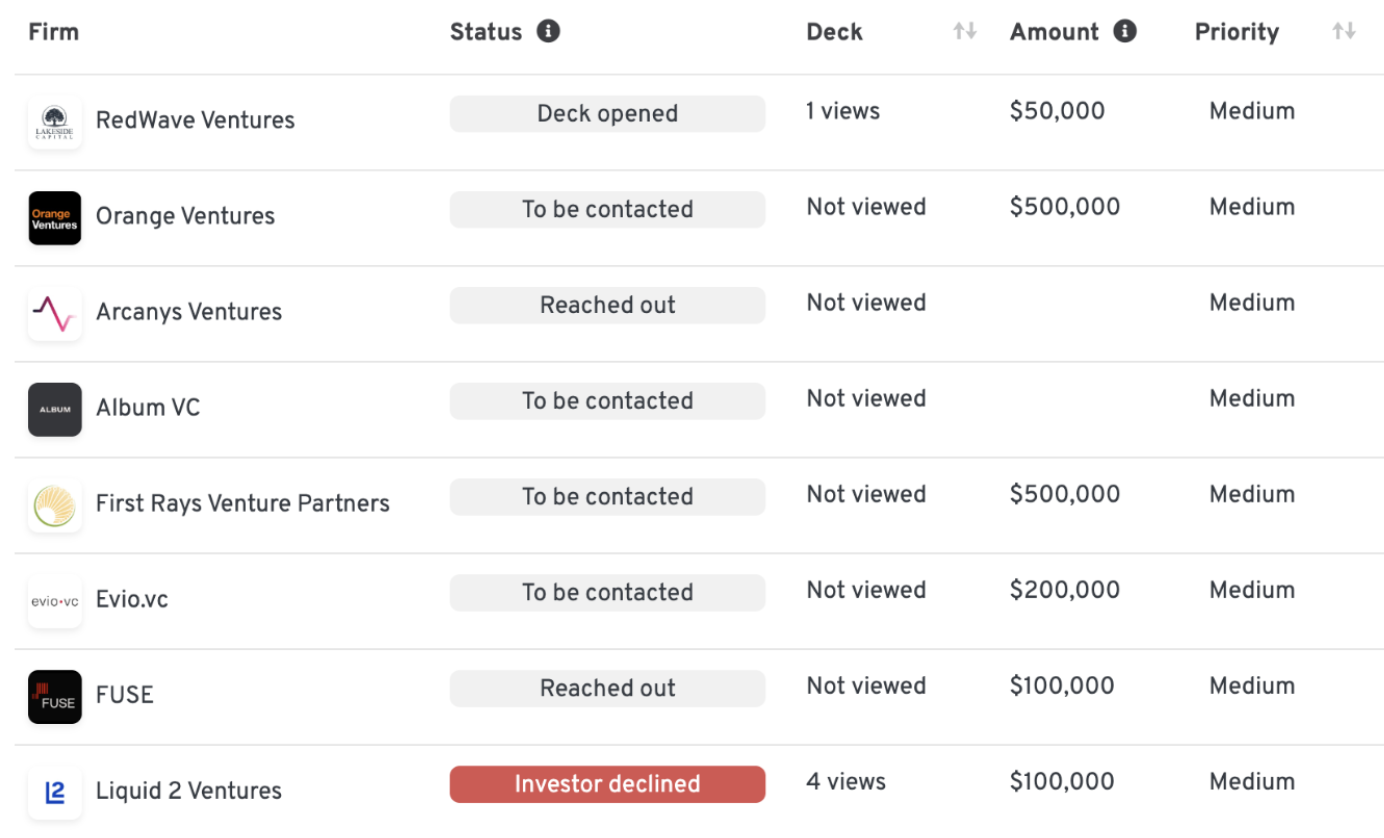
I'm more of a Kanban person. I think it's more visual, more user-friendly, and more engaging. And engagement matters here, because whether you're using the OpenVC pipeline or a homemade spreadsheet, you want a tool you actually enjoy working inside of.
A Kanban board is ideal for that.
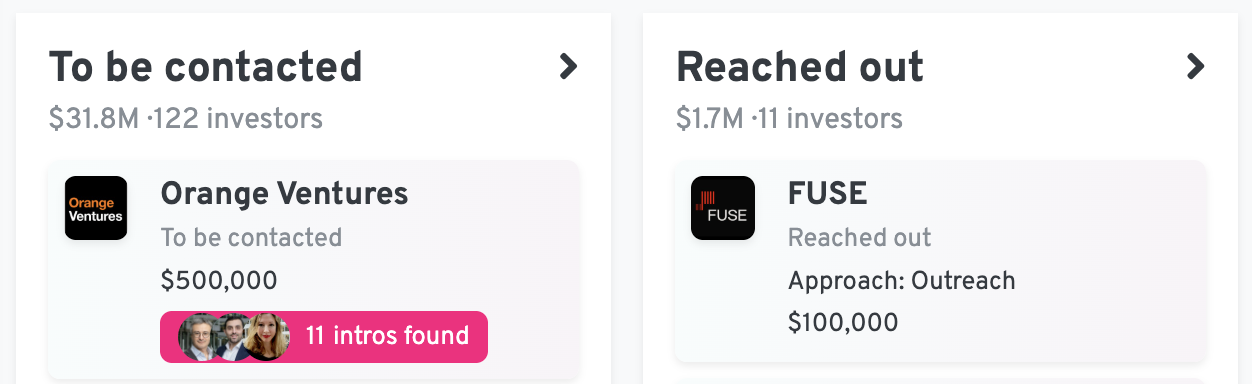
Sum up check size and investor count at the top of each column
There's one more feature I'd really encourage you to build if you're working in a spreadsheet: for each stage, show the sum of check sizes and the sum of investors at the top of that column.
If you're using the OpenVC pipeline, this is built in by default. Otherwise, write a formula for it. You want to be able to glance at your "in progress" column and know that there are seven investors in it, and that together they represent $3.5 million in potential investment. This is a small feature, but it matters, because it's what helps you understand your progress at each stage.
Part 2: Adding Investors to Your Pipeline
Once your pipeline is set up, you need to fill it. There are three ways to do this.
Upload a csv to your pipeline
The first is manually. For each investor, you enter their name, email, target check size, and any relevant notes or context by hand. This is usually what you do for your personal network: your rich uncle, your mom, your high school friends who might write small angel checks. You add these people manually because they don't live in any public database.
Purchase an investor database
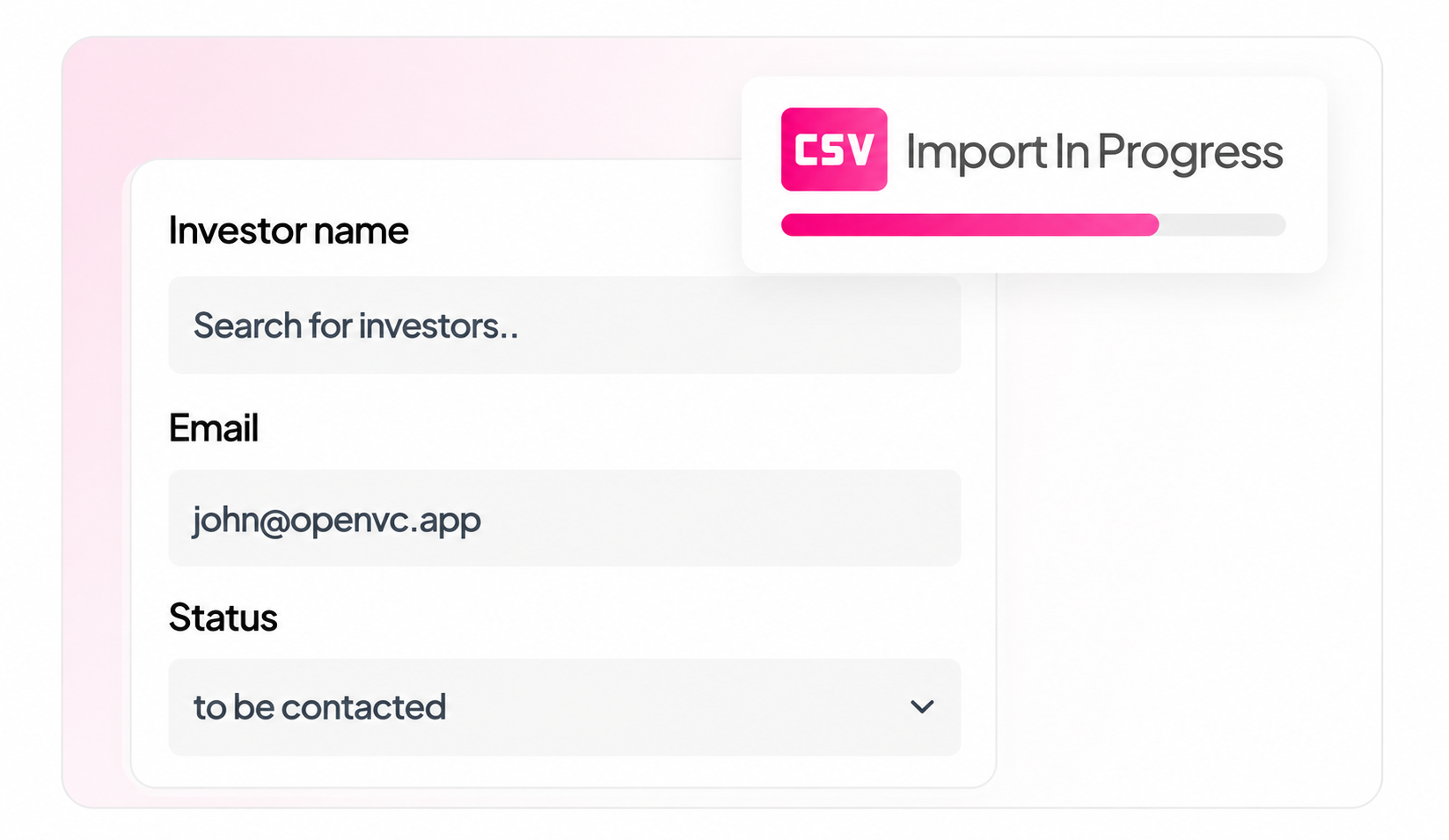
The second is to use a database you can purchase or find online, download it as a CSV or spreadsheet, clean it up, and upload it into your pipeline.
This works, but honestly, it's a lot of work if you want clean, structured data in your pipeline.
Use a list that plugs into your pipeline
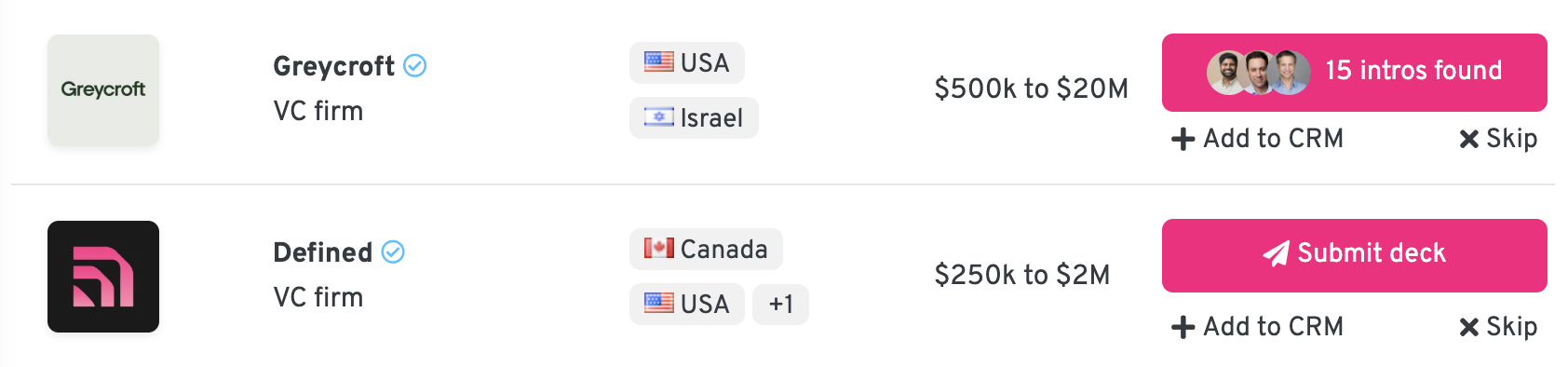
The third, and the one I'd recommend, is to use a tool where you can filter investors by relevant criteria and add them to your CRM in one click.
On OpenVC, I'd go to the investor database, filter by criteria like geography, stage, check size, and industry, and then click "add to CRM" on each profile that fits. That investor is now sitting in my first column, no CSV export or cleanup required.
Whatever tool you use, and now we're talking about tools, which is an important part of this, you want tools that speak to each other. You don't want one tool for your investor list, another for your CRM, and another for something else. You want everything in the same place. That's one of the real benefits of using a full suite like OpenVC rather than stitching several tools together.
So those are your three ways to add investors: manually, via a CSV upload, or straight from an integrated investor list. Once you've done that, you're almost ready to raise.
But before you start, there's a final check.
Find your ideal investors now
Browse 16,000+ investors, share your pitch deck, and manage replies - all for free.
Get Started Now
Part 3: The Final Check Before You Start Raising
You've just added investors to your "to be contacted" column. Before you start reaching out, you want to make sure you have enough of them.
Use a weighted average pipeline
To check this, use a technique called the weighted average pipeline. It sounds complicated, but it just means multiplying the total check size of all the investors in your pipeline by the probability that they'll actually invest, so you can see whether you have enough in the pipeline to hit your target.
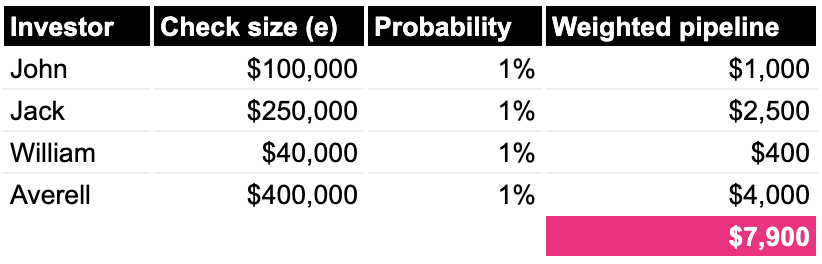
Here's how it plays out. Say you have $30 million worth of investors sitting in your "to be contacted" column. If every single one of them invested, you'd end up with $30 million. That's not going to happen, of course. Maybe five percent of them will actually invest. Five percent of $30 million is $1.5 million. If you're trying to raise $1 million, you're in good shape, assuming that five percent conversion rate is realistic.
In my opinion, a more realistic number is closer to 2%.
So if you're raising $1 million, you probably want around $50 million worth of investors sitting in that first column. That's the weighted average pipeline technique, and it's how you determine whether you have enough investors at the starting line.
Qualify every investor before they enter the pipeline
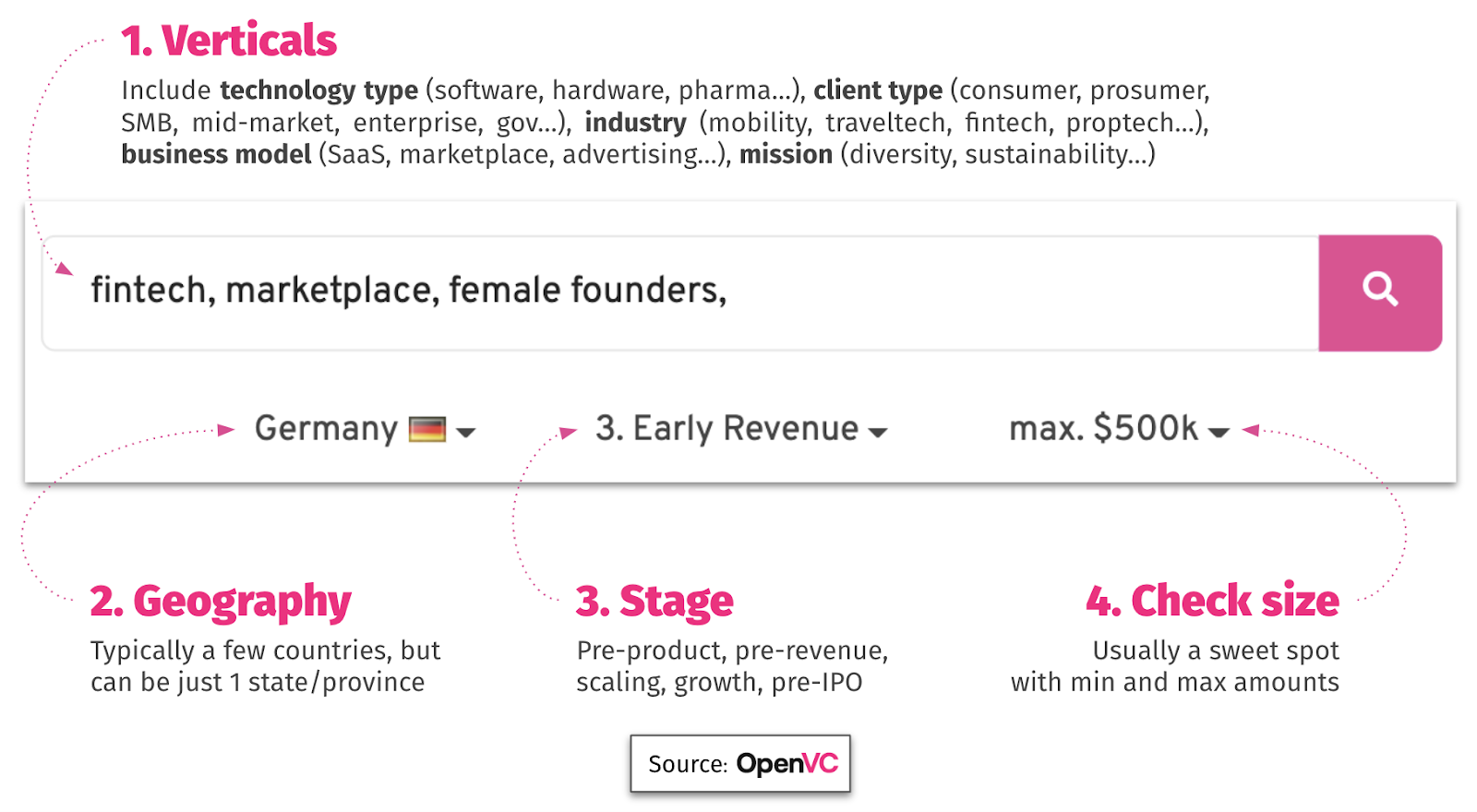
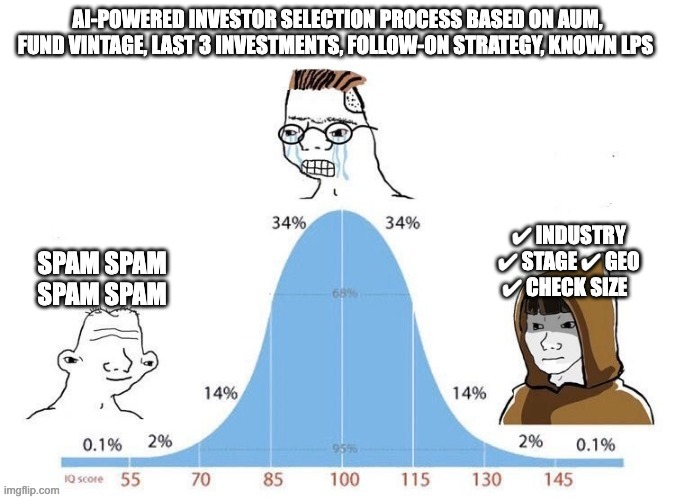
Having enough investors isn't the whole story. You also need to make sure they're qualified. That means each investor should actually invest in your geography, your stage, your check size, and your vertical.
If you're a Singaporean startup reaching out to Mexican VCs, the expected value of that outreach is zero, because it's just not going to happen. Qualify investors before you put them in your pipeline. Don't pollute your pipeline with poorly qualified names. Make sure you're sourcing your pipeline with the right investor types for your startup.
Map your intro pathway for every investor
Before you kick off the raise, go through every investor in your "to be contacted" list and ask: do I know someone at that firm? Or do I know someone who knows someone at that firm? That's a warm intro pathway, and it's extremely important.
You can do this manually, searching LinkedIn one person at a time, digging through your Gmail contacts, or asking around. Or you can use a tool like the intro finder on OpenVC, which automates the research step.
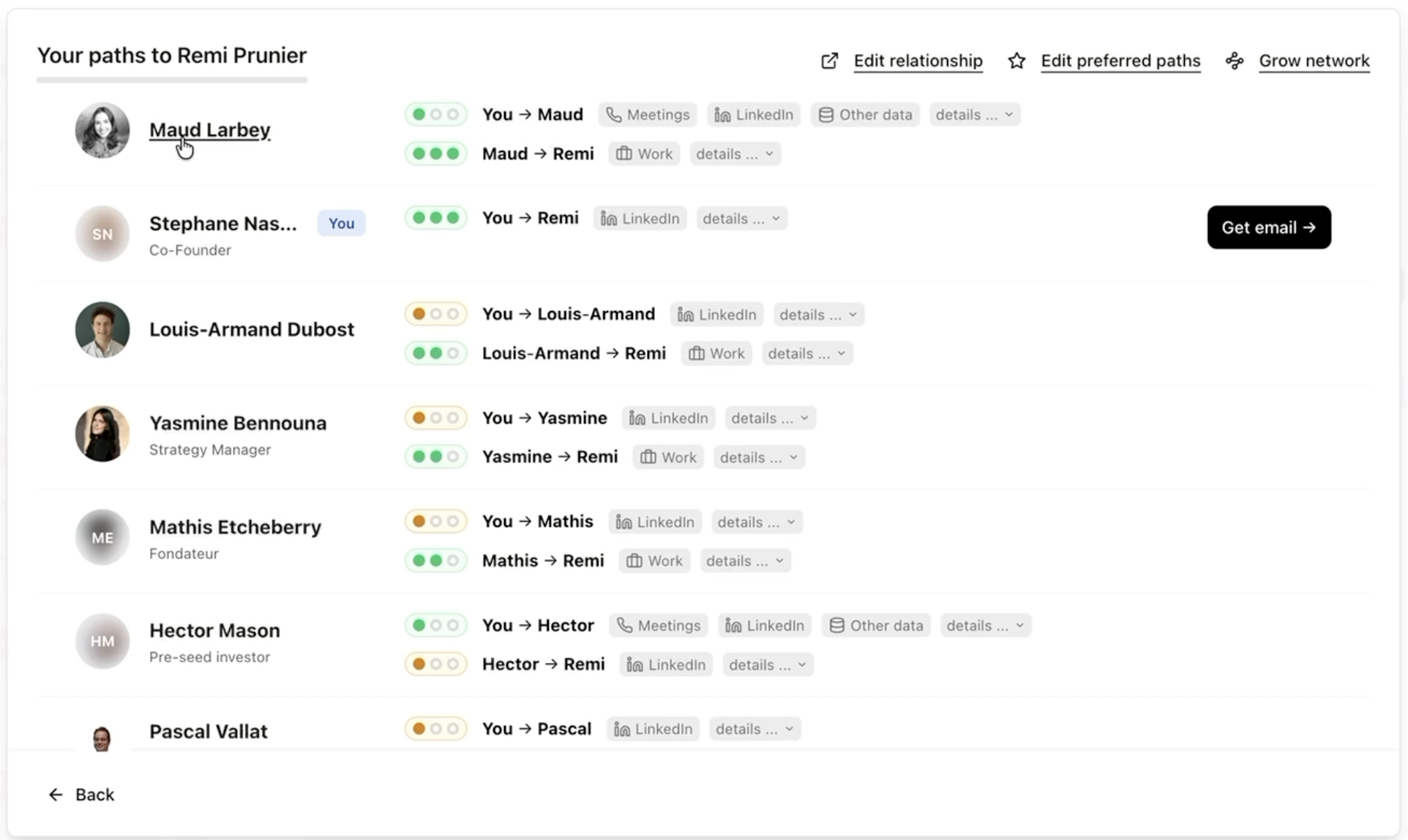
In my own pipeline, for example, I can see that I know someone who used to work with a partner at a firm I'm targeting, and that gives me an angle for a warm intro I wouldn't have found otherwise. Doing this one investor at a time by hand can easily eat twenty minutes per firm. A tool that surfaces the pathway automatically saves that time, and if you have an intro pathway available, you should use it rather than going in cold.
Our guide on warm intros goes deeper on how to actually request one once you've found the path, and our cold email guide covers what to do when you don't have a path at all.
Group investors into waves
The last thing to do before you kick off the raise is group your investors into waves. You're not going to reach out to everyone on day one. You'll run your process in several waves, maybe one wave per week or one every two weeks, across a raise that typically spans three to five waves.
Start with the investors most likely to say yes. These are people who know you, trust you, and like you. It doesn't matter if their checks are small.
What matters is the momentum.
When a small angel investor says yes, even for $10,000, it builds trust for the next, bigger investor to say yes for a $30,000 or $50,000 check. Then you can go to a small VC firm and say, "we've got $100,000 committed from these four people already," and that firm might write the $200,000 check.
This is what I mean by reducing your “time to term sheet”. You engineer momentum not by lying about commitments you don't have, but by actually collecting small commitments first, then bigger ones, moving further from your comfort zone each time, always starting from the people most likely to say yes.
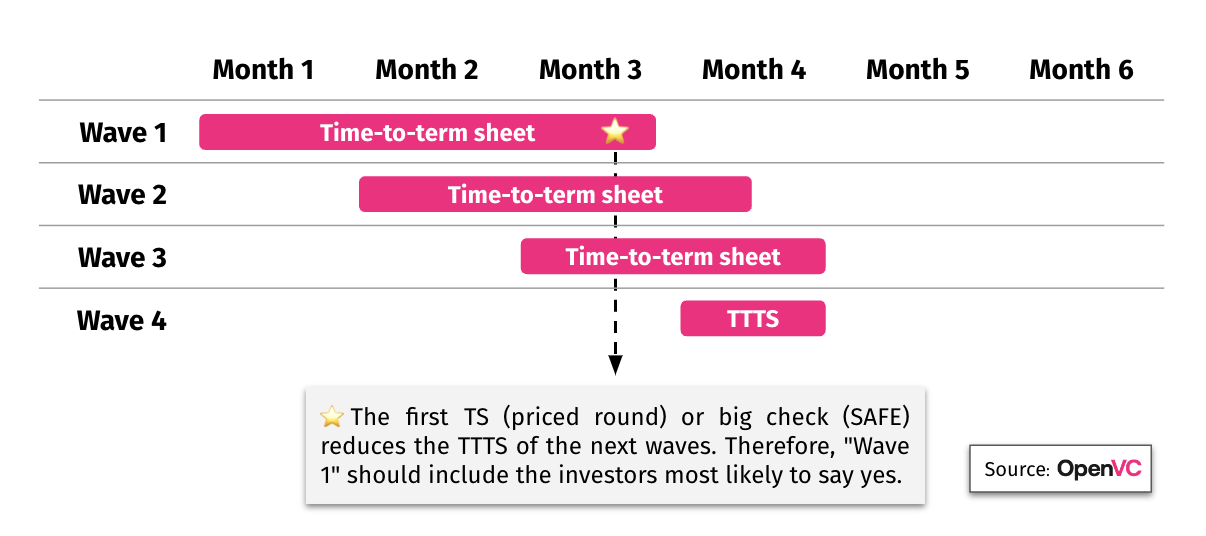
The investors you want the most, the Sequoias and the Andreessen Horowitzes of the world, go last.
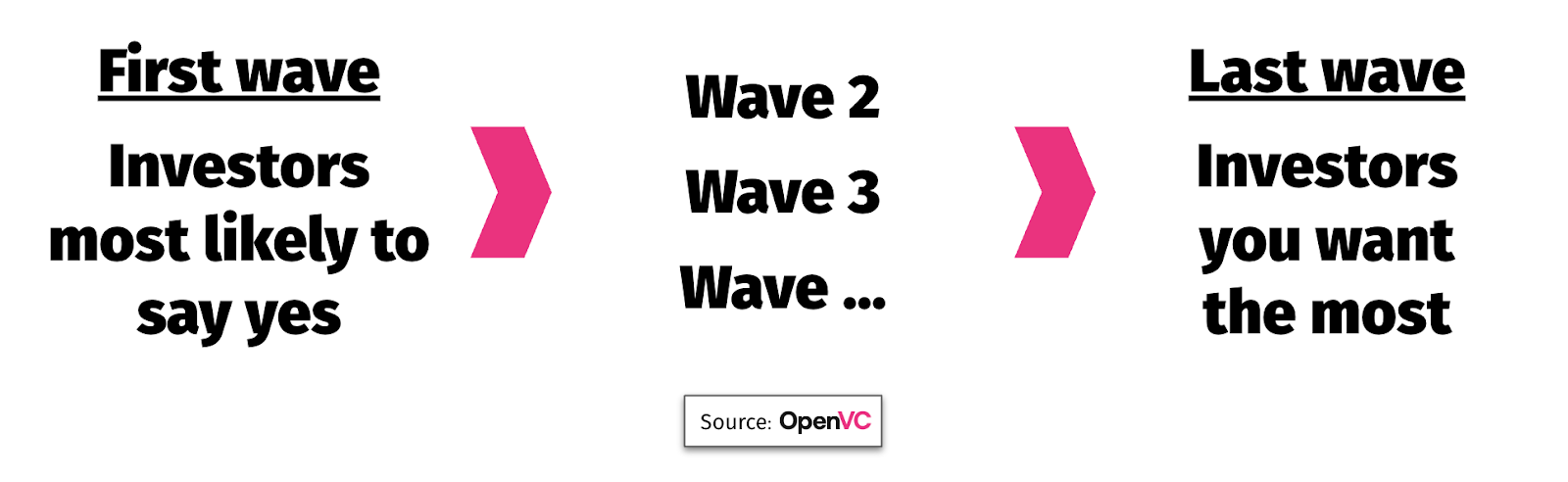
Once you've done all four of these things, meaning you have enough investors in your pipeline, they're all qualified, you've mapped intro pathways for each one, and you've organized them into waves, you're ready to raise.
To start connecting with investors, use an investor outreach platform like OpenVC, which will actually get you replies. You can track engagement with your pitch deck and get real feedback that will improve your fundraising strategy.
Part 4: Three Tips for Your Pipeline
What to do when an investor doesn't reply
This is the most common question I get. Investors will ghost you. VCs will ghost you. It's normal business practice. It sucks, but don't take it personally.
Here's how I handle it. If an investor opened your deck, and remember, that's the only reliable signal, and they don't reply, ninety-nine percent of the time it means they're not interested. VCs live in the extremes: either they're very excited, or they're not interested at all.
So you can be fairly confident they're not interested. But out of precaution, send two polite follow-ups. If they still don't reply after the second one, consider that a dead lead, move them to "not happening," and move on.
Don't flog a dead horse, because it's not going to work.
No answer is the answer.
Make your pipeline collaborative
You want one person in charge of fundraising, and that's the CEO. All communication should come and go through the CEO's business email. But you're probably not doing this entirely alone. Maybe you have someone cleaning up leads and enriching the database. Maybe you have a co-founder who wants to stay in the loop. Maybe you have advisors or existing investors who can help source intros.
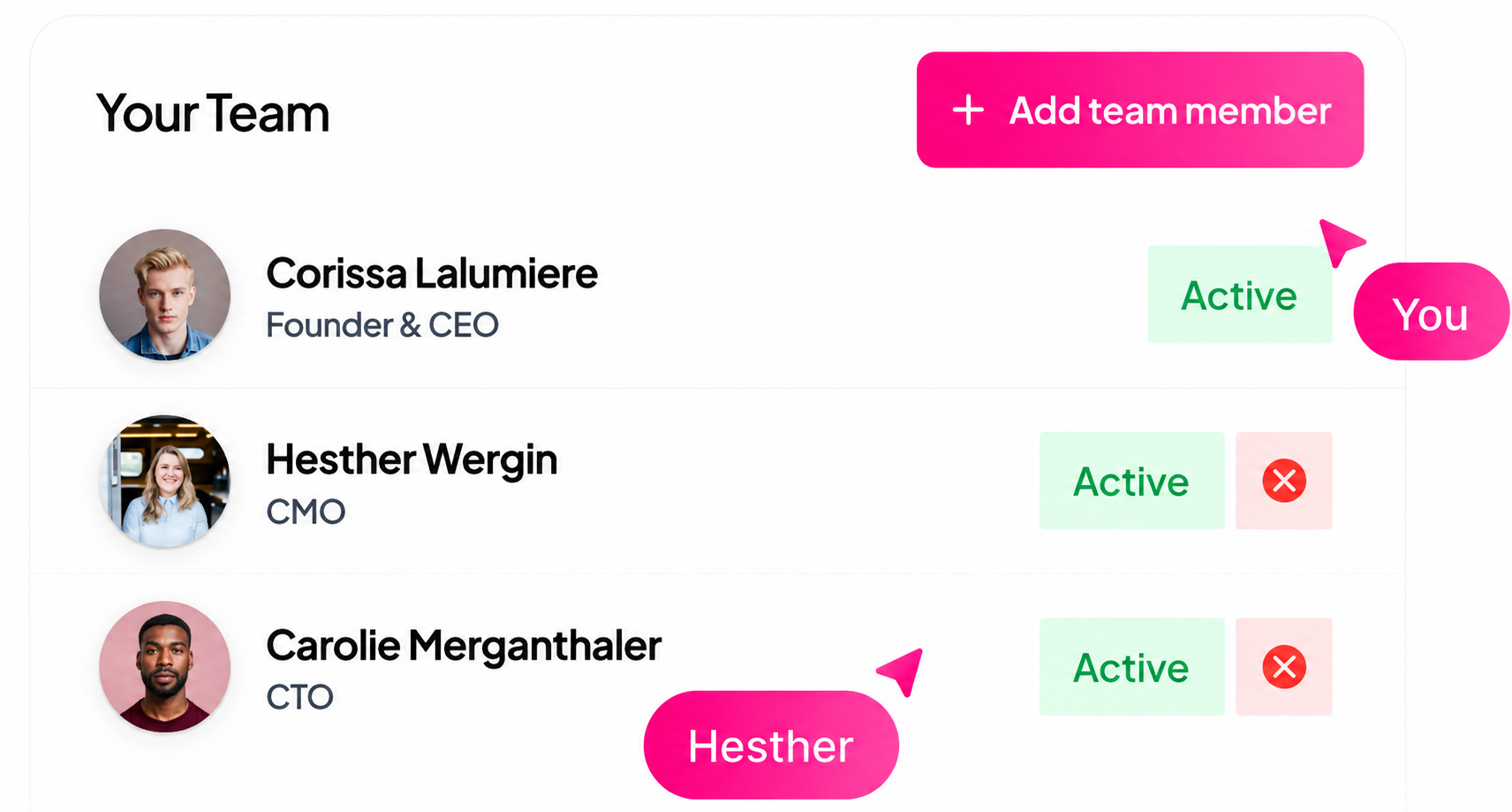
That's why it's worth having a pipeline you can share with those people rather than keeping it locked to one inbox. On OpenVC, you can add an unlimited number of team members to your CRM for exactly this reason.
Keep it simple
The final piece of advice: don't overdo it.
I've seen passionate founders take all this advice a little too much to heart and spend an hour or two every day updating their CRM. The pipeline is supposed to help the raise. It is not the raise. Spending two hours a day tweaking your pipeline is false progress. It feels productive, but it's really just a way to keep yourself busy while avoiding the harder, more useful work, which is being out there talking to investors.
Your Pipeline Is the Backbone of the Raise
A raise without a pipeline is just a series of emails you're hoping you didn't forget to send.
The pipeline gives you a single place to see where every investor stands, what your weighted potential is at each stage, and what action needs to happen next. It keeps you from dropping balls, helps you build momentum deliberately, and makes collaboration possible without creating confusion.
Set it up before you start. Fill it with qualified investors. Check the numbers. Assign your waves. Then go raise.
If you want a pipeline that's already built for this, OpenVC's fundraising CRM is free, designed specifically for early-stage fundraising, and connects natively to a database of 16,000+ verified investors. You can go from finding an investor to adding them to your pipeline in one click, track deck opens inside the same tool, and share access with your whole team without paying for extra seats. Start for free here.
Follow this advice, keep it simple, and you'll have an investor pipeline that supports your raise instead of becoming a project of its own.
If you're setting up your own pipeline right now, OpenVC's fundraising CRMand investor databaseare both free to use and built specifically around this process, from the first cold list to the signed term sheet.
Find your ideal investors now
Browse 16,000+ investors, share your pitch deck, and manage replies - all for free.
Get Started Now




![12 Best Startup Financial Model Templates [Free & Paid]](https://d1pnnwteuly8z3.cloudfront.net/images/177302d9-3657-45b7-ac9d-acf801d83a74/019fadd2-2388-77a4-a43e-6c44f536d546.jpg)