Most founders think about fundraising in three buckets: angels, VCs, and maybe accelerators. That's it. Three boxes, and then they start sending emails.
That mental model is not just incomplete. It actively hurts your fundraising strategy. Because the way you approach a serial angel is completely different from how you approach a corporate VC. The terms a startup studio offers look nothing like what you'd get from a crowdfunding platform. And a VC scout has different incentives, different authority, and different timelines than the fund they represent.
This post breaks down all 23 types of startup investors: what they are, how they think, what they typically invest in, and how to approach them.
It's not an academic taxonomy. It's a practical map you can use to build a smarter fundraising strategy. The numbers skew toward the US and toward vanilla software (your typical SaaS, e-commerce, or app startup). If you're in biotech or pharma, the check sizes will look different. But the investor types? They're the same across the board.
Let's go through them in order, from earliest stage to latest.
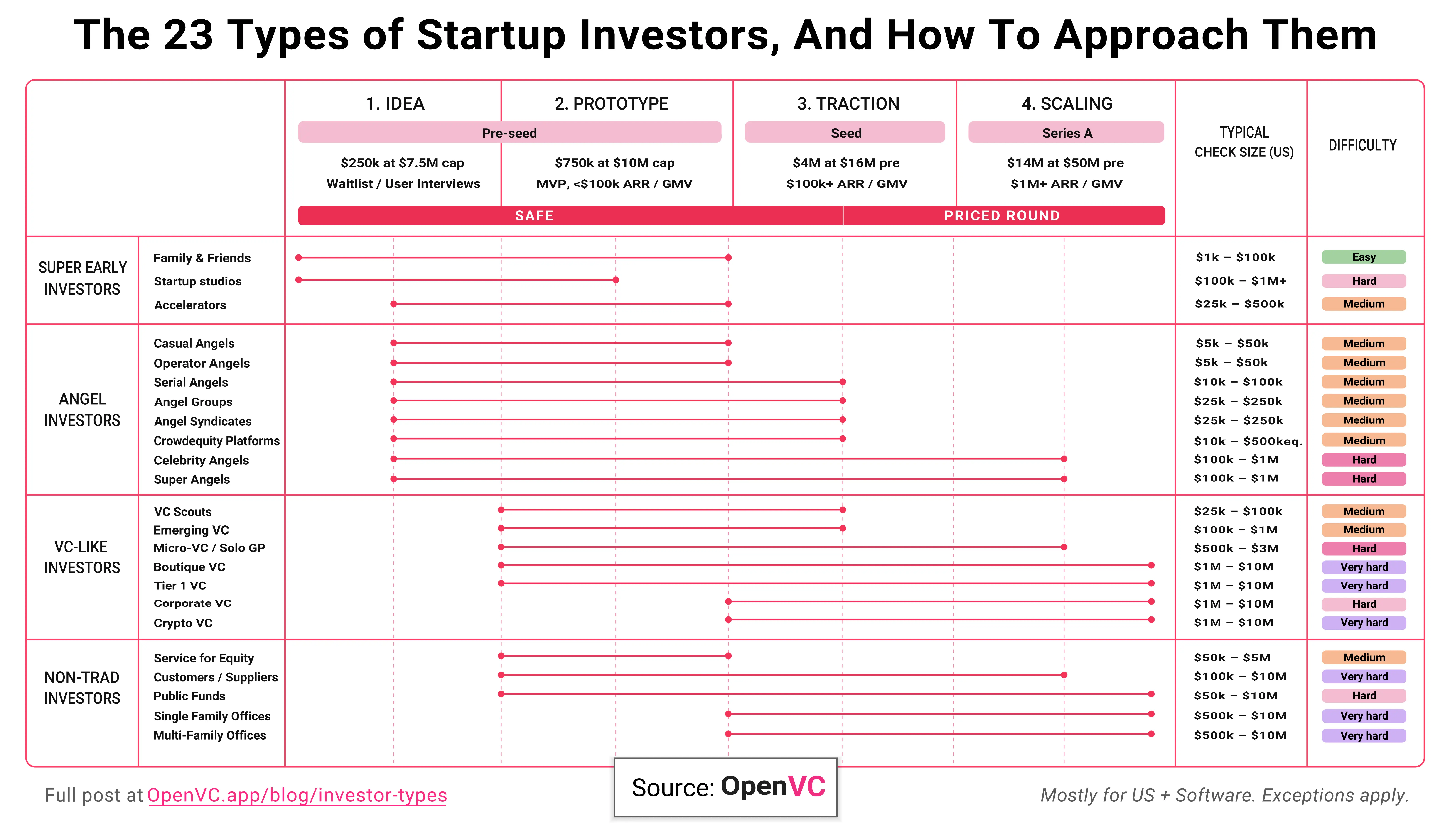
Table of Contents
The Early-Stage Investor Types
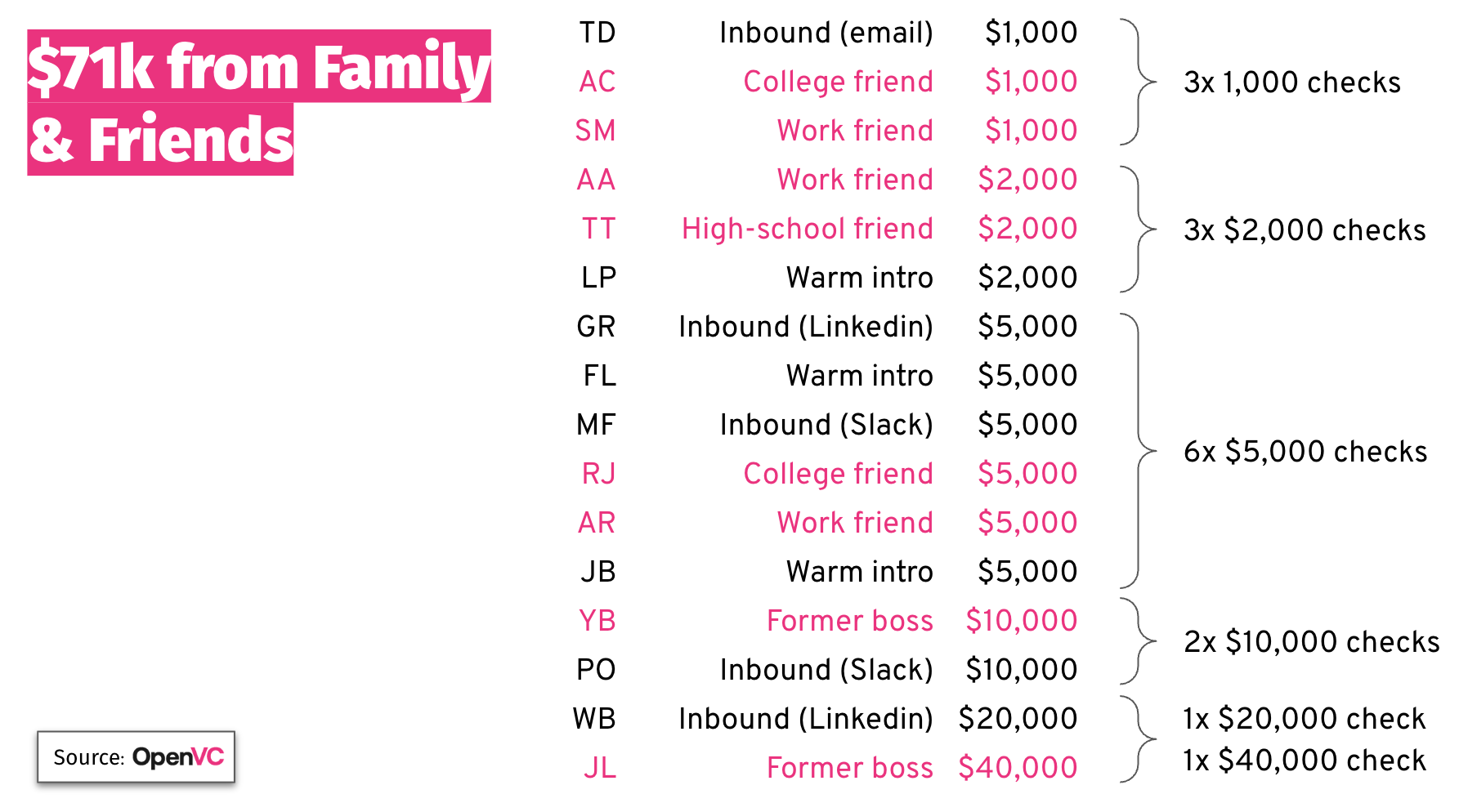
1. Family & Friends
That's your mom, your uncle, your high-school friends, or your former boss.
Family members, friends, former colleagues, and other personal contacts invest primarily because they love you and trust you. Their decision is usually based more on the relationship than on institutional due diligence.
This capital can be fast and flexible, but you must clearly communicate the possibility of losing the entire investment.
Family and friends are strangely underutilized by many founders. A lot of first-time founders either believe check sizes have to be $50K minimum, so they don't bother asking, or they think they can jump straight to angels or VCs and skip this phase entirely.
That's a mistake.
When you're a first-time founder with no track record and no traction, family and friends are often the only realistic path to early equity capital. And the scope is broader than you'd think. Ex-managers, former professors, high school friends, old colleagues. Anyone who knows you and believes in you qualifies.
The key thing here is communication. Make it crystal clear this is not a loan. They could lose everything. And once they've invested, they don't get to tell you how to run the company. That has to be said upfront.
- Typical stage: Idea to prototype
- Typical check: $1,000 to $100,000
- How to approach: Use a direct and honest conversation. Explain the company, the risks, the intended use of funds, and the investment terms without applying emotional pressure. Use proper documents, ideally the same SAFE offered to other investors.
- Example: Your former boss investing $10,000 in your pre-seed via SAFE.
2. Startup Studios
A startup studio repeatedly creates companies using its own ideas, employees, capital, infrastructure, and operating resources. Unlike a conventional investor, it is often involved before the company or founding team fully exists.
Because the studio contributes from inception, it usually receives substantially more equity and control than a normal investor.
Studios “hire” a founding team, usually a CEO and CTO, not a product. You get equity and often, you get paid on top
If you've already started building, a studio probably isn't an option. But if you're still at the idea stage and weighing your options, it's worth understanding the model. The most famous example in Europe is probably eFounders, recently rebranded as Hexa, which produced companies like Aircall.
One word of warning: equity ownership. Because studios are so hands-on and take on significant early risk, some have historically taken over 50% equity from day one. That can make your startup less fundable down the road.
- Typical stage: Idea
- Typical amount: $100,000 to $1 million or more in cash and services
- How to approach: Demonstrate strong founder-market fit and a willingness to build collaboratively. Carefully negotiate founder ownership, intellectual property, decision rights, and what happens when the studio team moves on to other projects.
- Example: Atomic
3. Accelerators
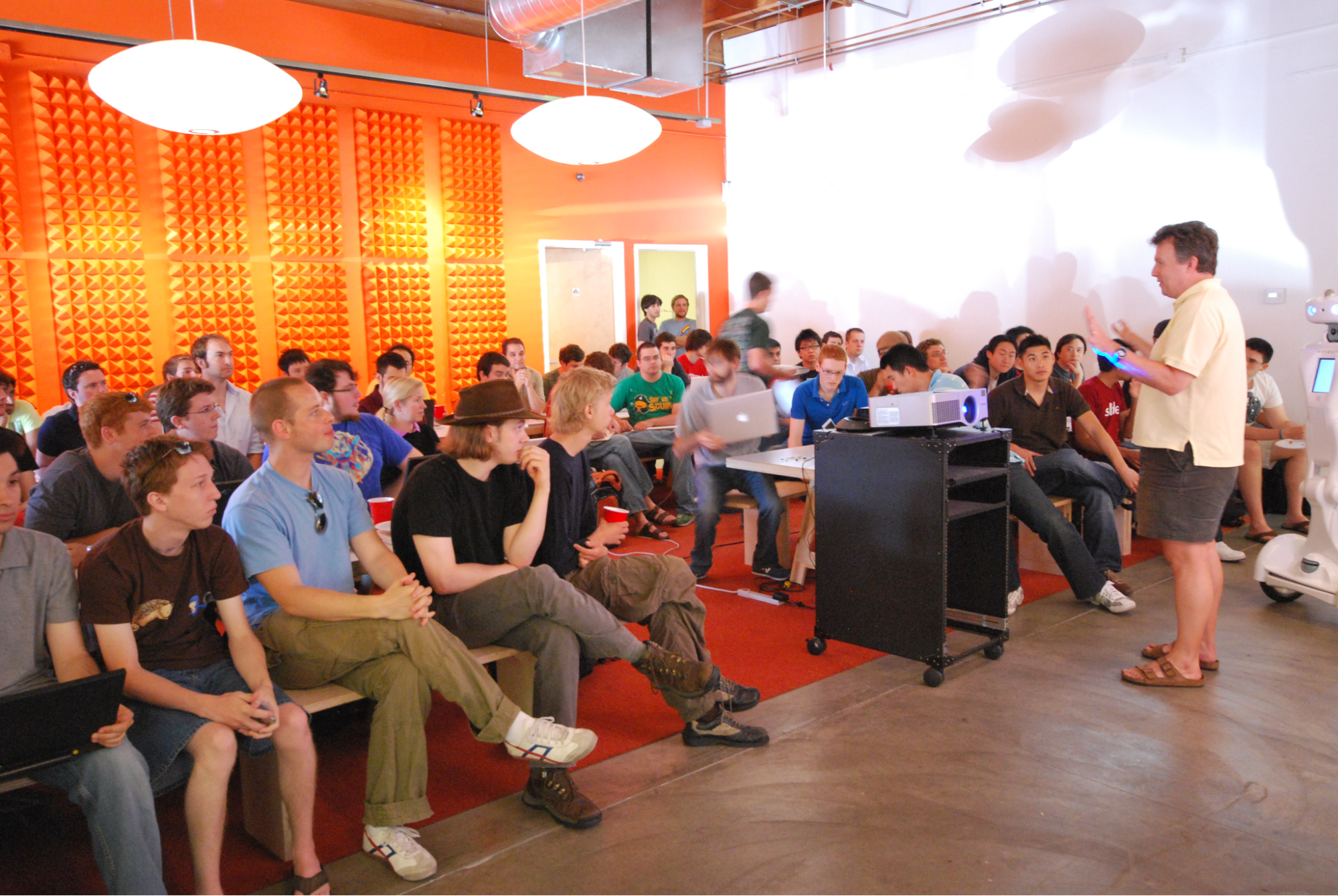
Accelerators are fixed-term, cohort-based programs that help startups progress through mentorship, education, investor introductions, and structured support. Many provide a standard investment in exchange for equity and conclude with a demo day.
The quality, terms, alumni network, and fundraising value vary dramatically between programs.
The big names (Y Combinator, Speedrun, HF0) carry intangible value that goes far beyond the check. Getting into YC doesn't just mean $500K. It means that a huge number of investors will take your meeting because of the signal it sends. If you're a first-time founder with no track record and no traction, that brand power can completely change your trajectory.
But here's where founders need to be careful: not all accelerators are YC. A lot of local or niche programs will invest $50–100K and take 5–7% equity, sometimes with additional fees layered on top.
Run the numbers. Is the network worth it? Are the alumni actually raising meaningful rounds afterward?
One thing I do appreciate about accelerators: they have a clear, transparent process. Apply, get accepted or rejected, know where you stand. That's a lot less opaque than the typical VC process.
- Typical stage: Late idea to prototype
- Typical check: $25,000 to $500,000
- How to approach: Apply during the program's application window and emphasize speed, ambition, coachability, and evidence that the team can execute. Review the effective valuation, equity dilution, additional rights, program obligations, and alumni outcomes before accepting.
- Example: Y Combinator
The Angel Investor Types
4. Casual Angels
A casual angel is an individual who occasionally invests personal money into startups without treating angel investing as a full-time activity or maintaining a sophisticated portfolio strategy.
They may invest because they know the founder, understand the industry, like the product, or simply want exposure to startups.
Every individual who invests in a startup is technically an angel. But casual angels have an investment logic; they're seeking a return, even if they don't operate with the same rigor as an operator angel or serial angel.
Think of a successful gym franchise owner approached by a founder building a fitness app. They have cash, they understand the adjacent industry, and the opportunity feels tangible to them. They're not deep tech venture people, but they're not your grandma either.
These investors typically write checks between $5K and $50K, and warm introductions are almost always the best way in. Cold outreach can work, but it's harder here than with professional investors who actively source deals.
- Typical stage: Late idea to prototype
- Typical check: $5,000 to $50,000
- How to approach: Keep the pitch simple and personal. Warm introductions, founder communities, customers, local startup events, and professional networks are often more effective than formal cold outreach.
- Example: A successful local business owner investing $25,000 in a startup serving their industry.
5. Operator Angels
An operator angel is a current startup executive who invests personal capital in companies where their experience is relevant.
Beyond capital, they may help with product, hiring, sales, partnerships, fundraising, or navigating a specific market.
Operator angels are one of my favorite investor types. They are builders. They're still in the game, maybe a sales executive at a scaleup, CEO of a Series B company. They invest in part because they understand the market deeply and in part because they have strong, organic networks worth leveraging.
They're not coasting. They're still going up in their own career, which creates a very different dynamic compared to someone who made their money and is now writing checks from the beach.
If you're targeting an operator angel, make sure the relevance is genuine. Explain not just why the investment makes sense financially, but why their specific expertise could materially move the needle for your company.
- Typical stage: Late idea to prototype
- Typical check: $5,000 to $50,000
- How to approach: Target operators with experience directly relevant to the problem you are solving. Explain not only why the investment is attractive, but why their expertise, reputation, or network could materially help the company.
- Example: Tobias Lütke
6. Serial Angels
A serial angel invests repeatedly across many startups and usually has a recognizable thesis, evaluation process, portfolio, and network.
Some remain full-time personal investors, while others use their track record to raise a venture fund or become professional syndicate leads.
Serial angels are full-time investors. That's the defining characteristic. To do this, they had to accumulate enough financial success to forgo a salary and invest systematically. They look at many opportunities, they have a semi-structured screening process, and they move fast because it's their own money with no committee approval required.
A warm intro from a serial angel to a VC partner carries real weight. When you approach one, come in with a concise pitch, clear evidence of founder-market fit, round terms, and momentum. They see a lot of opportunities, so clarity and a clean process matter more than you'd think.
- Typical stage: Late idea to traction
- Typical check: $10,000 to $100,000
- How to approach: Send a concise pitch with clear evidence of founder-market fit, momentum, and round terms. Serial angels see many opportunities, so speed, clarity, and a clean fundraising process matter.
- Example: Francis Santora
7. Angel Groups
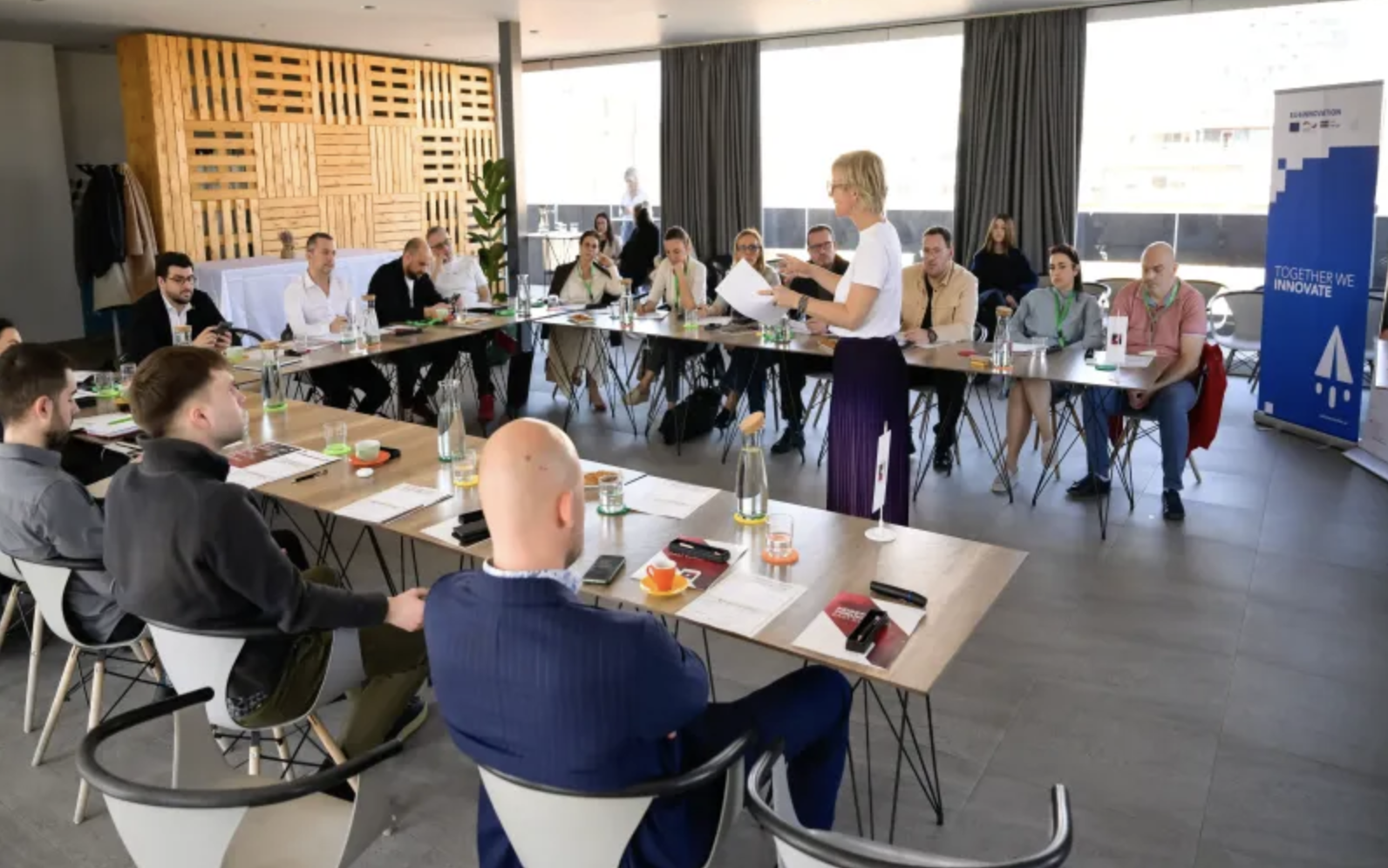
An angel group is an organized community that sources, reviews, and discusses startup opportunities for its members. Members mostly invest individually, although a few groups aggregate participating investors into a single vehicle.
Angel groups often form around a geography, university, profession, demographic, or industry. They exist because a lot of individuals want to invest but don't want to navigate the process alone. They look for guidance and structure. Or they are just bored to invest alone and the social experience makes it more fun.
My experience with these groups is mixed. Some are genuinely high-quality. Others are, frankly, not very professional because nobody is deeply invested in the process. And watch out for groups that charge founders to pitch, which creates weird dynamics. If the group charges investors a membership fee and that's it, I think that's fair. But paying to pitch is a red flag IMHO.
- Typical stage: Late idea to traction
- Typical group total: $25,000 to $250,000
- How to approach: Follow the group's formal submission and screening process. Identify a member willing to champion the deal internally, and expect more presentations, questions, and coordination than with a single angel.
- Example: Keiretsu Forum
8. Angel Syndicates
An angel syndicate pools money from multiple angels into a specific startup under the leadership of a lead angel called the “syndicate lead”. The investment is generally made through a SPV (special-purpose vehicle), giving the company one legal entity on its cap table.
The syndicate's ability to raise capital depends heavily on the lead's reputation, audience, and conviction.
A lot of founders confuse angel groups and angel syndicates. They're not the same thing. An angel group connects founders with individual investors who each make their own decision. An angel syndicate goes all the way: the lead pools money into a single vehicle and invests it as one entity.
Another big difference: the lead usually takes a fee (a percentage of returns) of the amount they “raise”. In that sense, it's close to a fund, minus the administrative weight.
Angel syndicates took off with social media and AngelList, which made it easy for prominent angels to build audiences and handle the legal infrastructure automatically.
To approach an angel syndicate, your job is to win the lead first. Everything else follows from there. Give them a strong investment memo, clear terms, a shareable data room, and enough runway for them to market the deal to their members. Think of the syndicate lead as a lightweight VC; they're evaluating the deal on behalf of their LP base.
- Typical stage: Late idea to traction
- Typical pooled total: $25,000 to $250,000
- How to approach: Win over the syndicate lead first. Provide a compelling investment memo, clear terms, a shareable data room, and enough time for the lead to market the opportunity to syndicate members.
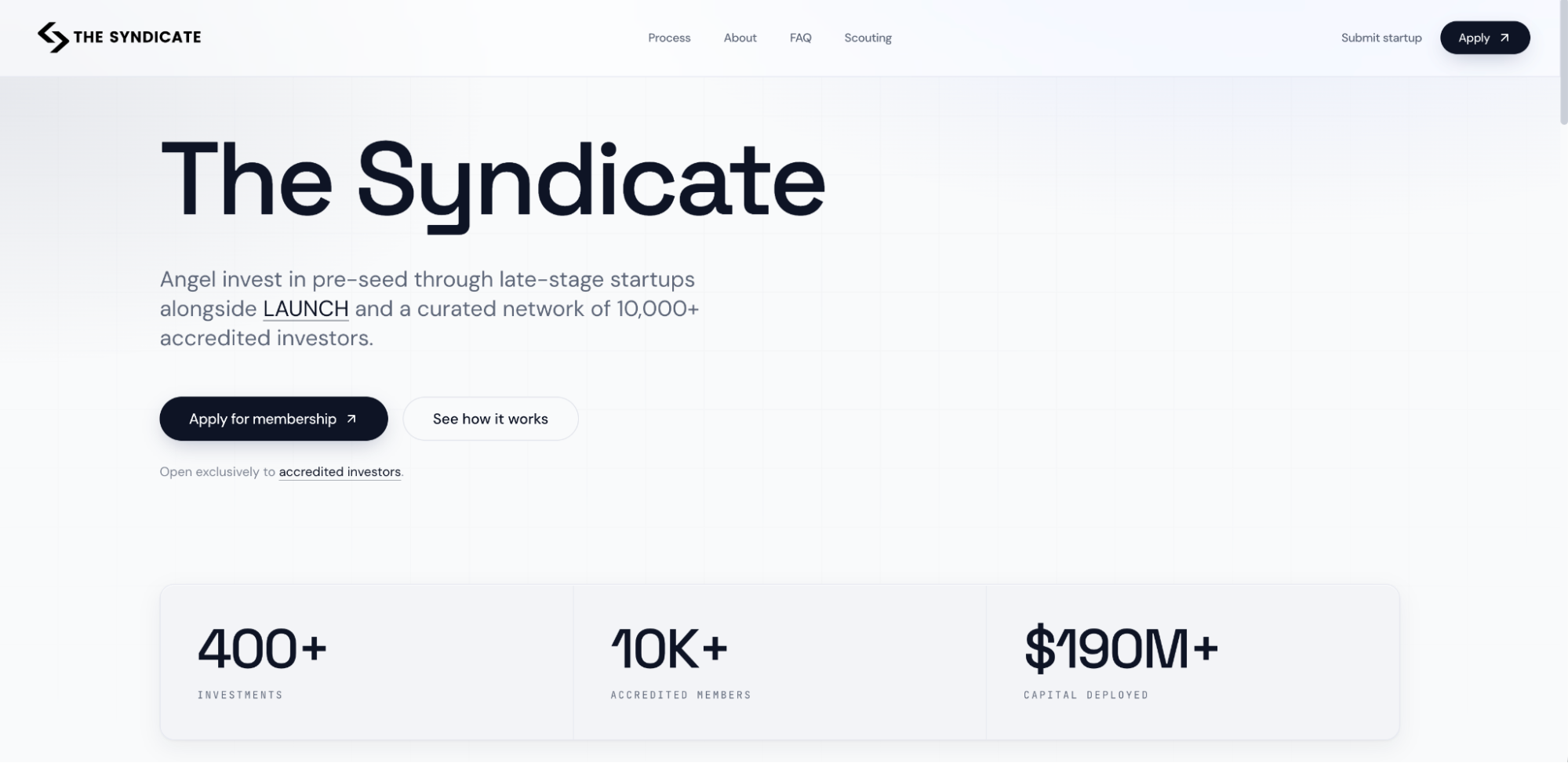
- Example: The Syndicate, led by Jason Calacanis
9. Crowdequity Platforms
Equity crowdfunding platforms allow startups to raise capital from a large number of individual investors through an online campaign.
A campaign can combine fundraising, customer acquisition, community building, and public visibility. However, it requires substantial preparation, marketing, disclosure, and investor communication.
Crowdequity is essentially the digitized version of angel groups, but open to retail investors through regulated online platforms. In the US, this falls under Reg CF (up to roughly $5M) or Reg A+ for larger raises.
The platforms handle compliance, manage the investor pool, and charge a fee for it. Here's the honest reality though: in many circles, raising through a crowdfunding platform carries a stigma. Some professional VCs interpret it as a signal that sophisticated investors passed. That may be unfair, but it's a perception that exists, and you need to factor it in.
- Typical stage: Late idea to traction
- Typical campaign: $10,000 to $500,000
- How to approach: Build an audience before launching. Successful campaigns normally require early commitments, strong social proof, customer participation, frequent promotion, and a compelling public story. Also review platform fees, securities regulations, disclosure requirements, and cap-table structure.
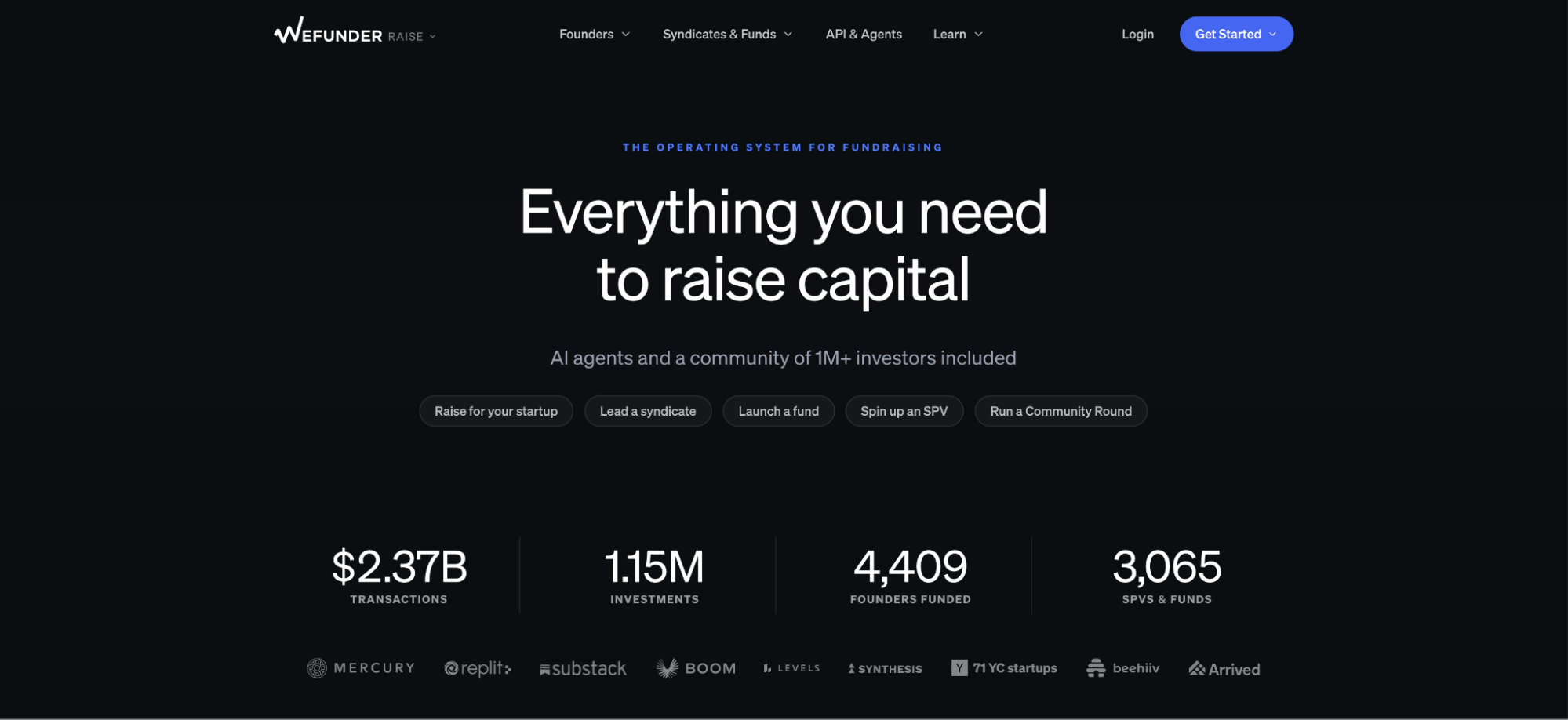
- Example: Wefunder
10. Celebrity Angels
A celebrity angel is an actor, athlete, musician, creator, or other public figure who invests personal capital in startups.
Their strategic value may come from their audience, reputation, distribution, media reach, or ability to accelerate consumer adoption.
Celebrity angels are an up-and-coming category. Athletes, musicians, and actors need to invest their cash somewhere, and increasingly they're choosing startups. Ashton Kutcher was arguably the pioneer of this trend, and he paved the way for many more.
The real upside isn't just the check. If Shaquille O'Neal invests $500K in your basketball app and then promotes it to his audience, the value-add is potentially enormous. And because they own equity, it's in their interest to see the valuation grow, which aligns incentives beautifully.
But you need a genuine fit. Don't approach a celebrity investor with a vague idea that their name could help. Come with a specific activation plan: how their brand connects to your market, what they would actually do, and what they'd get out of it beyond a financial return.
- Typical stage: Late idea to scaling
- Typical check: $100,000 to $1 million
- How to approach: Show a credible connection between the company and the celebrity's brand, audience, expertise, or interests. Present a specific activation plan rather than assuming their name alone will help the company.
- Example: Ashton Kutcher

11. Super Angel
A super angel is a highly active and sophisticated individual investor who writes larger checks, invests frequently, and may lead or structure rounds.
They often behave like micro-VCs but invest primarily through personal capital, holding companies, or deal-specific vehicles.
Super angels have typically exited a successful startup, accumulated significant capital, and want to stay in the game, but without the overhead of running a fund. They write $100K to $1M+ checks, operate alone, and move fast. No committee. No approval process. It's their money, and they press the button when they're ready.
If you're targeting a super angel, present a strong investment case, a clean round structure, credible co-investors, and a clear path to venture scale. They've seen enough deals to spot a weak argument immediately.
- Typical stage: Late idea to scaling
- Typical check: $100,000 to $1 million
- How to approach: Present a strong investment case, clear round structure, credible co-investors, and evidence that the company can become venture-scale. Super angels can move quickly and may help complete the rest of the round.
- Example: Elad Gil
Find your ideal investors now
Browse 16,000+ investors, share your pitch deck, and manage replies - all for free.
Get Started Now
The Venture Capital Types
12. VC Scouts
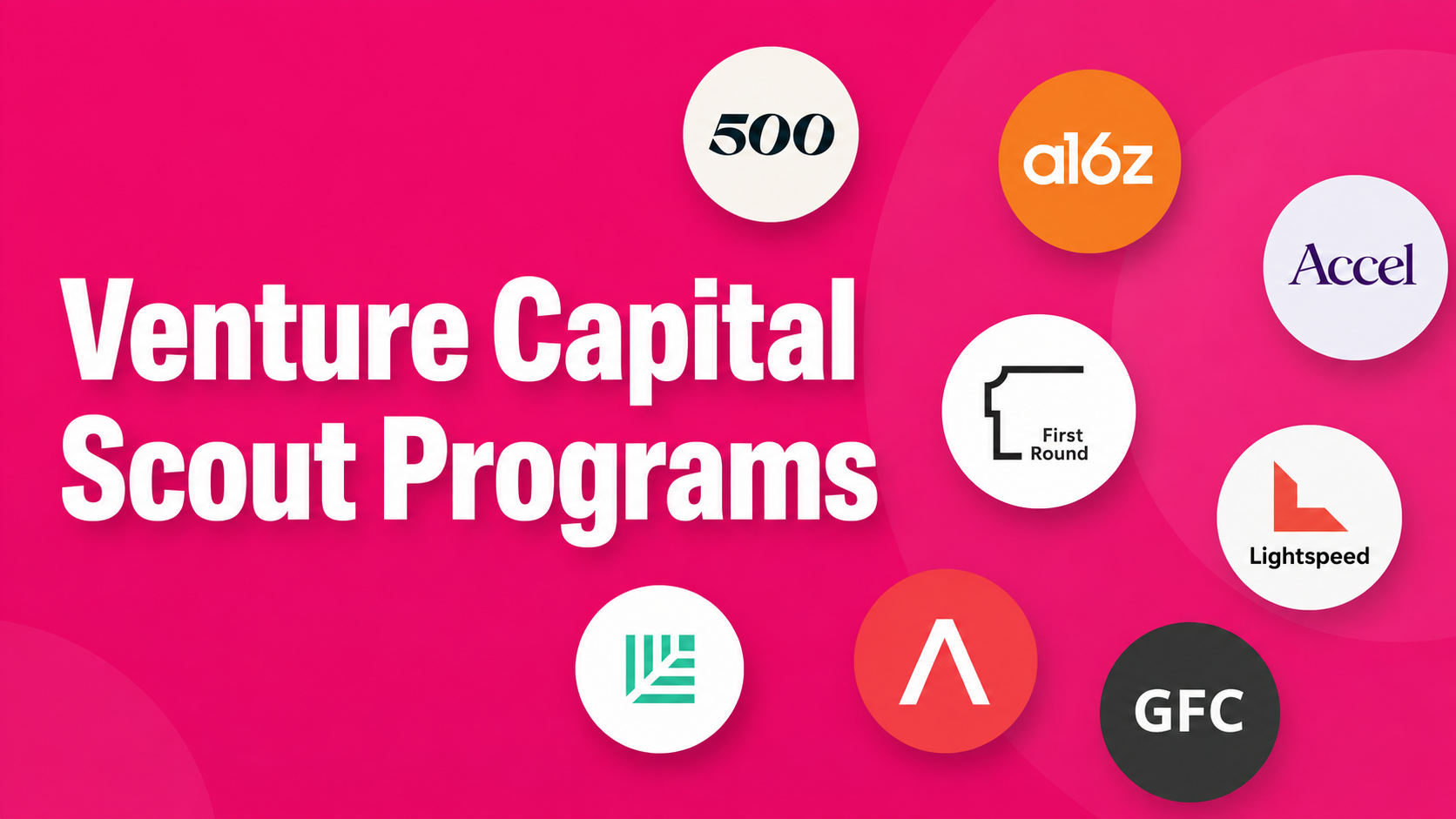
VC scouts are individuals authorized by a venture fund to identify startups and, in some programs, invest small amounts using the fund's capital.
They help venture firms access founders, communities, sectors, and geographies outside the partners' immediate networks.
The concept of scouts was pioneered by Sequoia in the 2010s. The logic made sense: as funds grow larger and move to bigger rounds, they miss great early-stage deals. Scouts (trusted individuals with strong taste and broad networks) could catch those deals early.
The real value for the fund is optionality: if a scout-backed startup takes off, the fund can preempt the seed or Series A before competitors even know about it. Since then, the model got abused. Lots of people agreed to scout roles just to build their own credentials, funds used them without fair compensation, and a lot of scouts had no actual authority to write checks.
The trend has calmed down, and the real ones who genuinely have autonomy and capital are worth treating like angels.
- Typical stage: Late idea to traction
- Typical check: $25,000 to $100,000
- How to approach: Treat the scout as both an investor and a potential path into the underlying fund. Ask whether they can make the investment independently, whether the partners have reviewed the deal, and what relationship the company will have with the fund afterward.
- Example: The Sequoia Scout program
13. Emerging VC
An emerging VC is a newer venture firm, typically raising or deploying Fund I, II, or III.
Emerging managers often have smaller teams, less established brands, and a greater need to differentiate themselves by backing overlooked founders, sectors, or markets.
Emerging VCs behave more like angels than large institutional funds: smaller teams, smaller checks, faster decisions, and more eagerness to find good deals. Because they're new to the game, they're often more accessible and approachable than established firms. That's useful if you know how to position yourself.
There is one frustrating dynamic, though.
Sometimes you'll have great conversations with an emerging manager, feel like you're making real progress, and then discover the fund hasn't actually closed yet. They may be "warehousing" deals to show prospective LPs what their deal flow looks like, but there's no actual capital available. That's a real time-waster. Ask directly: Is the fund closed? Do you have capital available to invest today?
- Typical stage: Prototype to traction
- Typical check: $100,000 to $1 million
- How to approach: Explain why the company fits the fund's specific thesis and why the opportunity could help establish the fund's reputation. Ask about available capital, current deployment pace, reserves, decision-making authority, and the fund's ability to support later rounds.
- Example: Firedrop
14. Micro-VC / Solo GP
A micro-VC is defined by its relatively small fund size, while a solo GP is defined by having one primary fund manager. The two frequently overlap, but they are not identical.
These funds generally write smaller checks, specialize in a narrow thesis, and make decisions with less internal bureaucracy than larger venture firms.
There is a school of thought that says VC firms don't scale well, that smaller is actually better because you make fewer, more deliberate bets. Micro-VCs and solo GPs often subscribe to this philosophy intentionally, not just because they're early.
These funds behave a lot like super angels: accessible, opinionated, passionate about the work, and willing to roll up their sleeves. They don't delegate to analysts and associates the way larger firms do. Tailor your pitch tightly to their stated thesis. Make it obvious why this deal fits within their portfolio logic.
- Typical stage: Prototype to scaling
- Typical check: $500,000 to $3 million
- How to approach: Contact the decision-maker directly with a highly targeted pitch. Demonstrate clear thesis fit, explain why the opportunity can matter within the fund's portfolio, and understand whether the investor can follow on.
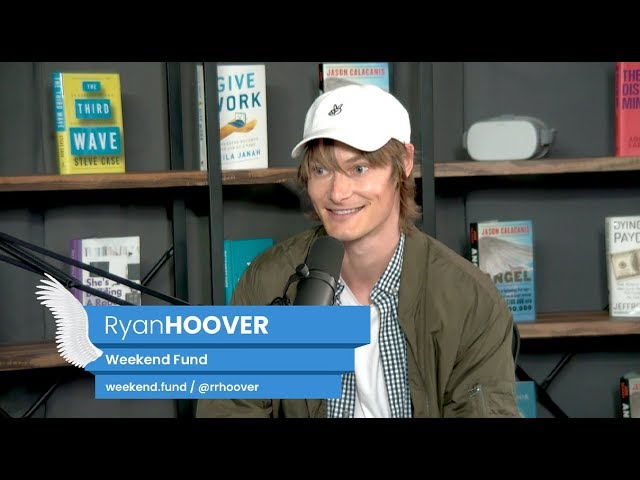
- Example: Weekend Fund
15. Tier 1 VC
"Tier 1" is an informal label applied to the most prestigious and established venture firms.
These firms manage large pools of capital, have influential networks, own stakes in prominent companies, and can finance startups across several rounds. Their participation can create major signaling value.
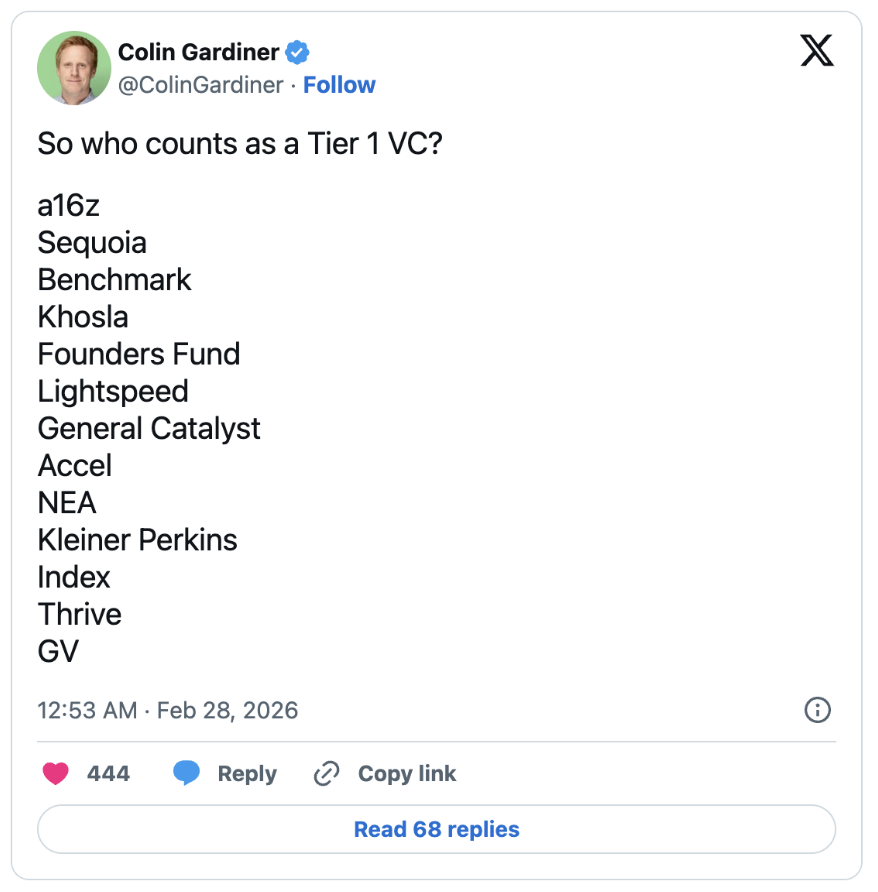
Sequoia, Andreessen Horowitz, Benchmark, Accel, Founders Fund… These are the firms everyone talks about. They manage enormous pools of capital, and because LPs keep throwing money at them, they're investing at larger and larger round sizes, sometimes across multiple stages from seed to pre-IPO.
Getting into one of these firms is genuinely transformative. The brand signal alone can attract co-investors, customers, and future hires. But here's the honest reality: unless you have exceptional traction or exceptional track record, you are probably not competing for their attention.
They are over-solicited, and the quality of their deal flow is extreme. You're not competing against average…you're competing against the ex-CTO of Stripe who raised $50M pre-product.
There are side doors though: scouts, accelerator programs like Sequoia Arc or a16z Speedrun. Those are real paths for founders who aren't yet tier-one-ready on paper.
- Typical stage: Prototype to scaling
- Typical check: $1 million to $10 million or more
- How to approach: Warm introductions, exceptional founder-market fit, rapid traction, and competitive deal momentum are usually required. Run a concentrated fundraising process and be prepared for extensive references and due diligence.
- Example: Sequoia Capital
16. Boutique VC
A boutique VC is an independent venture fund investing within a defined sector, stage, geography, or community.
It generally follows the traditional venture model, including institutional due diligence, ownership targets, governance rights, and reserves for follow-on investments, but operates on a smaller scale than a major multistage firm.
Boutique VCs are your friendly neighborhood VC firm. They've been around for 15 years in a capital city; they have a solid track record; they run a proper process. They have junior people sourcing deals, investment committee, due diligence, term sheet negotiations. They're not Sequoia, but they're serious and they're real.
These are often the most realistic institutional targets for founders who have traction but aren't yet at tier-one scale. Tailor your pitch. Show that you understand their investment model, their ownership targets, and why your company fits what they're trying to build.
- Typical stage: Prototype to scaling
- Typical check: $1 million to $10 million or more
- How to approach: Tailor the pitch to the fund's specific thesis and portfolio. Build a relationship with the relevant partner and show why the company fits both the fund's expertise and its ownership strategy.
- Example: Alven
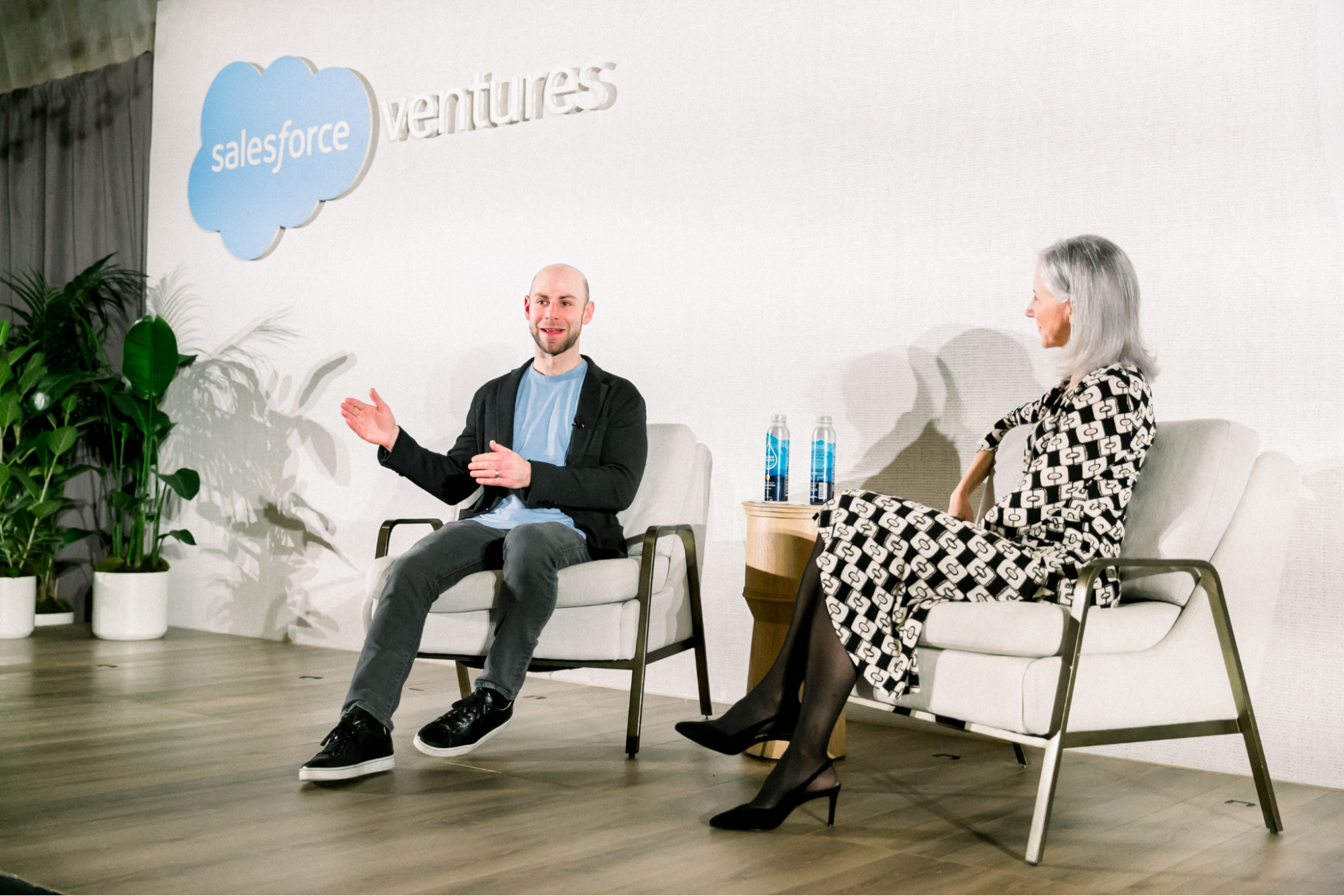
17. Corporate VC
A corporate VC invests on behalf of an established corporation. The motivation is often strategic: they want to stay close to technologies that might become important to their business, or they're building an M&A pipeline.
Corporate VCs operate with very different incentives than traditional VCs. Google has GV. Qualcomm has a venture arm. Renault and Total (Engie) have their own funds.
My experience with corporate VCs is genuinely mixed. Sometimes you get people who are passionate about venture and really understand the founder's world. But a lot of the time, you get corporate executives who were moved into the venture arm from the innovation department and approach it like an office job.
The cultural gap between a tech founder and a corporate executive is enormous, and it creates friction. Even when you have internal champions who believe in you, the sheer organizational inertia of a large company can kill momentum.
- Typical stage: Traction to scaling
- Typical check: $1 million to $10 million or more
- How to approach: Secure support from the relevant business unit, not only the venture team. Understand the corporation's strategic objective and carefully review information rights, exclusivity, commercial obligations, acquisition rights, and potential conflicts with competitors.
- Example: Salesforce Ventures
18. Crypto VC
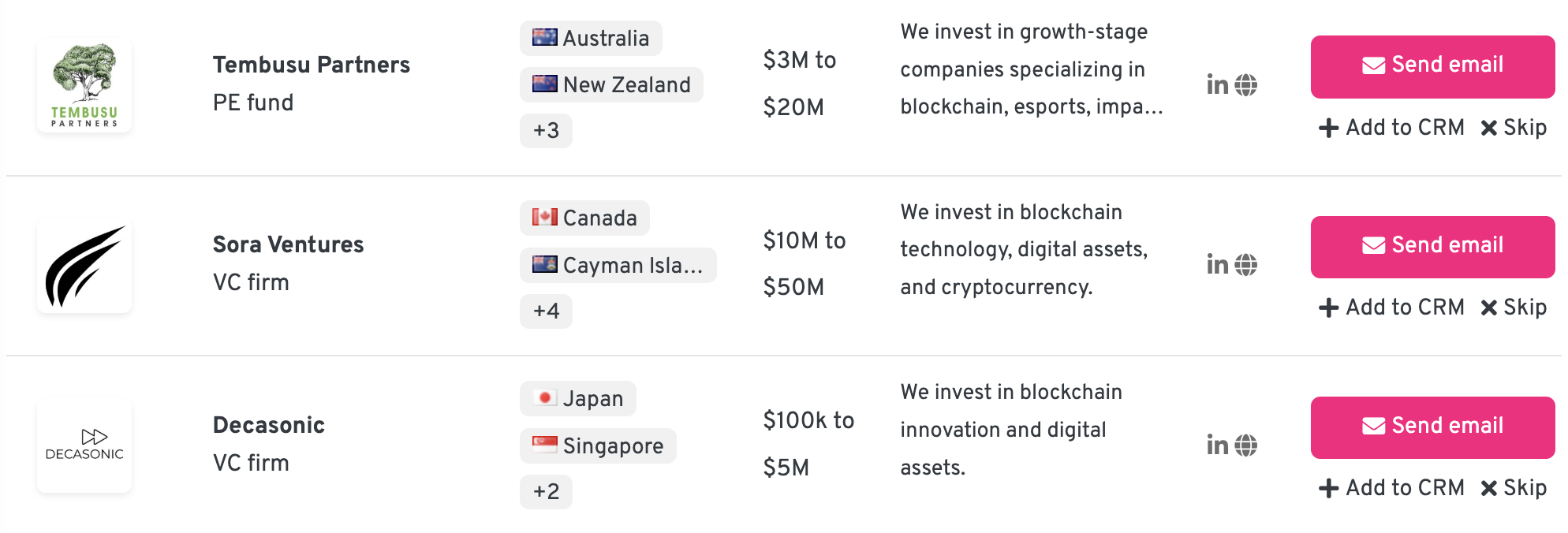
A crypto fund specializes in blockchain infrastructure, protocols, crypto applications, and Web3 companies. It may invest through equity, tokens, token warrants, SAFTs, or a combination of instruments.
Two things to understand about Web3 investors.
First, they don't always invest in equity: sometimes they invest in tokens, which means the instruments and legal structures are fundamentally different. This matters. If you're not building a Web3 company, most crypto funds won't be relevant to you.
Second: there is an incredible concentration of scammers in this space. More than anywhere else in venture. Do your due diligence on any crypto fund before you engage. Verify they've backed real companies. Talk to other founders in their portfolio. Don't hand over documents or sign anything without legal review.
- Typical stage: Traction to scaling
- Typical check: $1 million to $10 million or more
- How to approach: Be prepared to explain both the company and the network economics. Investors will examine technical architecture, token utility, distribution, governance, security, liquidity, regulatory exposure, and community traction.
- Example: Paradigm
Find ideal VCs for your startup today 
Share pitch decks, track engagement, and get replies from investors - all within your FREE Fundraising CRM.
Non-Traditional Venture Investors
19. Service for Equity
A service provider accepts startup equity in exchange for work such as software development, recruiting, legal services, marketing, distribution, or media exposure.
The arrangement can preserve cash, but the equity may become extremely expensive if the company succeeds.
Service-for-equity is not uncommon, and it makes intuitive sense when cash is limited. Tech-for-equity and media-for-equity are the most common flavors. A dev shop builds your product in exchange for shares. A media company gives you advertising inventory in exchange for upside.
In theory, great. In practice, I've heard two recurring complaints from founders who've done these deals. First: you can't actually measure what you're getting. Second: you're not a priority and the work they owe you gets deprioritized at the benefit of “paying” customers.
If you go this route, work with people who have done it before and done it well. Tie equity to specific, measurable deliverables. Never grant it all upfront.
- Typical stage: Prototype to traction
- Typical service value: $50,000 to $5 million service-equivalent
- How to approach: Define the deliverables, timeline, valuation, equity vesting, performance standards, intellectual property ownership, and termination conditions in writing. Avoid granting all the equity upfront before the service is delivered.
- Example: GMPVC.
20. Customers / Suppliers
Customers, suppliers, distributors, and other commercial partners may fund a startup to strengthen a strategic relationship.
The capital may take the form of an equity investment, advance payment, paid pilot, development contract, minimum purchase commitment, or prepaid order.
I love this one, and founders underestimate it all the time. If you're solving a real problem in a specific industry, your customers and commercial partners may be willing to invest not just because it's a good financial opportunity, but because they genuinely want to see you succeed.
If you're working with smaller family businesses, you often have direct access to the decision-maker, and if they believe in what you're building, a check can happen quickly.
At OpenVC, we've had VCs invest small angel checks early on simply because they loved what we were building and wanted to be part of it. That's the best vote of confidence you can get.
- Typical stage: Prototype to traction
- Typical amount: $100,000 to $10 million through a contract or prepayment
- How to approach: Begin with a commercial relationship rather than an investment pitch. Prove that the startup creates measurable value, then discuss financing that accelerates deployment. Avoid exclusivity or strategic restrictions that could prevent competitors from becoming customers.
- Example: A hospital group funding a healthtech startup after a successful pilot.
21. Public Funds
Public funds are government-backed programs that finance startups through grants, awards, equity investments, loans, guarantees, or co-investment schemes.
Their objectives may include innovation, job creation, regional development, scientific research, or support for strategically important industries.
Public funds are more common in Europe than the US. In France, BPI (Banque Publique d'Investissement) is the clearest example: if you raise €2M from private investors, BPI might co-invest €1M on the same terms.
They rarely lead. They follow reputable investors, but that follow-on commitment can be essentially guaranteed once you have the private money. In some cases, they go further and offer grants or subsidies, which is the best possible outcome: non-dilutive capital.
The downside is navigating the bureaucracy.
Depending on your country, you may be dealing with national, regional, and EU-level programs simultaneously, each with different criteria, timelines, and reporting requirements. It's tedious, but it's essentially free or cheap capital, so you don't complain. You just budget the time.
- Typical stage: Prototype to scaling
- Typical award: $50,000 to $10 million
- How to approach: Identify programs whose eligibility criteria closely match the company, geography, technology, and use of funds. Plan around application deadlines, matching requirements, reporting obligations, and longer approval timelines.
- Example: BPI France, the French Public Investment Bank
22. Single Family Office
A single family office is a private organization managing the wealth of one family.
Because it does not manage capital for outside LPs, it may have a flexible mandate, long investment horizon, and fewer constraints around ownership, sector, or fund timelines.
Family offices are surrounded by a lot of mystique, and I understand why. They're incredibly hard to find. Most don't have a website. Many don't have a public-facing identity at all.
But there's nothing inherently mysterious about what they are: a team of three to four people whose full-time job is investing one wealthy family's money.
The upside is significant. They often have more capital than a VC fund, a longer investment horizon, and no LP agreements telling them what to do. No committee. No fund timeline. If the principal wants to write a check, it happens.
The downside is access and fit. Startups are usually a small slice of a family office's portfolio; they also invest in stocks, real estate, bonds, commodities. For most family offices, a $500K check into an early-stage startup is too small to bother with given the diligence required. You either need a warm referral from someone the family trusts, or a genuine personal connection to the family's interests.
- Typical stage: Traction to scaling
- Typical check: $500,000 to $10 million or more
- How to approach: Warm referrals are especially valuable because many family offices operate discreetly. Understand how the family created its wealth, what themes it cares about, and who actually makes the investment decision.
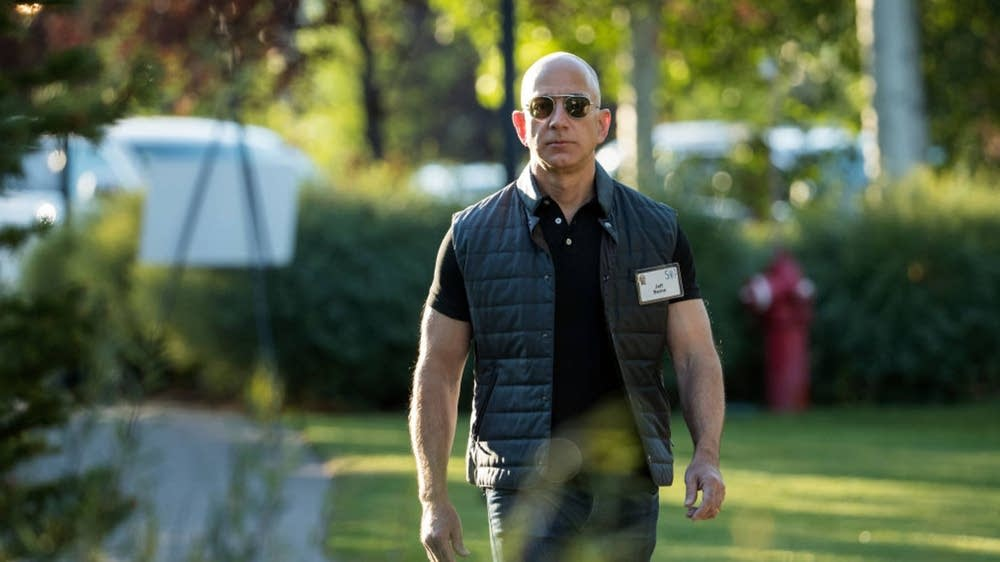
- Example: Bezos Expeditions, the family office of Jeff Bezos
23. Multi-Family Office
A multi-family office manages wealth and investment services for several wealthy families.
It may recommend startup opportunities to clients, invest through a dedicated fund, or create an SPV for families that choose to participate in a specific deal.
Multi-family offices are like single-family offices, but they pool the administration across several wealthy families to share costs. They might recommend a startup to their client families, create a dedicated SPV for those who want to participate, or sometimes invest directly through a fund structure.
Before you spend too much time on one of these conversations, figure out who you're actually talking to: someone who controls capital, or an advisor who still needs to convince individual families. If it's the latter, expect more steps, more approval layers, and an uncertain timeline before you know the final check size. Come prepared with a clean investment memo and an organized data room that can be circulated easily.
- Typical stage: Traction to scaling
- Typical combined check: $500,000 to $10 million or more
- How to approach: Determine whether the person you are speaking with controls capital or is advising individual families. Provide a clear investment memo and organized data room that can be circulated internally, and expect additional approval steps before the amount is confirmed.
- Example: Iconiq Capital
How to Pick the Right Investor
The chart above maps when each investor type typically writes checks. But stage alone should not determine who you approach.
Before you add anyone to your target list, think through these questions:
- Check size : Can they write a meaningful portion of your round?
- Decision speed : Can they move within your fundraising timeline?
- Follow-on capacity : Will they be able to support later rounds?
- Strategic value : Can they help with customers, hiring, distribution, or future fundraising beyond capital?
- Ownership expectations : Does their target stake fit your round math?
- Restrictions : Could this investment create conflicts with future investors or commercial partners?
- Reputation : Will their participation on your cap table help or hurt you with the next investor?
The best investor for your company is not necessarily the most prestigious one. It is the investor whose capital, incentives, timeline, expertise, and expectations align most closely with what you're actually building right now, at your current stage, with your specific constraints.
Understanding who each type of investor is and how they think is the starting point for building a smarter list. The founders who raise efficiently don't blast outreach to everyone. They target deliberately, they approach correctly, and they invest their limited time in the conversations most likely to convert.
That's what this framework is for.
If you're building your investor list right now,OpenVCgives you access to a searchable database of 16,000+ verified investors you can filter by stage, check size, geography, and industry, and manage your outreach in a CRM built specifically for startup fundraising. It's free to start.




![12 Best Startup Financial Model Templates [Free & Paid]](https://d1pnnwteuly8z3.cloudfront.net/images/177302d9-3657-45b7-ac9d-acf801d83a74/019fadd2-2388-77a4-a43e-6c44f536d546.jpg)